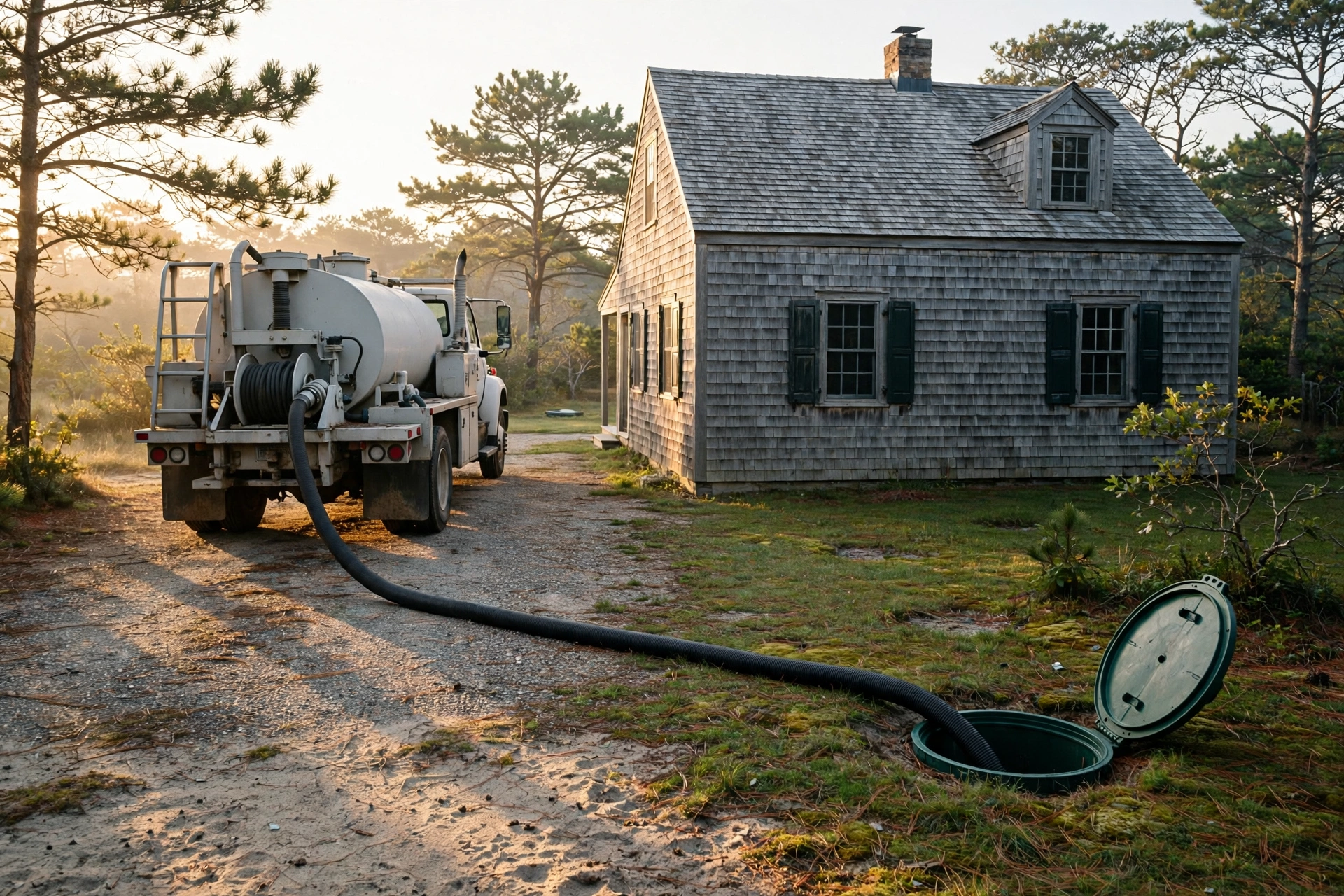
Barnstable Septic is a Hyannis-based company, and the person who keeps its work moving is Greg Halloran, our operations manager. The calls that come in from Barnstable, Yarmouth and Dennis are the ordinary run of septic services on this part of the Cape. A house is about to change hands and needs one of our Title 5 inspections before the closing. A tank has gone too long and needs septic pumping before it reminds anyone why the schedule matters. Some yards have to be opened up for a full septic system installation. Some owners have just learned what they have buried out back, and cesspool replacement is the conversation nobody expected to have. Others sit in the watershed, where nitrogen-reducing systems are what the rules call for. Greg is the one who knows where each of those jobs stands on any given day.
If you have a closing date, a failed report or a tank you are unsure about, you can call Greg's office at (774) 619-8331 or send the form at the foot of this page. Tell us what is happening and what the deadline is, and we will start from there.
How Greg came to the work

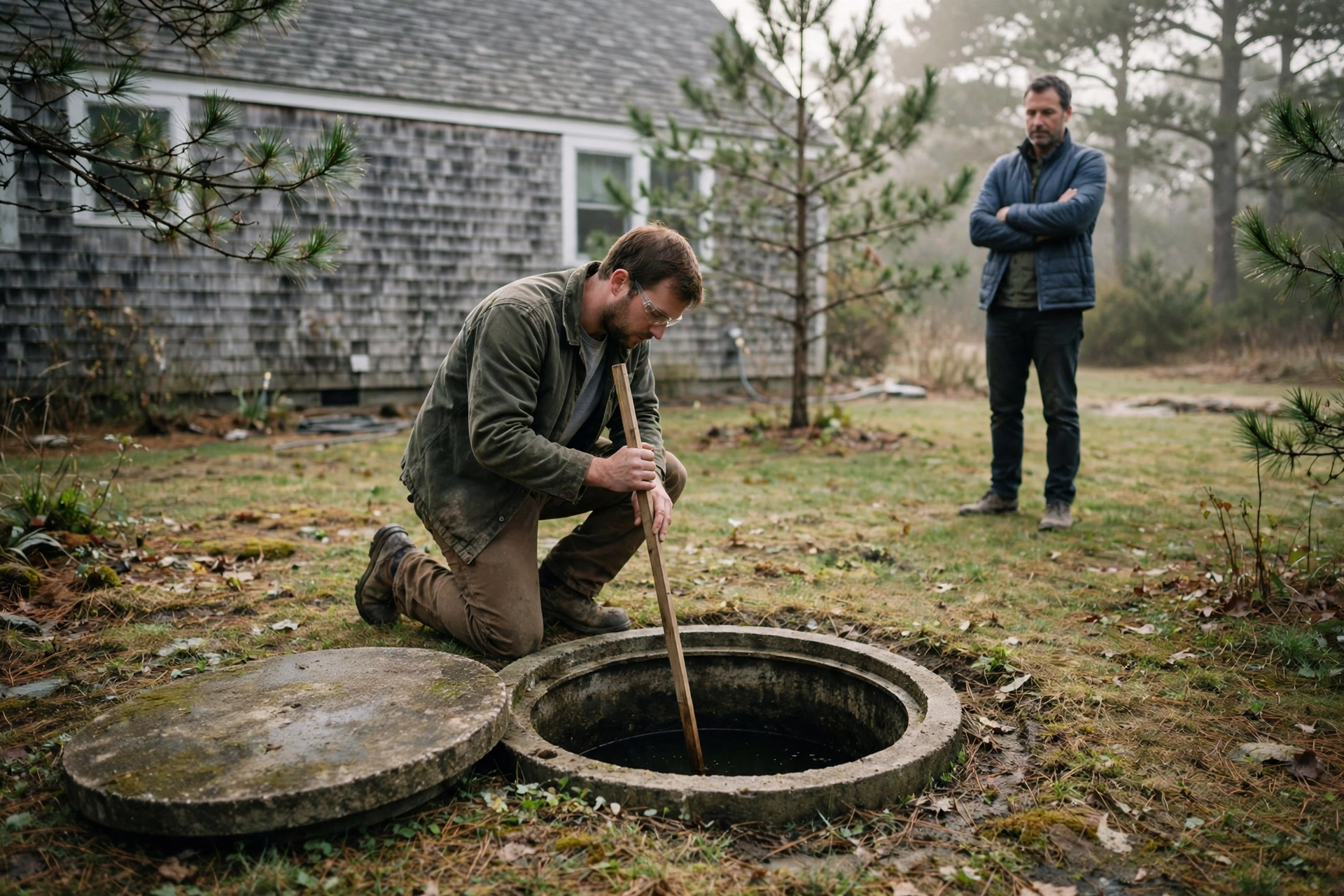
Greg did not come to septic work through an office. He started where most of the trade starts, riding along on a pump truck, learning to find a buried lid with a probe rod and to read what a tank was telling him once the cover came off. A tank holds a record of the house. The scum layer, the baffles, the condition of the outlet tee, a crust of grease from a disposal that never should have been used the way it was: all of it is there for anyone who looks, and Greg looked. He still does, even when the job is routine and nobody is asking him to.
From the truck he moved to the digging. He has spent a good many days in test pits, standing in a hole on the Cape's sandy ground watching where the water stains stop in the soil wall, because that line is how you learn where seasonal high groundwater sits and how much room a leach field really has. He is easy to get talking on the subject. Ask him why two houses on the same street need different systems and you will get a real answer, with the soil, the lot lines and the setbacks all in it.
Then came the part he says taught him the most. He has sat at kitchen tables with homeowners holding a failed Title 5 report, a closing date three weeks off and no idea what the words meant. The rule he explains most often is that a failure means an upgrade within two years, and that the duty sits with the owner even if the sale falls through. People relax a little when someone tells them plainly what the paper says and what it does not.
What his days look like
Greg's weeks run across all three towns. A morning might find the crews in Yarmouth, where every property is on an on-site system and the summer load comes hard on rentals and seasonal homes. By afternoon he can be looking at an old system in Barnstable and deciding with the homeowner whether it can keep going or what should replace it. Dennis is a lot of closings: second homes change hands there constantly, and each sale carries its inspection and its clock.
He is particular about three things, and they are the reason the schedule holds together.
The first is the records. A pumping record, a tank condition note or an inspection report is only useful if it is correct and in the right hands on time. Title 5 reports go to the Board of Health within 30 days and the seller passes a copy to the buyer. A pumper reports tank condition within 14 days. Greg keeps those dates in front of him, so they do not depend on someone's memory.
The second is the call before the report lands. If an inspection turns up a problem, the homeowner hears it from a person, with the reasons and the options, before a document arrives in an inbox and a closing starts to feel unsteady. A cracked tank, a distribution box sitting uneven and a cesspool with liquid close to the inlet are different situations, and they deserve different conversations.
The third is the yard. A lawn that was a lawn in the morning should look like one at the end of the day. Greg walks the site after the trucks have gone, checks that lids are seated, that the grass and the driveway are not a mess, and that the homeowner knows where the access points now are.
Want to talk through a particular situation, such as a letter from the town, an old system or a sale in progress? Call (774) 619-8331 or use the form below.

What he enjoys about it
Ask Greg what he likes about the job and he does not give a speech. He tells you about the morning a crew opened a tank everyone assumed was failing and found the problem was a single baffle, a repair measured in hours rather than a replacement. Or he mentions a new leach field going in on tight ground where the layout finally worked on paper and then in the soil. He likes it when the answer is smaller than the owner feared. He likes it just as much when a hard job is finished and the system is sitting there, buried and quiet, doing what it was built to do for the next family.
When you call
When a customer calls, the first thing that happens is a conversation about the actual situation: what the property is, what is due and when. Greg is the one who answers for the schedule and for the paperwork, so there is no handing you from one person to another to find out where a job stands. Pricing questions get the figures from our price list, and for work that depends on the site, he walks it with you first.
We take calls Monday to Friday, 9:00 AM to 5:30 PM, at (774) 619-8331.
Send us your name and a phone number and we will call you back. Add whatever else you know, such as the address of the property, the closing date, what the report said or what you have noticed in the yard.
The more details you give, the better we are able to help you.
[Form: Name (required), Phone (required), optional fields for property town, what is happening, and deadline]