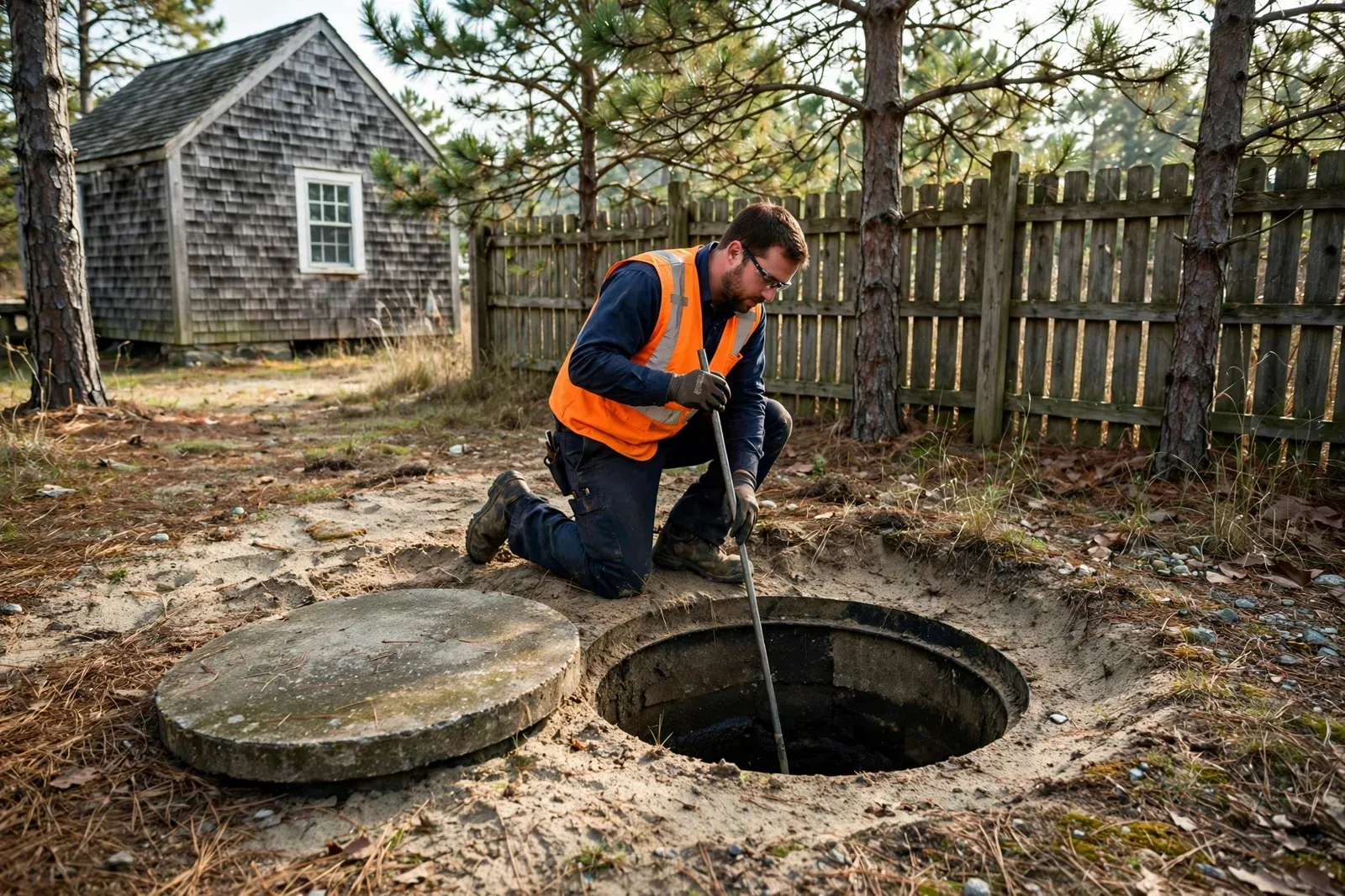
Barnstable Septic is a Hyannis-based company, and cesspool replacement is work we do across the Town of Barnstable, Yarmouth and Dennis. Most of it starts the same way. A seller orders one of the Title 5 inspections that come before a closing, and the inspector lifts a cover to find a pit where a tank and leach field should be. Sometimes the homeowner finds out years earlier, from a neighbor or an old plot plan, or simply from a yard that stays wet.
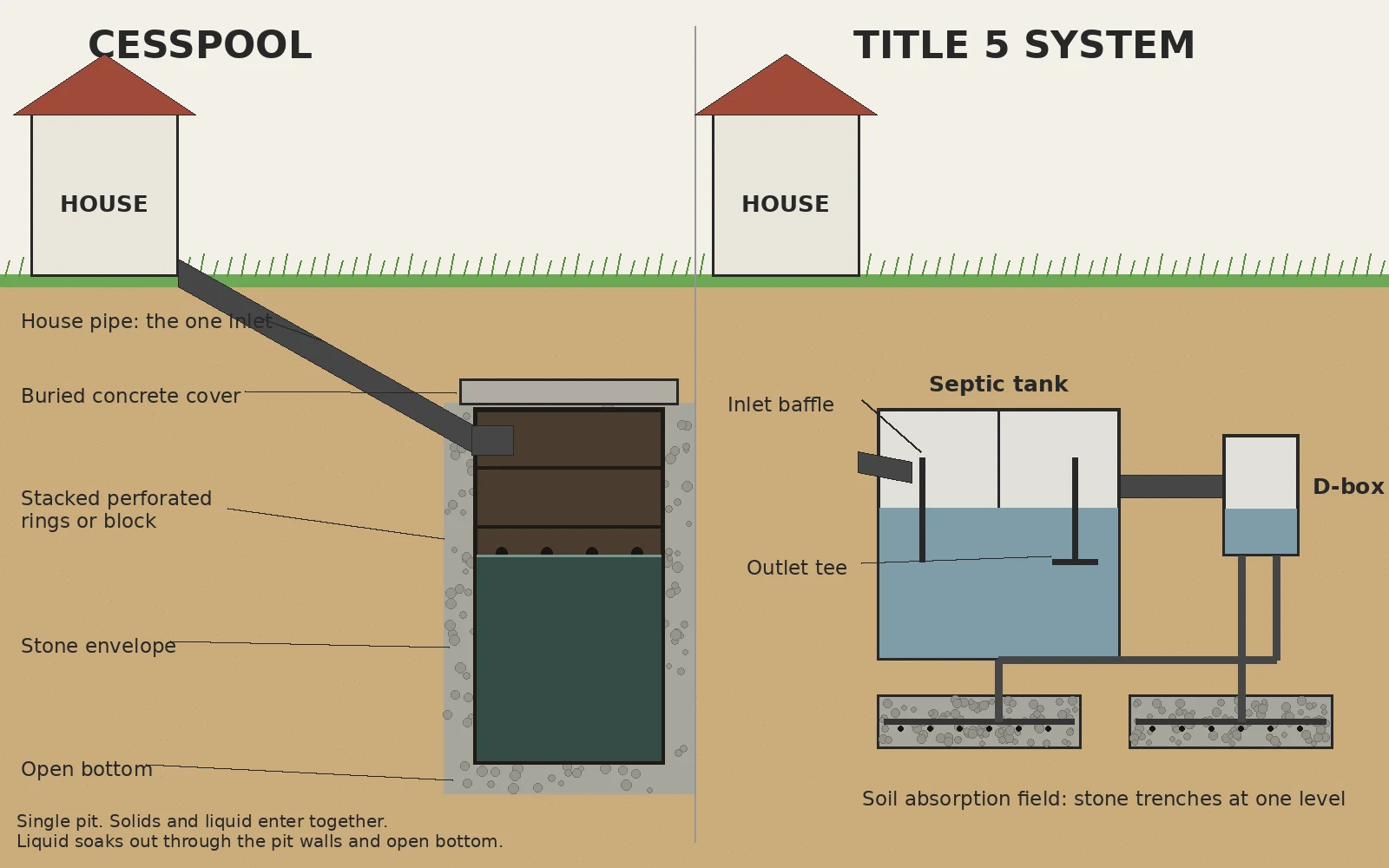
A cesspool lets sewage soak straight into the surrounding soil, with no tank to settle the solids and no field to spread and treat the liquid. Replacing it means septic system installation of a proper Title 5 system: a tank with baffles, a distribution box, and a soil absorption system sized to the house. On a lot that is small, close to the water table, or inside a nitrogen-sensitive watershed, the replacement may call for one of the nitrogen-reducing I/A systems instead, and we work that out for your parcel before anyone digs.
Until the pit comes out, septic pumping and careful septic maintenance are what keep an old cesspool working. When that stops being enough, you are into what the rule requires, what a septic system replacement costs, how the job goes, and who helps pay for it.
Have a closing date, a letter from the Board of Health, or an older house with no septic paperwork at all? Call (774) 619-8331, Monday to Friday, 9:00 AM to 5:30 PM, or send the form on this page with your name and phone number. We start by working out what is actually in your yard.
What a cesspool is, and what it is not
A cesspool is a buried pit, usually lined with stone, block or concrete rings with open joints, that takes everything the house sends down the drain and lets the liquid leach out through its walls. Because there is no tank in front of it, solids build up inside the pit and slowly seal the soil around it. As the walls clog, the liquid level rises.
A cesspool is not illegal to own. Title 5 does not condemn a cesspool for existing. Cesspools have been banned for new construction since 1995, which is why they turn up mostly in older houses, and why most owners meet theirs at the transfer inspection and not before. Some Cape towns have gone further than the state with their own rules on cesspools, so your Board of Health is worth a call.
What the state rule does say is that a cesspool must be upgraded in three situations:
- It shows hydraulic failure.
- It sits extremely close to a water supply.
- It otherwise fails to protect health and the environment.
It must also be upgraded before any increase in design flow. Title 5 sizes a home at 110 gallons per day per bedroom, with 330 gallons as the minimum, so adding a bedroom, finishing an attic or converting a space for a use that needs a permit brings that rule into play. Until the system is upgraded, flow cannot go beyond the approved design.
Does your cesspool have to be replaced?
Answer as an inspector would find it, group by group. A cesspool cannot receive a conditional pass, so the outcome is one of two. The section below this checker sets the same criteria out in full.
Is sewage backing up into the house?
Is effluent ponding, breaking out at the surface, or reaching surface water?
Does the liquid stand within 6 inches of the inlet pipe, or leave less than half a day's design flow of room above the liquid?
Does the pit need pumping more than four times a year?
Does any part of the system sit below high groundwater?
Does a cesspool or privy sit too close to a water supply?
Are you planning an increase in design flow, such as adding a bedroom, finishing an attic, or converting a space?
Replacement required
The cesspool must be upgraded. The upgrade runs within 2 years, unless the Board of Health or MassDEP sets a different schedule, and sooner where there is an imminent hazard. The duty sits with the owner even if the sale falls through. A cesspool cannot receive a conditional pass.
Where full compliance is not feasible on the lot, the Board of Health may approve a Local Upgrade Approval, which is maximum feasible compliance, and we prepare that work with the Board.
Found on this system:
No upgrade trigger found
None of the findings that require replacement is present. A cesspool is not illegal to own. Title 5 does not condemn a cesspool for existing. A cesspool cannot receive a conditional pass. The upgrade still has to come before any increase in design flow.
When a cesspool has to be replaced
The Title 5 failure criteria are specific, and several apply to cesspools. A system fails when sewage backs up into the house, or when effluent ponds, breaks out at the surface or reaches surface water. For a cesspool, it fails when the liquid stands within 6 inches of the inlet pipe or leaves less than half a day's design flow of room above the liquid. A system that needs pumping more than four times a year also fails. So does any part sitting below high groundwater. A cesspool or privy too close to a water supply fails on distance alone.
A cesspool cannot receive a conditional pass. A tank, a broken pipe, an uneven distribution box or a pump chamber can be repaired with Board of Health approval and the system passes. The soil absorption system and the cesspool cannot. If the inspector finds a failure, the upgrade runs within 2 years, unless the Board of Health or MassDEP sets a different schedule, and sooner where there is an imminent hazard. The duty sits with the owner even if the sale falls through.
Where full compliance is not feasible on the lot, the Board of Health may approve a Local Upgrade Approval, which is maximum feasible compliance, and we prepare that work with the Board. It matters most on the small lots described below.
Finding out what you have
If your house is older and you have no system records, you may have a cesspool, an old tank with a failed field, or a modern system nobody told you about. The sure way to know is to open it.
Start with the paperwork. Title 5 reports are filed with the local Board of Health, so a prior inspection or repair may be on record there, and the seller's copy may be in your closing file. Old plot plans and the original building file sometimes mark a system. Then walk the yard. The sewer line leaves the house on the side nearest the plumbing, and the system sits in the direction it points. A tank is usually a rectangle with one or two lids. A cesspool is usually a single round or square cover over a deep pit.
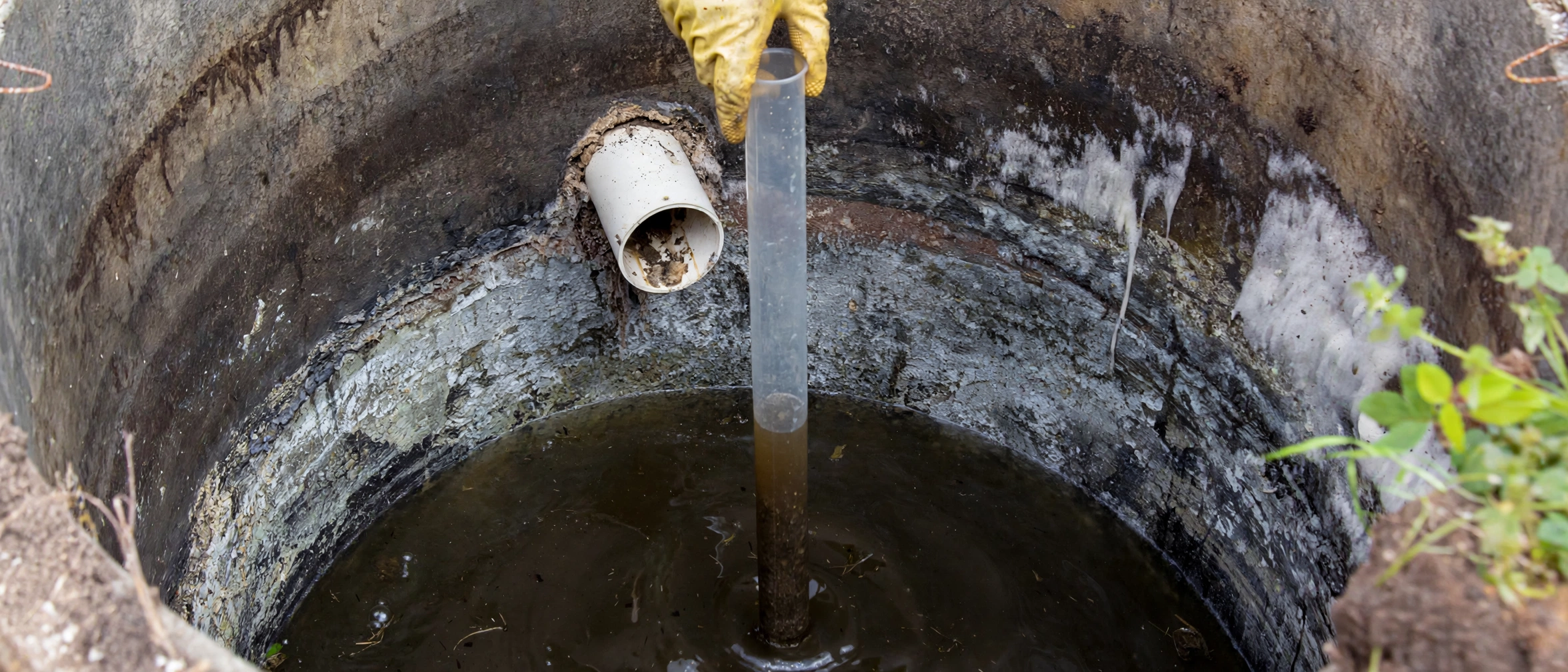
Locating and uncovering the cover is part of our work, and where the covers sit too deep we set risers so that the next inspection and every septic pumping afterward does not need a dig. Once the cover is open, a pump-out lets us see the walls, the inlet and the soil, and read the condition of the whole system.
A Title 5 inspection settles the question and puts it on the state form. Our price is $475 to $850. Booked together with pumping, which is how most cesspool inspections go because the pit has to be emptied to be seen, it is $600 to $1,200. The report goes to the Board of Health within 30 days, and a seller gives the buyer a copy. The inspection must fall within 2 years before the transfer, and one inspection covers more than one transfer inside that window. An inspection stays valid for 3 years when the system is pumped at least once a year after it, with records.

Not sure whether what you have is a cesspool? Call (774) 619-8331 and tell us the age of the house, the number of bedrooms and what you have found so far. Name and phone number on the form is enough to start.
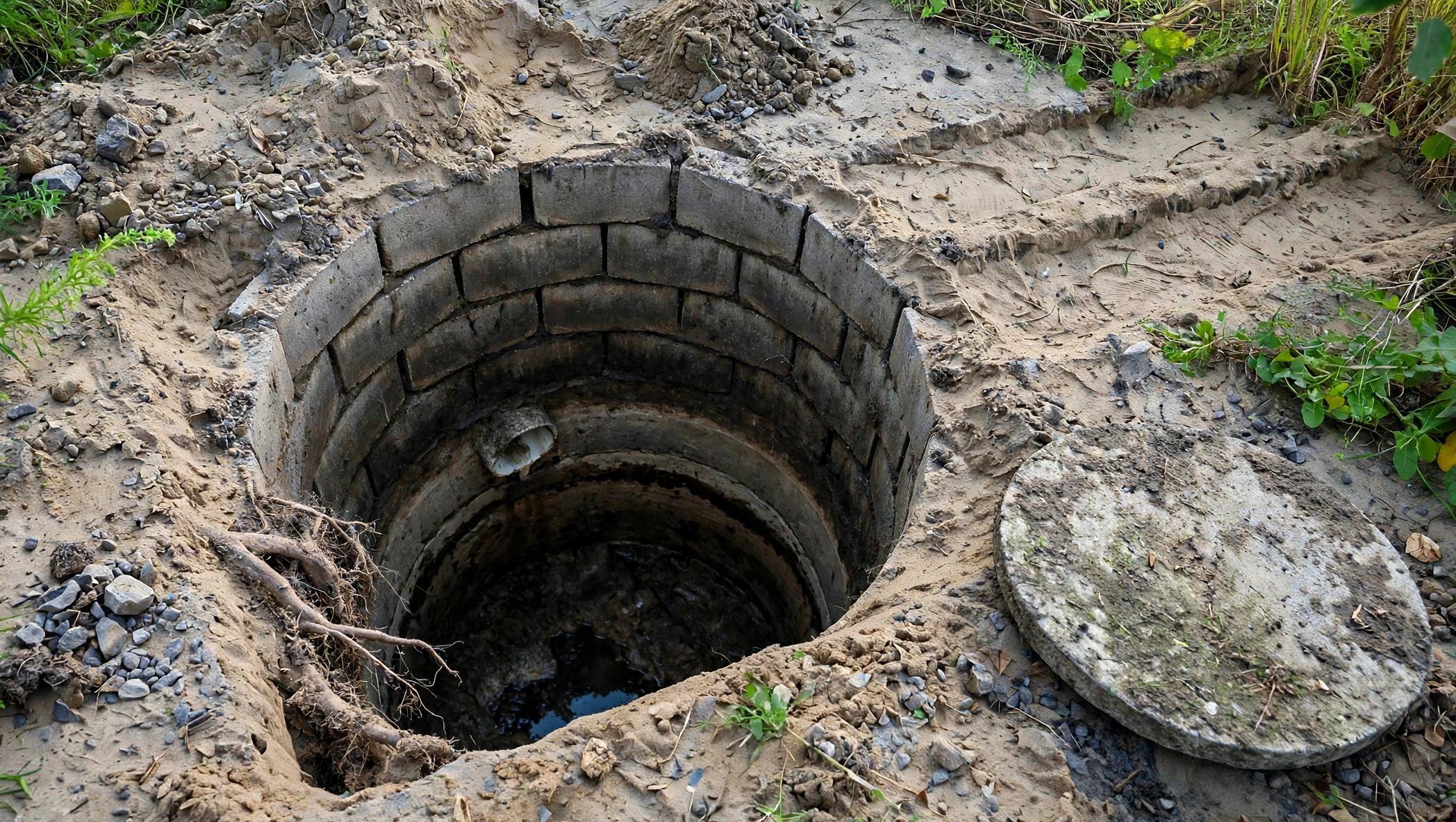
Before and after
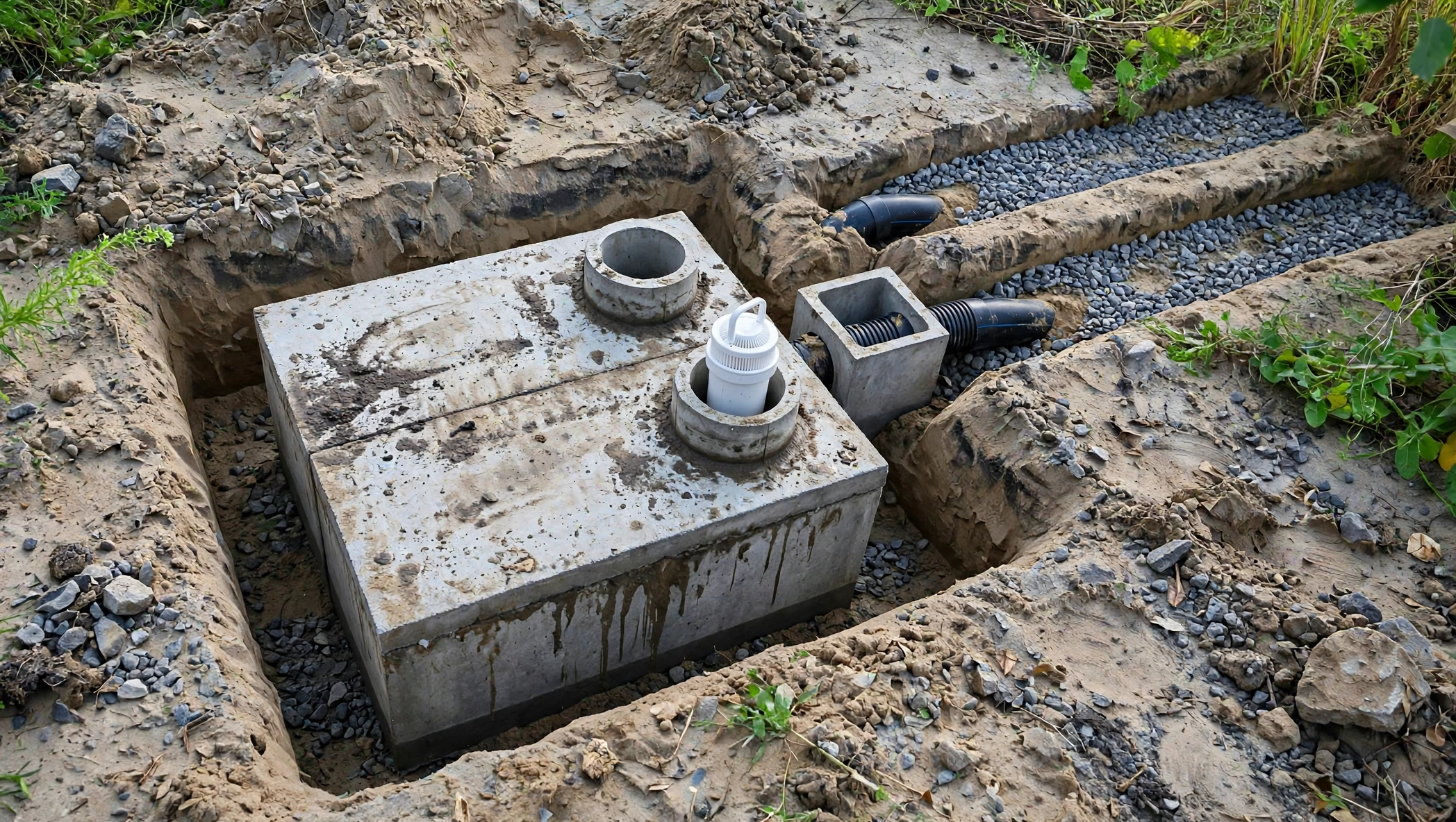
The two photographs below are from the same side yard.
How the work goes, step by step
Every cesspool replacement follows the same order, whatever the size of the lot.
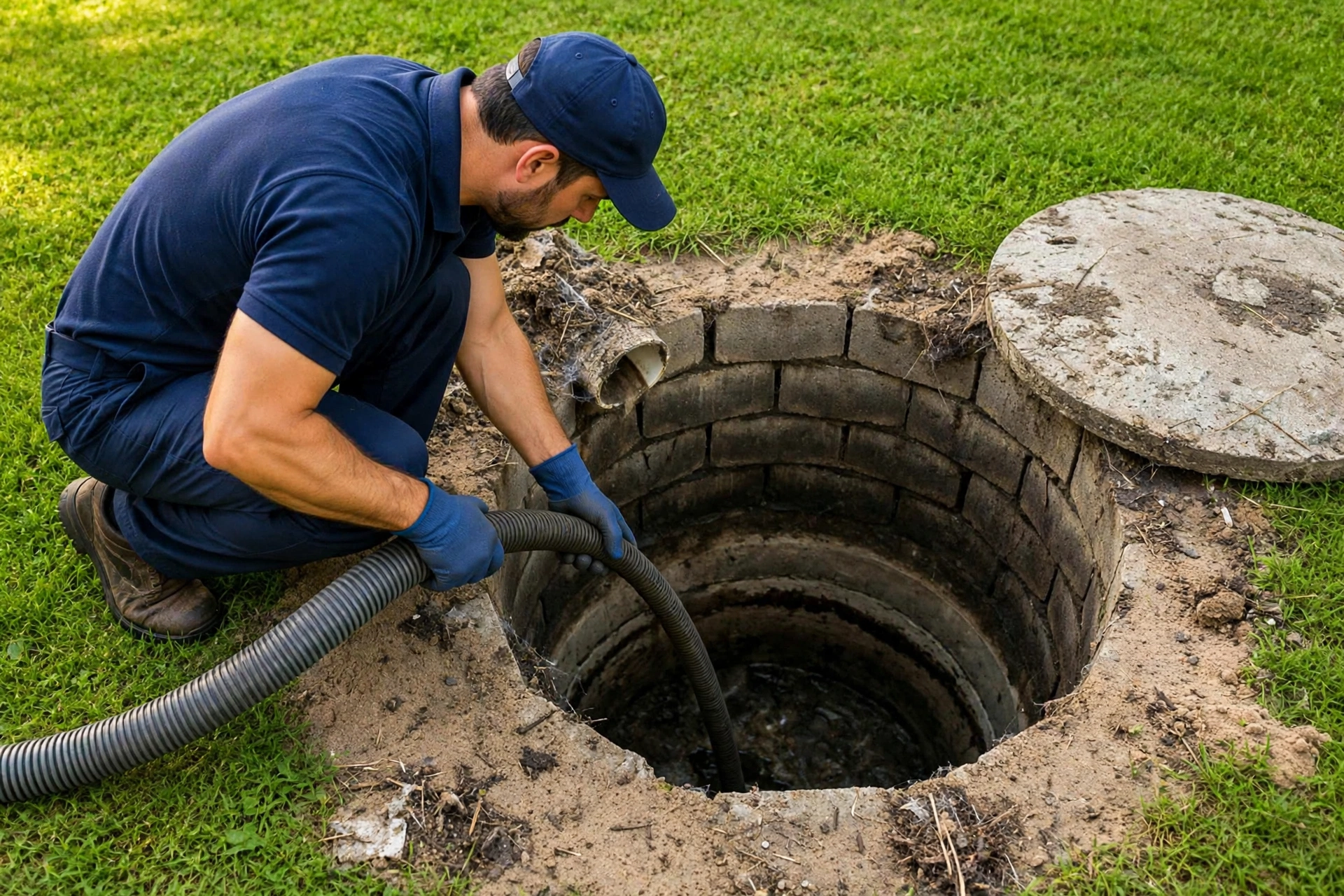
1. Locate, open and pump
We find and open the cover and pump the pit, then read it: wall material, inlet, liquid level, signs of groundwater, and the distance to any well or water line.
2. Title 5 inspection and report
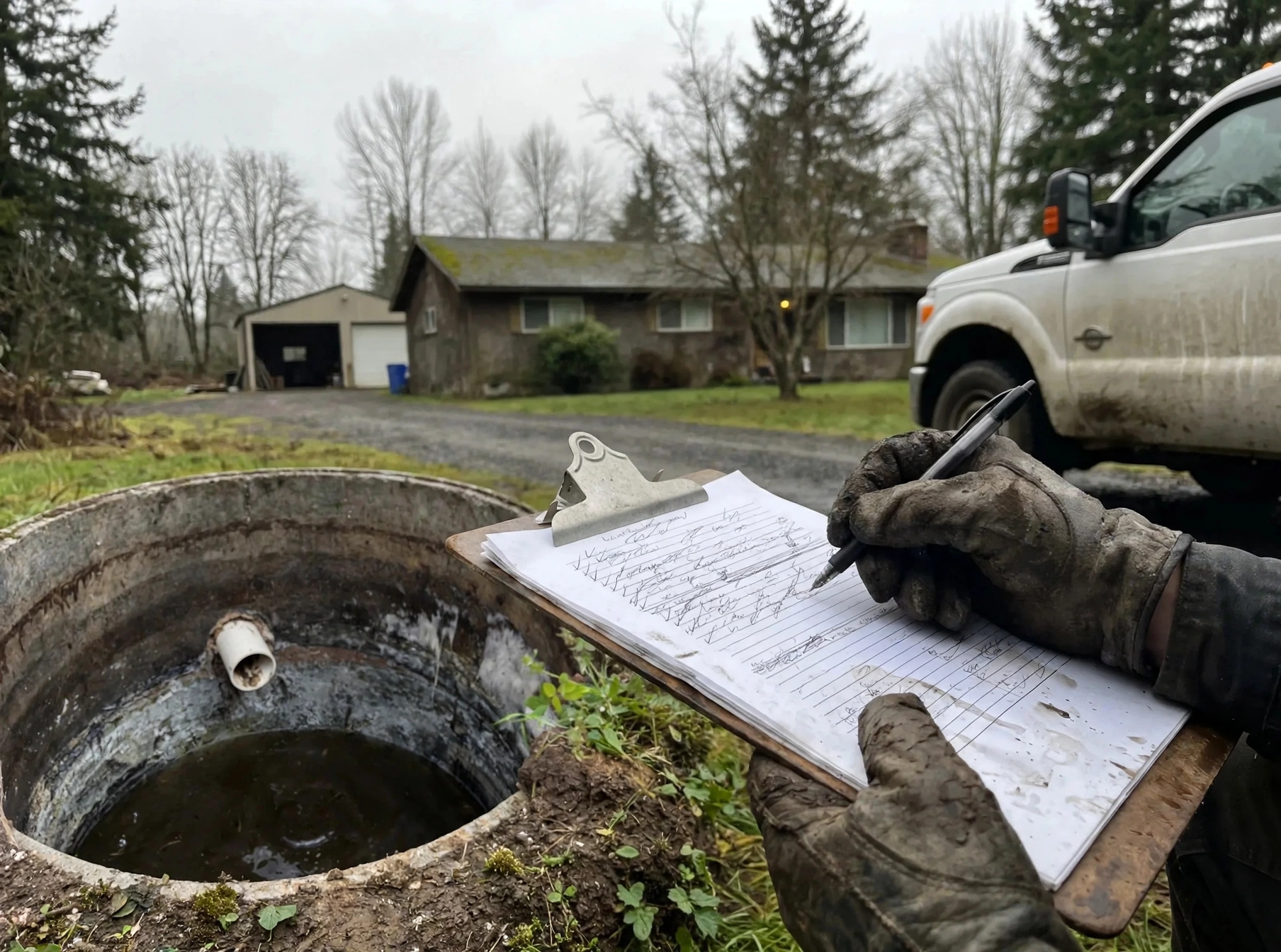
The inspection is done on the state form by an approved inspector and filed with the Board of Health within 30 days. A cesspool in failure becomes a replacement job with a schedule attached.
3. Soil evaluation and design
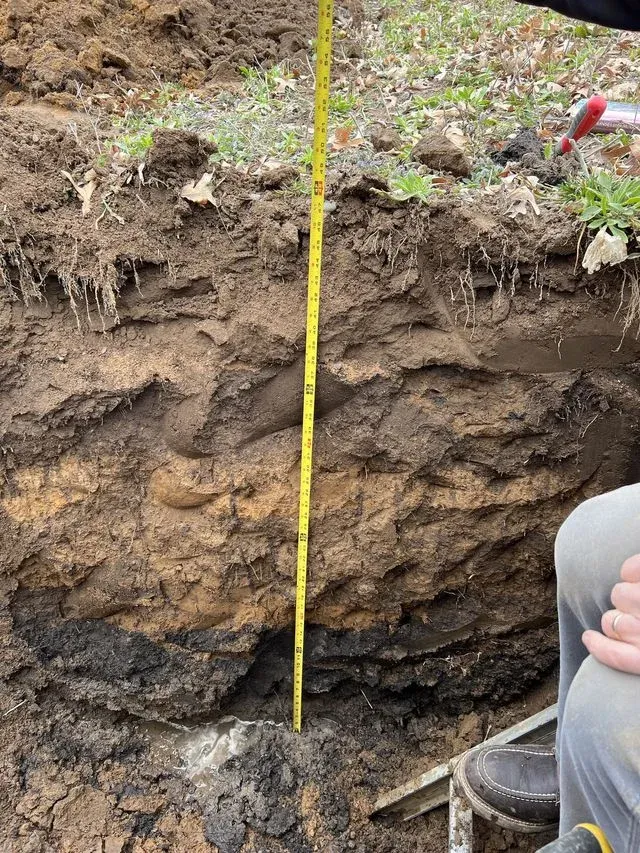
We test the soil and percolation, find the seasonal high groundwater, and place the new system against the setbacks on the lot. The design is sized to the bedrooms and filed for Board of Health approval. This is also where we find out whether a conventional system fits or the parcel calls for an I/A system.
4. Remove or decommission the cesspool
With the approved plan in hand, the pit is pumped again, and then removed or filled in as the rules require, so that nothing is left to collapse under a lawn or driveway.
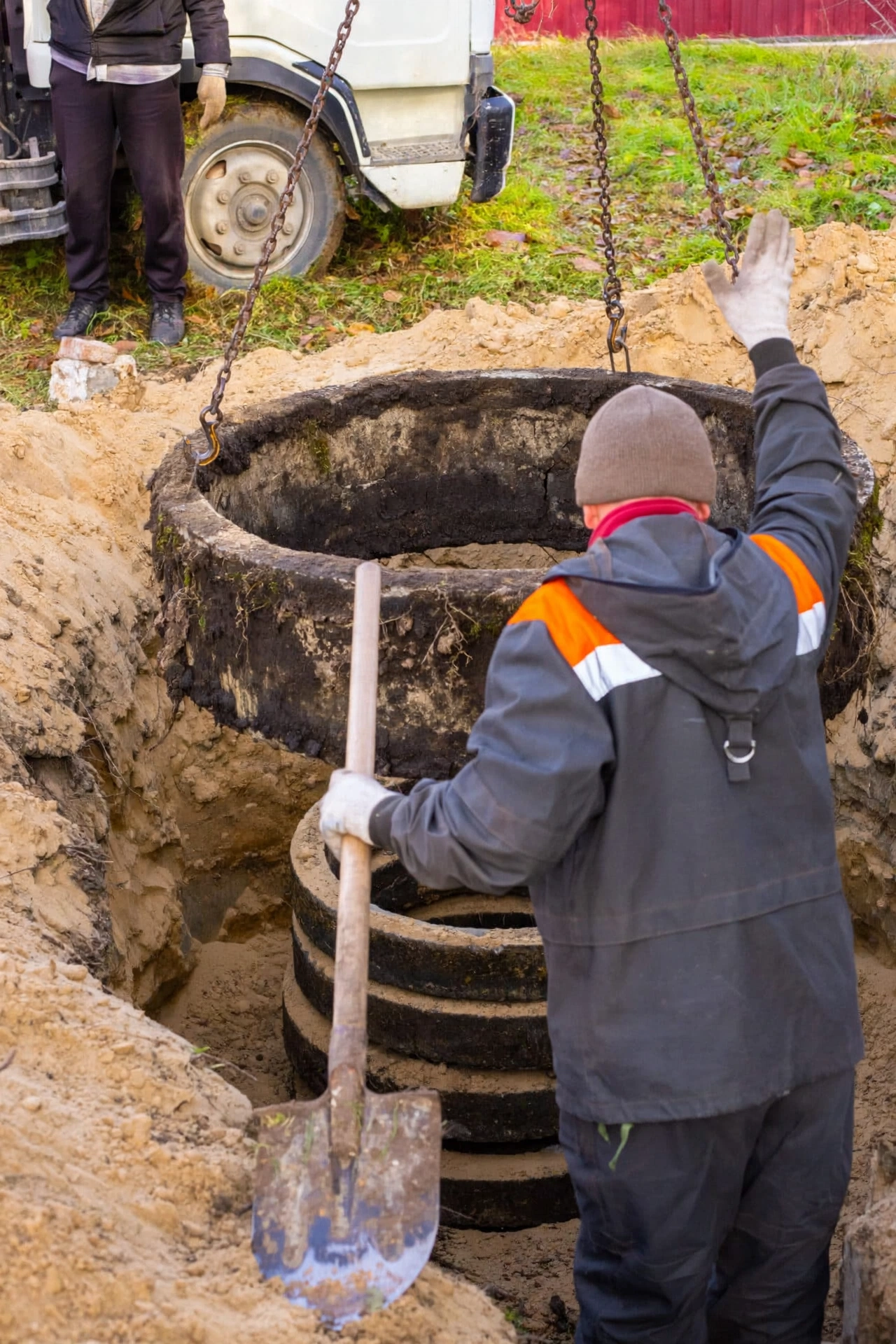
5. Install the tank, distribution box and soil absorption system
The tank is set level on prepared base, the baffles and effluent filter are installed, and risers are brought to grade. The distribution box is set level so the flow splits evenly, and the soil absorption system is built to the design elevations.
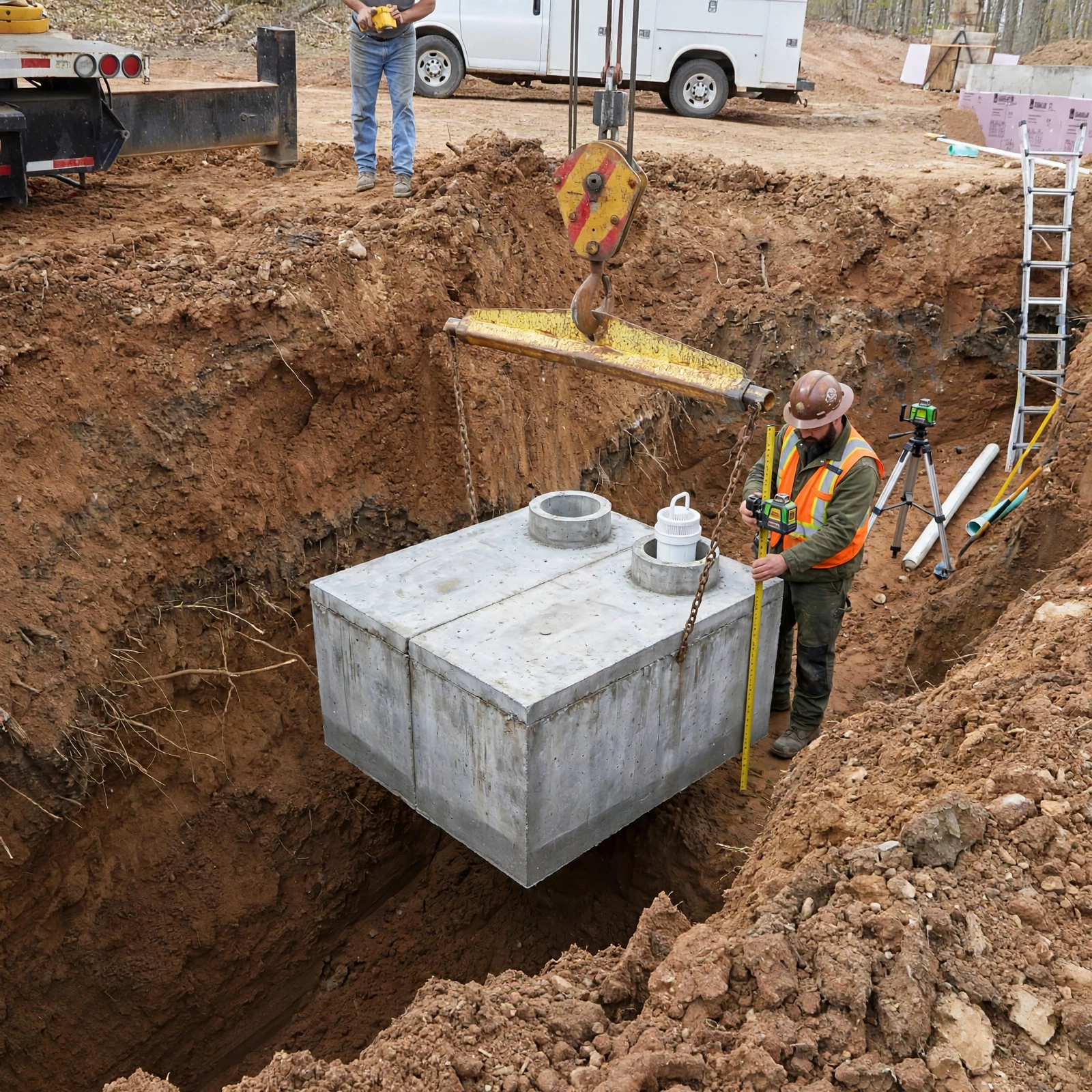
6. Backfill, grade and close out
The system is covered, the yard is graded back, and we complete the Board of Health approvals the permit calls for. You are left with riser lids at grade and a record of where everything sits.
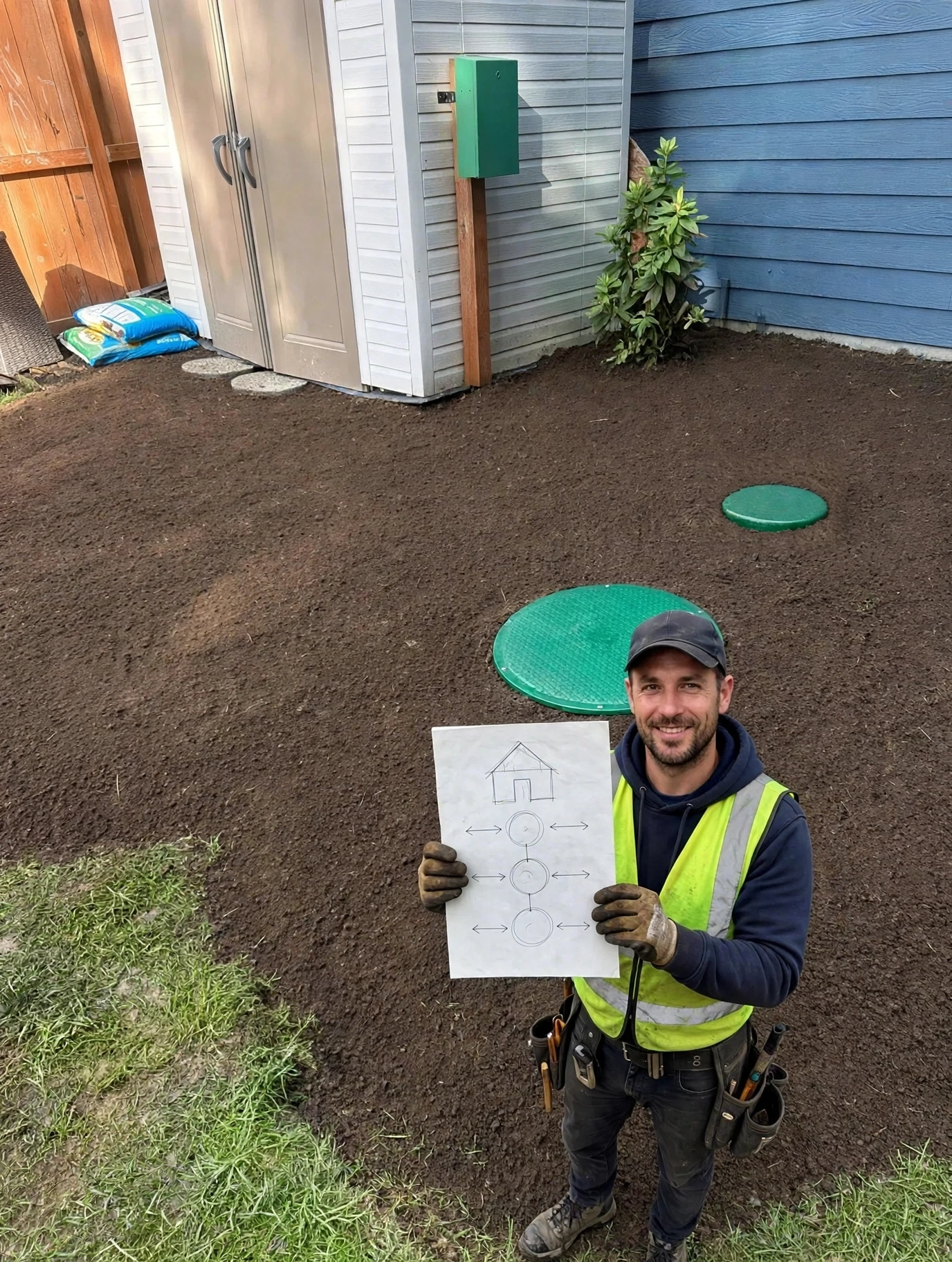
What a replacement involves on a small older lot
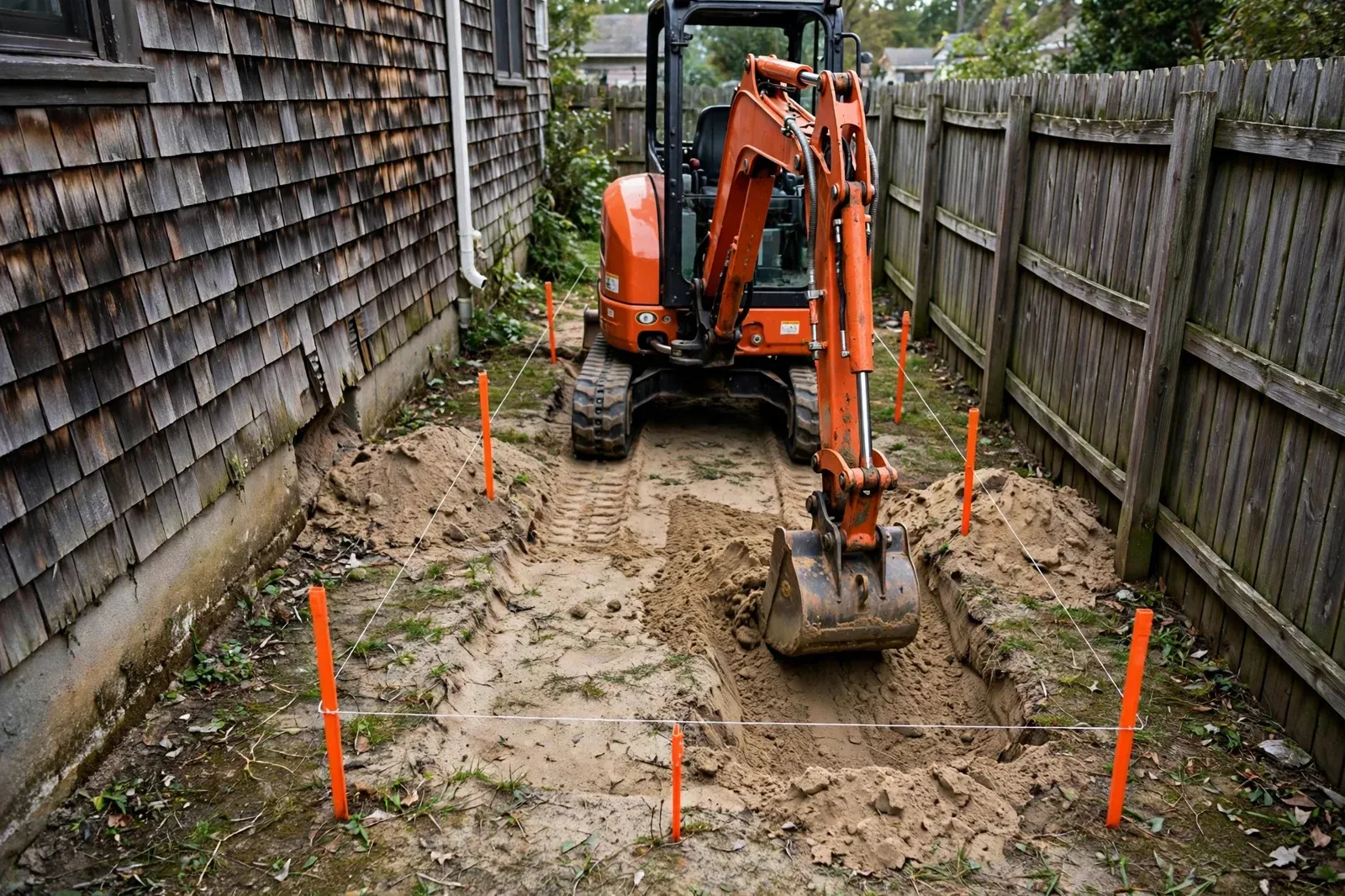
Older houses sit on older lots, and the lot is often the hardest part of the replacement. The cesspool went in where there was room in the 1960s, and the setbacks that apply now to wells, property lines, wetlands and the foundation may leave little room for a tank and a field.
Several things decide it. Soil and percolation control how much absorption area the design needs. Seasonal high groundwater controls how deep the field can sit, and in the Town of Barnstable the marginal-lot article asks for four feet of natural pervious soil above groundwater. Lot size and setbacks control where the field can sit at all. Truck and excavation access control how the job is done, since a narrow driveway or a house close to the road changes the equipment and the time.
Where the lot is tight, we price and design for it. The conventional replacement is $18,000 to $32,000, and on tight lots it is $25,000 to $40,000. Where full compliance cannot be reached, a Local Upgrade Approval, with the Board of Health's agreement, is the route to the maximum feasible compliance for that lot.
Nitrogen adds a second question. Since July 7, 2023, Cape Cod's nitrogen-sensitive watersheds require new construction to use a nitrogen-reducing system. For existing systems the regulation runs the upgrade five years from the end of the Notice of Intent and Application Period, unless an application for the area is filed, and then the watershed permit route governs. The Town of Barnstable applied on September 1, 2023, the first Cape community to do so, and at its December 2025 annual report was awaiting MassDEP's next steps. For a Barnstable property we check your parcel against the town's plan and phasing, and we do not give you a single deadline that the rule does not give.
That plan also matters for what you build. The town's 30-year wastewater plan is in its first ten-year phase, which runs from 2021 to 2030 and covers about 4,700 properties. If your street is in a sewer area, a building abutting a way with a public sewer must connect within 6 months of the Board of Health's letter, or within 60 days if the system has hydraulically failed, and the old system is removed or filled in. The one-time assessment is capped at $10,000 per sewer unit, and the average residential sewer bill runs about $490 a year. That is worth knowing before you spend $18,000 or more on a new system under a street the sewer is about to reach.
What it costs
These are our prices. Final figures depend on the bedrooms and design flow, the soil, the groundwater, the lot and the access to the work.
- Conventional septic system replacement: $18,000 to $32,000. On tight lots, $25,000 to $40,000.
- Nitrogen-reducing I/A system: $32,000 to $55,000. On tight lots and high water table, $45,000 to $75,000 or more. An I/A system carries a required maintenance contract at $400 to $900 a year, with pumping every 1 to 2 years.
- Title 5 inspection: $475 to $850. Booked together with pumping, $600 to $1,200.
- Distribution box repair: $500 to $1,500, for a system whose only problem is an uneven box.
- Septic pumping, a 1,500-gallon tank: $375 to $575, which is the routine care the new tank will need.
For a cesspool the choice between conventional and I/A is usually set by the parcel, not by preference. Groundwater, lot size and watershed status decide it, and we tell you which applies at the design stage, before the number is final.
Help paying for the work
Three public programmes help with the cost. They are not our prices, and each has its own terms.
Cape Cod AquiFund is Barnstable County's Community Septic Management Loan Program. It makes betterment loans for repair, replacement, I/A installation or sewer connection. The loan is paid directly to the contractor and repaid on your property tax bill over up to 20 years. Septic work carries the 4% and 5% rates, with 5% where the property is, or is expected to be, listed for sale within 12 months. The 0% and 2% rates are for new sewer connections and are income-tiered. The County authorized a further $20 million for the program in 2026.
The state septic tax credit (M.G.L. c. 62, section 6(i)) covers a principal residence. It is 60% of the cost of repairing or replacing a failed cesspool or septic system, with costs capped at $30,000, up to $4,000 a year and $18,000 in total, from tax year 2023.
The MassHousing Septic Repair Loan is up to $25,000 for owner-occupants of one- to four-family homes. Income limits apply.

Questions
How do I know whether I have a cesspool?
Open it. A cesspool is a single pit with an inlet and no outlet to a leach field, usually under a round or square cover. Records at the Board of Health, an old plot plan or a prior Title 5 report may name it, and a Title 5 inspection settles it on the state form.
Does Title 5 make me replace a cesspool just because I have one?
No. A cesspool is not condemned by existing. It must be upgraded when it shows hydraulic failure, sits extremely close to a water supply or otherwise fails to protect health and the environment, and always before any increase in design flow.
When does a cesspool count as failed?
Among the criteria: sewage backs up, effluent surfaces or reaches surface water, the liquid stands within 6 inches of the inlet, or it holds less than half a day's design flow above the liquid. Needing pumping more than four times a year, any part below high groundwater, and a cesspool too close to a water supply also fail it.
Can a cesspool get a conditional pass?
No. A cracked tank, a broken pipe, an uneven distribution box or a pump chamber can be repaired with Board of Health approval and conditionally passed. A soil absorption system or a cesspool cannot.
How long do I have to replace it after a failure?
Two years, unless the Board of Health or MassDEP sets another schedule, and sooner where there is an imminent hazard. The duty sits with the owner even if the sale falls through.
What does cesspool replacement cost?
A conventional septic system replacement is $18,000 to $32,000, and on tight lots it is $25,000 to $40,000. If the parcel calls for a nitrogen-reducing I/A system, the price is $32,000 to $55,000, or $45,000 to $75,000 or more on tight lots with a high water table, plus the maintenance contract at $400 to $900 a year.
What makes a lot count as tight?
Setbacks to the well, property lines, wetlands and foundation, small lot size, shallow clean soil above seasonal high groundwater, and difficult truck and excavation access. Any of these can push the work from the conventional figure to the tight-lot figure.
Will I need an I/A system?
It depends on the parcel: its groundwater, lot size and watershed status. New construction in a nitrogen-sensitive watershed must use one, and for existing systems the timing follows the watershed rules and the Town of Barnstable's plan. We check your parcel against them and tell you at the design stage.
Can I sell the house before the cesspool is replaced?
The rule puts the duty to upgrade on the owner whether or not the sale closes, and the seller gives the buyer a copy of the inspection report. How the cost is shared is between you, your agent and your attorney. For financing, AquiFund's 5% rate applies when a property is, or is expected to be, listed within 12 months.
Can I add a bedroom if I have a cesspool?
Not before the system is upgraded. Flow cannot be increased beyond the approved design, and Title 5 sizes a home at 110 gallons per day per bedroom, with 330 as the minimum.
How often should a cesspool be pumped?
MassDEP's guidance for septic systems is at least once every 3 years for a home without a garbage disposal and every year with one. A cesspool that needs pumping more than four times a year has failed, and that is the point at which more septic maintenance stops being the answer.
Are cesspools banned?
For new construction, since 1995. Existing cesspools are not banned by the state, though some Cape towns have adopted their own rules, so check with your local Board of Health.
What happens to the old cesspool?
It is pumped out and then removed or filled in, as the rules require, so nothing is left to collapse. Where a house connects to a public sewer in the Town of Barnstable, the old system must be removed or filled in.
Is any financial help available?
Yes. Cape Cod AquiFund loans are repaid on the tax bill over up to 20 years. The state tax credit is 60% of eligible costs up to $4,000 a year and $18,000 in total for a principal residence, and MassHousing offers a Septic Repair Loan of up to $25,000 for owner-occupants, with income limits.
Call Barnstable Septic at (774) 619-8331, Monday to Friday, 9:00 AM to 5:30 PM, or send the form below. It requires only your name and phone number. Everything else is optional: the address of the house, the number of bedrooms, whether a sale is pending, what the system has been doing. The more details you give, the better we are able to help you.