Barnstable SepticHyannis · Cape Cod
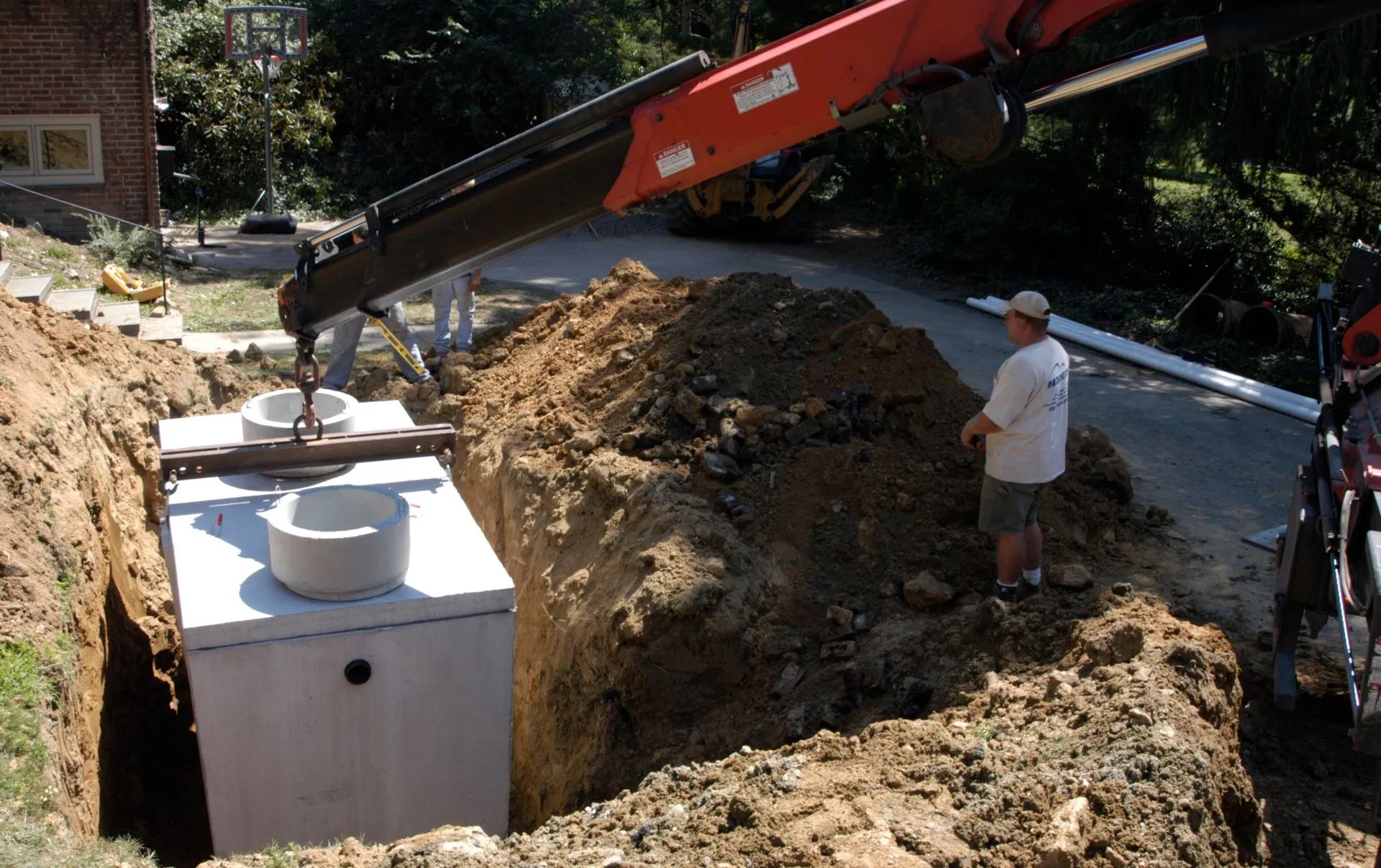
Open excavation behind a Cape-style house with a new concrete septic tank set in the ground, pipe runs laid out and an excavator at the edge of the lot.

Projects & Gallery

Septic work across Barnstable, Yarmouth and Dennis, shown by the job

Call (774) 619-8331

A tank set and bedded before backfill. The inlet and outlet pipes are checked for fall, because a tank that settles unevenly sends flow to one side of everything downstream.

Barnstable Septic works out of Hyannis in the Town of Barnstable, and these photographs are the quickest way to see what the work involves. Some of it is septic system installation on a site where the old arrangement can no longer be patched, and some is a septic system replacement planned around a closing date. Here in the Mid-Cape the same pages of the rulebook keep coming up, so you will also see nitrogen-reducing I/A systems going in where lot size or groundwater call for one.

The smaller jobs sit beside the big ones. A cesspool replacement often starts with a surprise at one of the Title 5 inspections that come with a sale, and a routine septic pumping is where most owners first see the inside of their own tank. If you are looking at a system of your own and want to know which of these pictures it resembles, call (774) 619-8331 or send the short form at the bottom of this page. A name and a phone number are all it needs.

Three jobs, told in full elsewhere

Each of these three entries is a photograph from a job with its own page. The caption says what the picture shows about the work. The story itself is told where the link points.
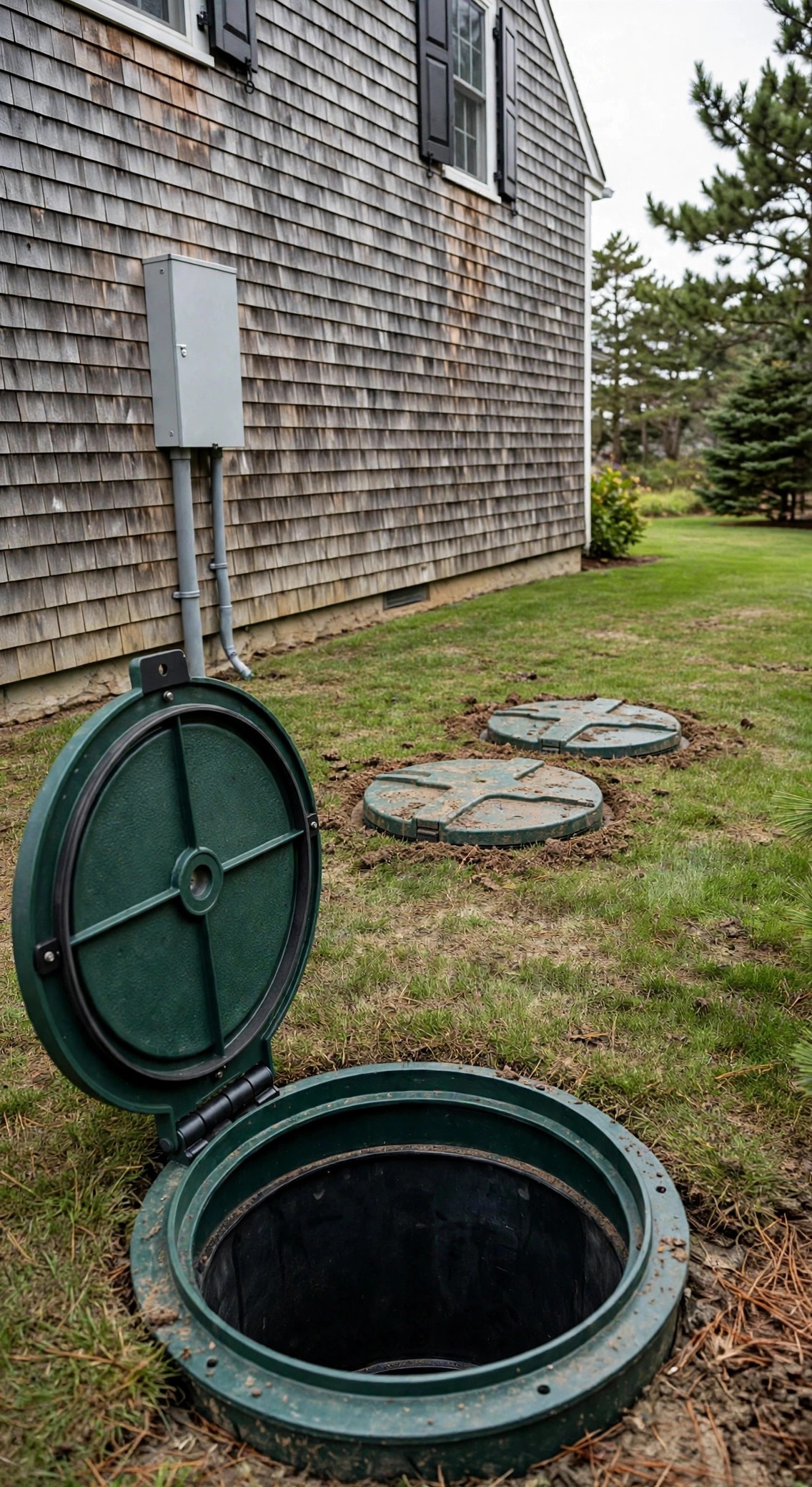
Nitrogen-reducing I/A treatment unit beside a Hyannis house with its lid raised, a wall-mounted control panel nearby and access risers flush with the lawn.
The Hyannis I/A upgrade. An I/A system adds a treatment stage ahead of the soil absorption area to cut the nitrogen in the effluent. The control panel and alarm are the parts the owner will see every day. Installation of this kind runs $32,000 to $55,000, or $45,000 to $75,000 or more on tight lots and high water table, and the required maintenance contract is $400 to $900 a year. The job is told in full in the featured job on the homepage.
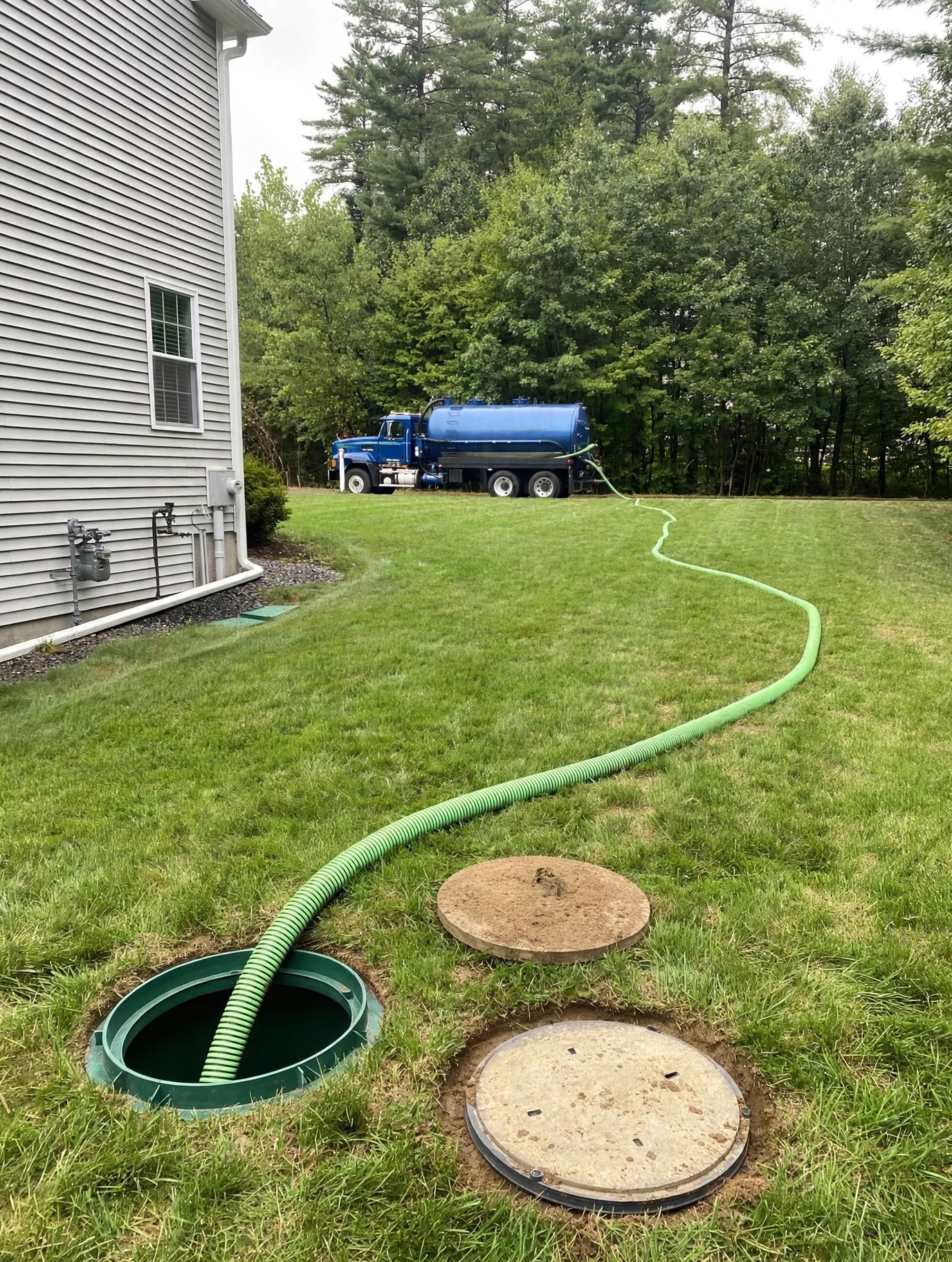
Seasonal cottage in South Yarmouth with tank riser lids uncovered in the side yard and a pump truck hose run across the grass.
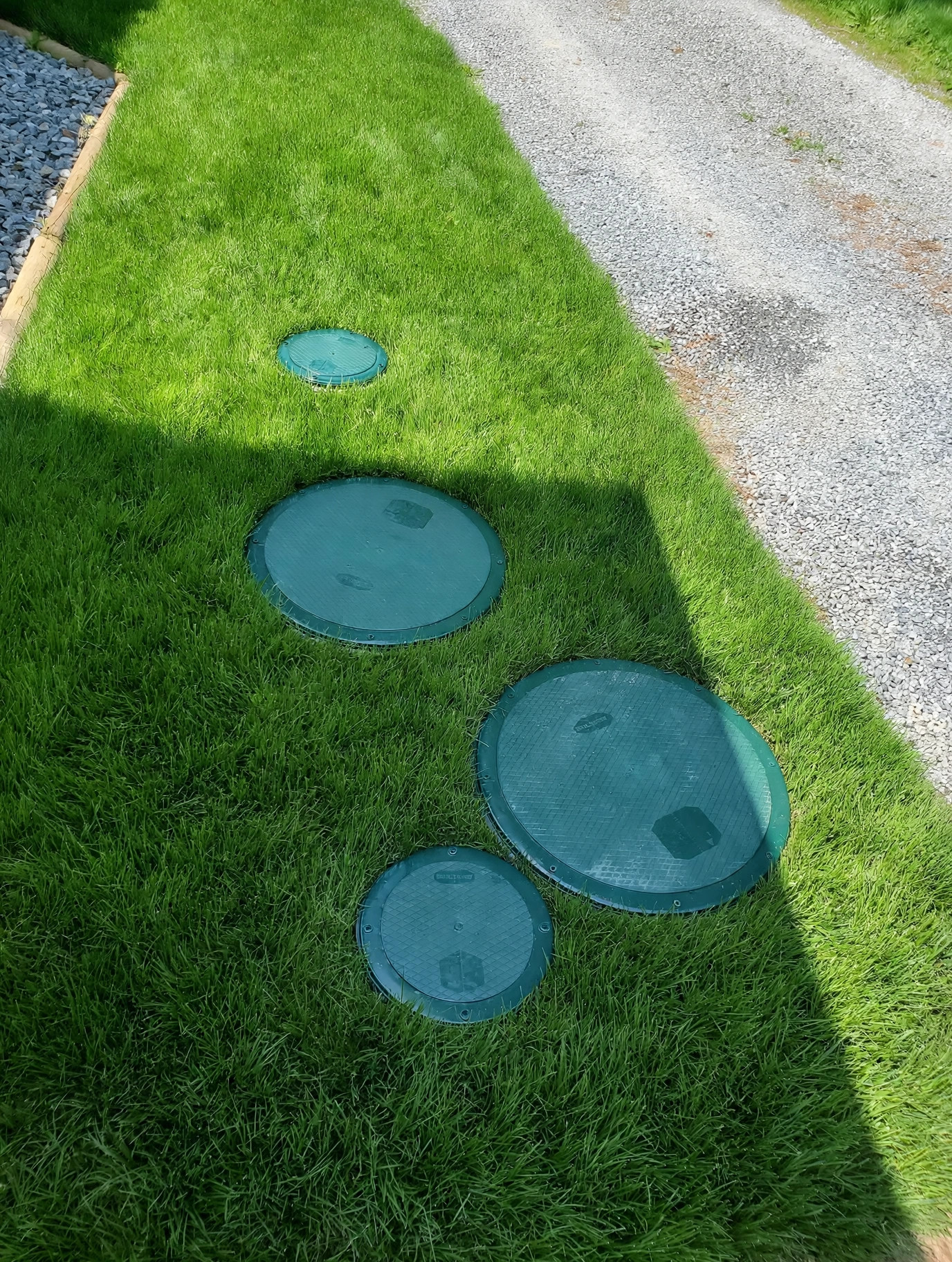
The South Yarmouth seasonal cottage. Risers bring the tank lids to grade, so a pump-out and a look at the baffles and effluent filter do not start with a shovel. A cottage that sits idle in winter and takes full load in summer is judged by its tank, not its calendar. Pumping a 1,500-gallon tank is $375 to $575. This job is told in full on the Yarmouth page.
Completed conventional septic replacement in Dennis Port with fresh loam raked over the leach field area and new tank risers marked with stakes.
The Dennis Port replacement. A conventional system is sized from the bedroom count at 110 gallons per day per bedroom, with a 330-gallon minimum, so the number of bedrooms on the deed shapes the design. Conventional replacement is $18,000 to $32,000, and $25,000 to $40,000 on tight lots. This job is told in full on the Dennis page.

Looking at a system like one of these?

Tell us the town and what you are facing, whether that is an inspection date, a tank that is slow to drain or a letter from the town. Call (774) 619-8331, Monday to Friday, 9:00 AM to 5:30 PM, or use the form. Name and phone number are required. Everything else is optional, and the more details you give, the better we are able to help you.

Component work, one job at a time

These entries stand on their own. They are the parts of a septic system that a homeowner sees only when something is being done to them.
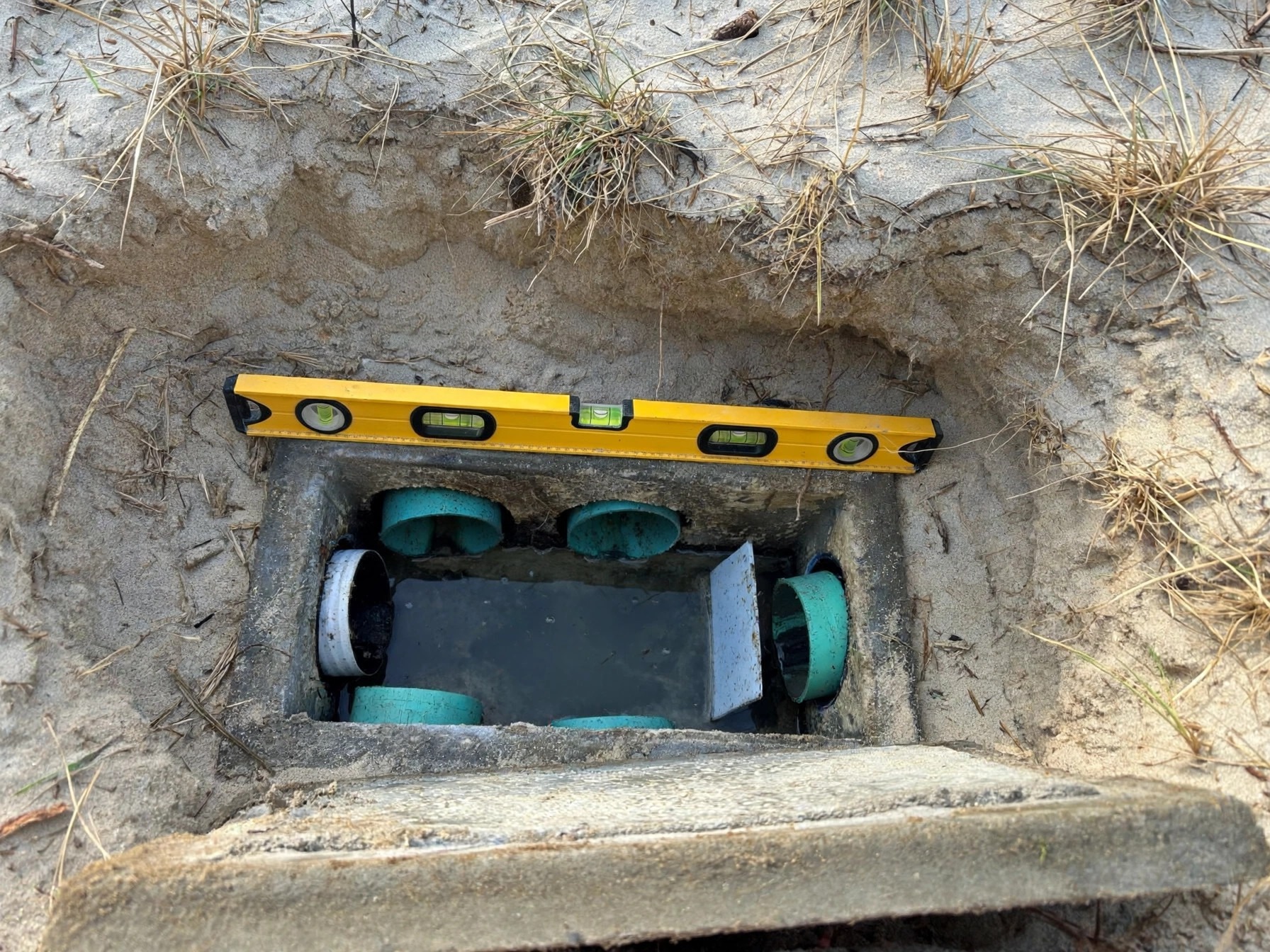
Open distribution box at ground level with its lid lifted off, one outlet lower than the others and a level laid across the top.
A distribution box caught uneven. The box is meant to split flow evenly among the lines of the leach field. When one outlet sits lower, as here, that line takes the load and fails early, and an uneven box can leave a conditional pass on a Title 5 report. Distribution box repair is $500 to $1,500.
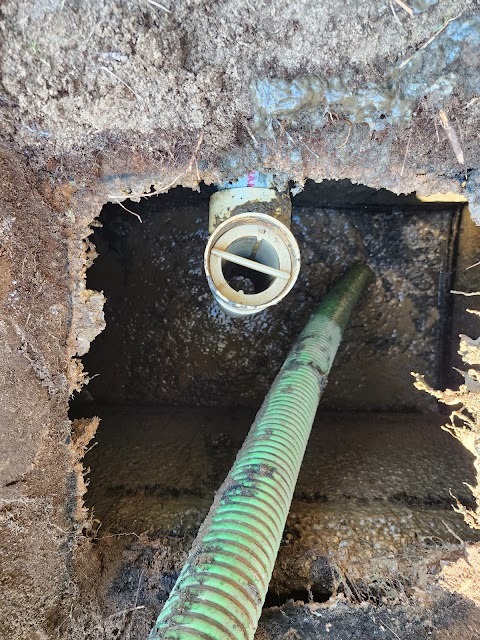
Septic tank being pumped out with the hose in the open manhole and the outlet tee visible above the liquid line.
A tank at its pump-out. The depth of sludge and scum measured against the outlet tee decides when a tank must be pumped, and the empty tank shows the baffles, walls and inlet for the first time since the last visit. Pumping a 1,500-gallon tank is $375 to $575.
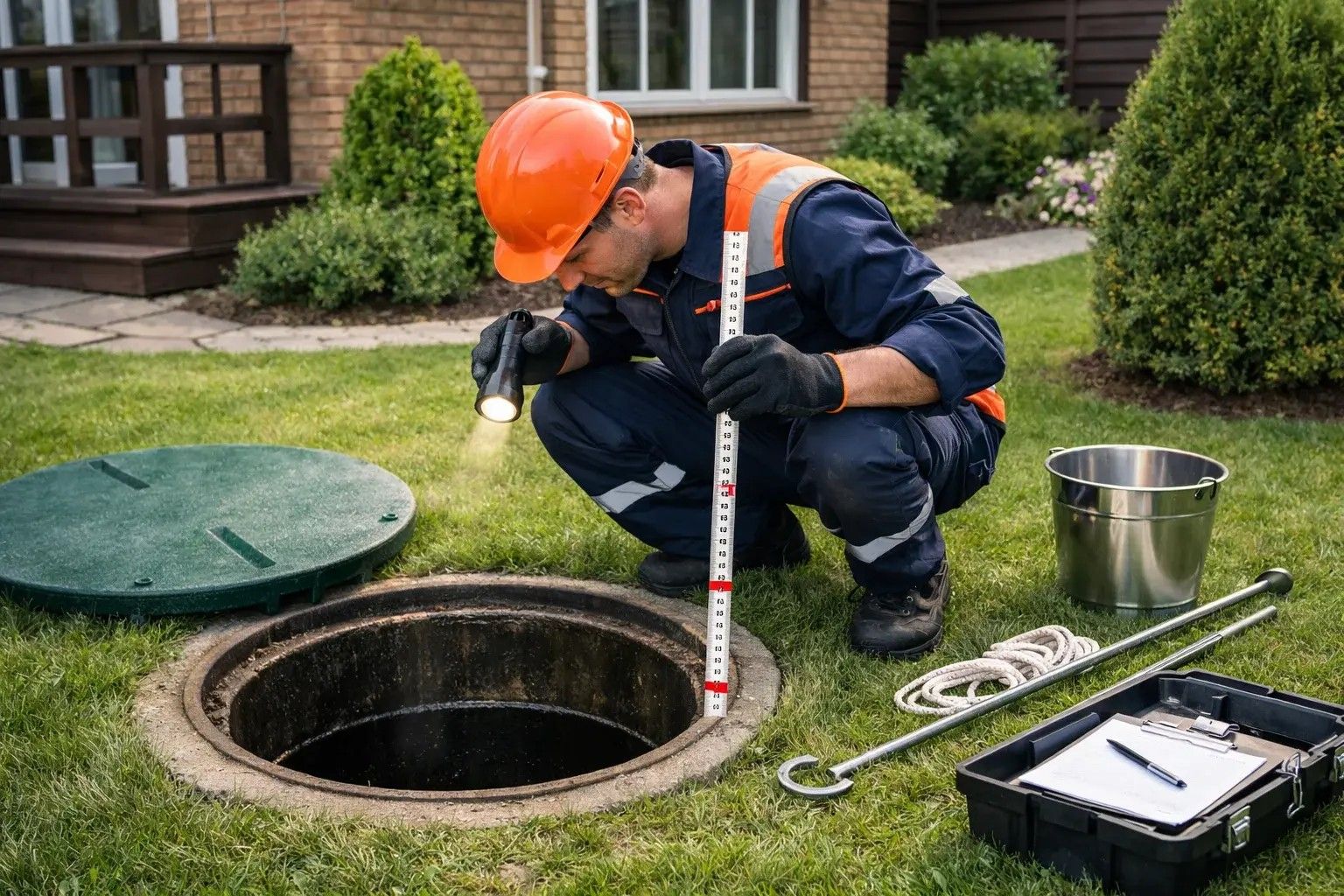
Open septic tank during a Title 5 inspection with a measuring stick, flashlight and the state inspection form on a clipboard resting on the lid.
A Title 5 inspection in progress. The inspector checks the tank, the distribution box and the soil absorption area, and the report goes on the state form to the Board of Health. The inspection is $475 to $850, or $600 to $1,200 when booked together with pumping.
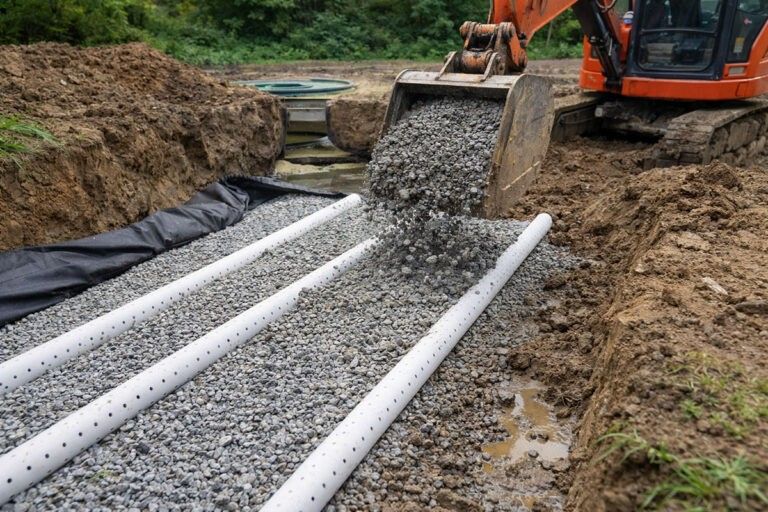
Leach field trench filled with washed stone and level perforated pipe, with an excavator bucket spreading stone along the next trench.
A leach field going in. Washed stone and level perforated pipe spread the effluent across a wide area of soil, and the soil, not the pipe, does the final treatment. Local conditions matter here, including the depth to seasonal high groundwater and the setbacks on the lot.
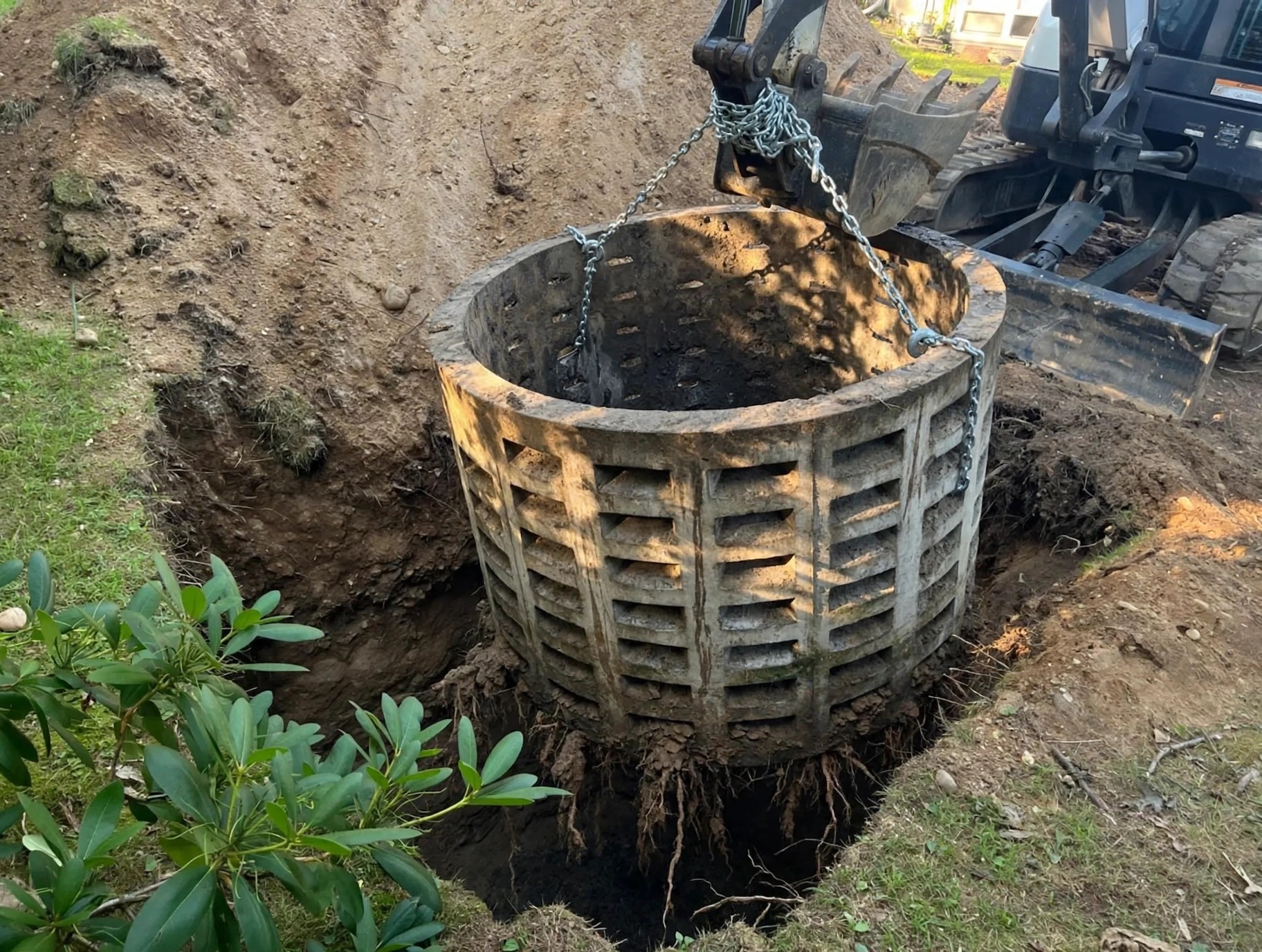
Old stacked-stone cesspool exposed in a dug pit, partly pumped out, with an excavator bucket lifting a ring from the side.
A cesspool coming out. Cesspools have been banned for new construction since 1995, and many are found for the first time at a transfer inspection. A cesspool that shows hydraulic failure must be upgraded, and so must one that stands in the way of an increase in design flow. The old structure is pumped and removed or filled in, and the replacement system is installed in its place.

Start with a call or a short form

If any of these photographs looks like your yard, the next step is a conversation about your system. Call Barnstable Septic at (774) 619-8331, Monday to Friday, 9:00 AM to 5:30 PM, or fill in the form below with your name and phone number. Add your town, your closing date or what you have noticed, if you like. The more details you give, the better we are able to help you.

The more details you give, the better we are able to help you.