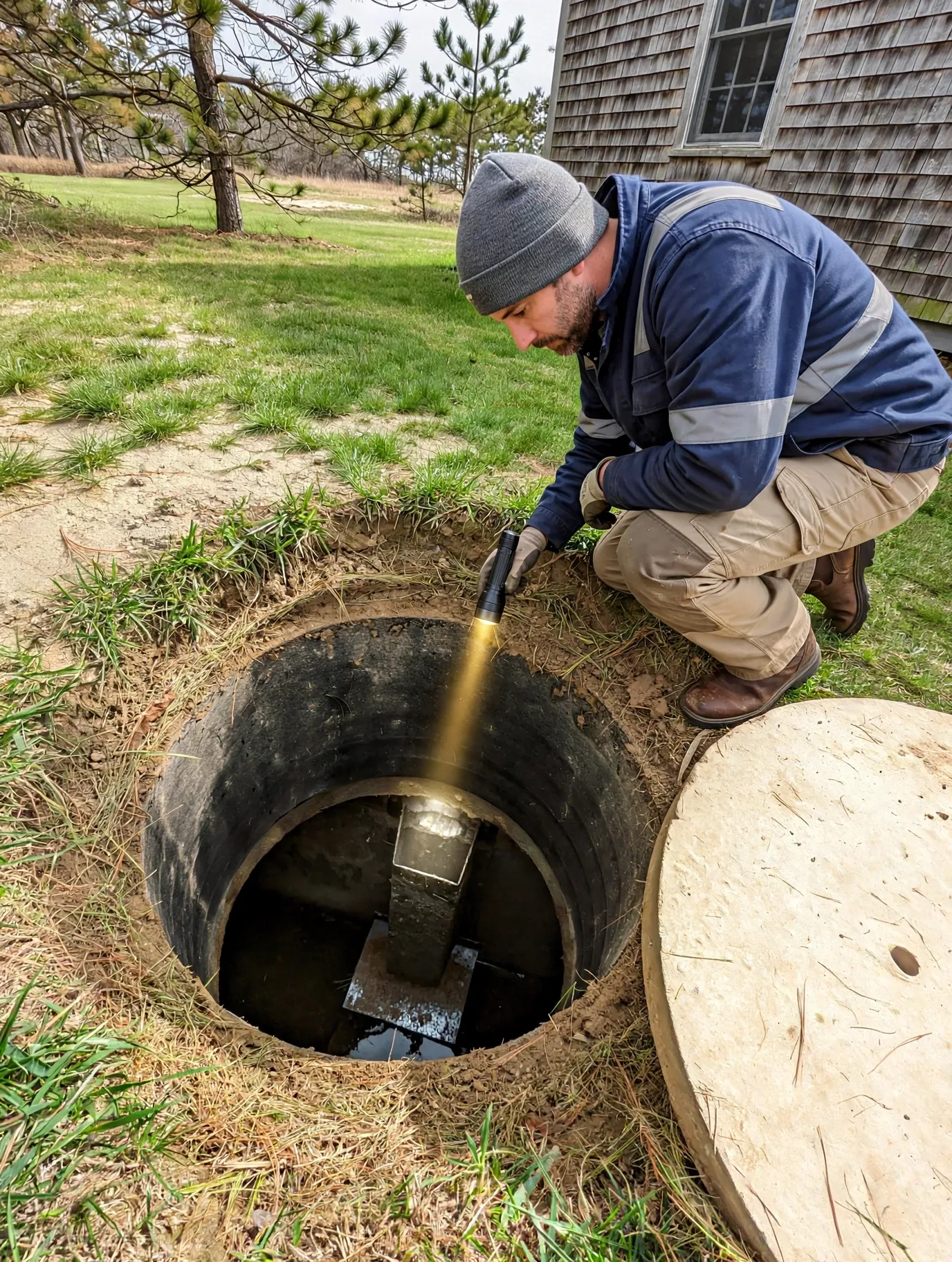
Barnstable Septic is a Hyannis-based company, and Title 5 inspections are a steady part of our week for homeowners in the Town of Barnstable, Yarmouth and Dennis. Most of the calls come from sellers with a closing date and from buyers who want to know what they are getting. Often the tank is due for septic pumping anyway, so we do the two together. The inspection then leads one of three ways. A clean pass needs nothing more than septic maintenance. A conditional pass means septic repairs on a named part. A failure means septic system replacement, and when the old system turns out to be a cesspool, cesspool replacement. Owners of nitrogen-reducing systems also call us for I/A system service ahead of a sale.
Call (774) 619-8331 or send the short form at the bottom of this section. It asks only for your name and a phone number. Everything else on it is optional, and the more details you give, the better we are able to help you. If a closing date is already set, tell us. The date decides how we schedule the work.
When Title 5 requires an inspection
The rule is 310 CMR 15.000, the state's septic code. It is simpler than most people fear, and it asks for an inspection at specific moments.
Property transfer. The system must be inspected within the 2 years before the transfer. If winter weather or frozen ground prevents an inspection at the time of sale, it may be done within 6 months after the sale, with written notice to the buyer. One inspection can cover more than one transfer inside the same window.
Other triggers. An inspection is also required when:
- a building or occupancy permit is needed for a change, such as an added bedroom, added restaurant seats or a change of use;
- the building footprint changes;
- a property is divided or combined;
- the Board of Health orders one.
Shared systems and condominiums of 5 or more units are inspected every 3 years.
The three-year extension. An inspection stays valid for 3 years if the system is pumped at least once a year after it and the pumping records are kept. That suits an owner who wants to hold a passing report through a slow market.
Who may inspect, and where the report goes
Only a MassDEP-approved System Inspector may inspect. The report is written on the state form and goes to your local Board of Health within 30 days, and the seller gives the buyer a copy. MassDEP does not regulate inspection fees, which is why prices vary so much from one company to the next. Ours are on this page.
What it costs
| Service | Our price |
|---|---|
| Title 5 inspection | $475 to $850 |
| Title 5 inspection booked together with pumping | $600 to $1,200 |
| Septic pumping, a 1,500-gallon tank | $375 to $575 |
| Distribution box repair | $500 to $1,500 |
Where the price lands in the inspection range depends on how easily the tank, box and other components can be reached. A buried cover that needs locating takes longer than a riser at grade. Booking with pumping is the sensible default when the tank has not been pumped recently, because the tank has to be emptied for the inspector to see its walls and baffles anyway.
How an inspection goes, step by step
1. Records and locating the system.
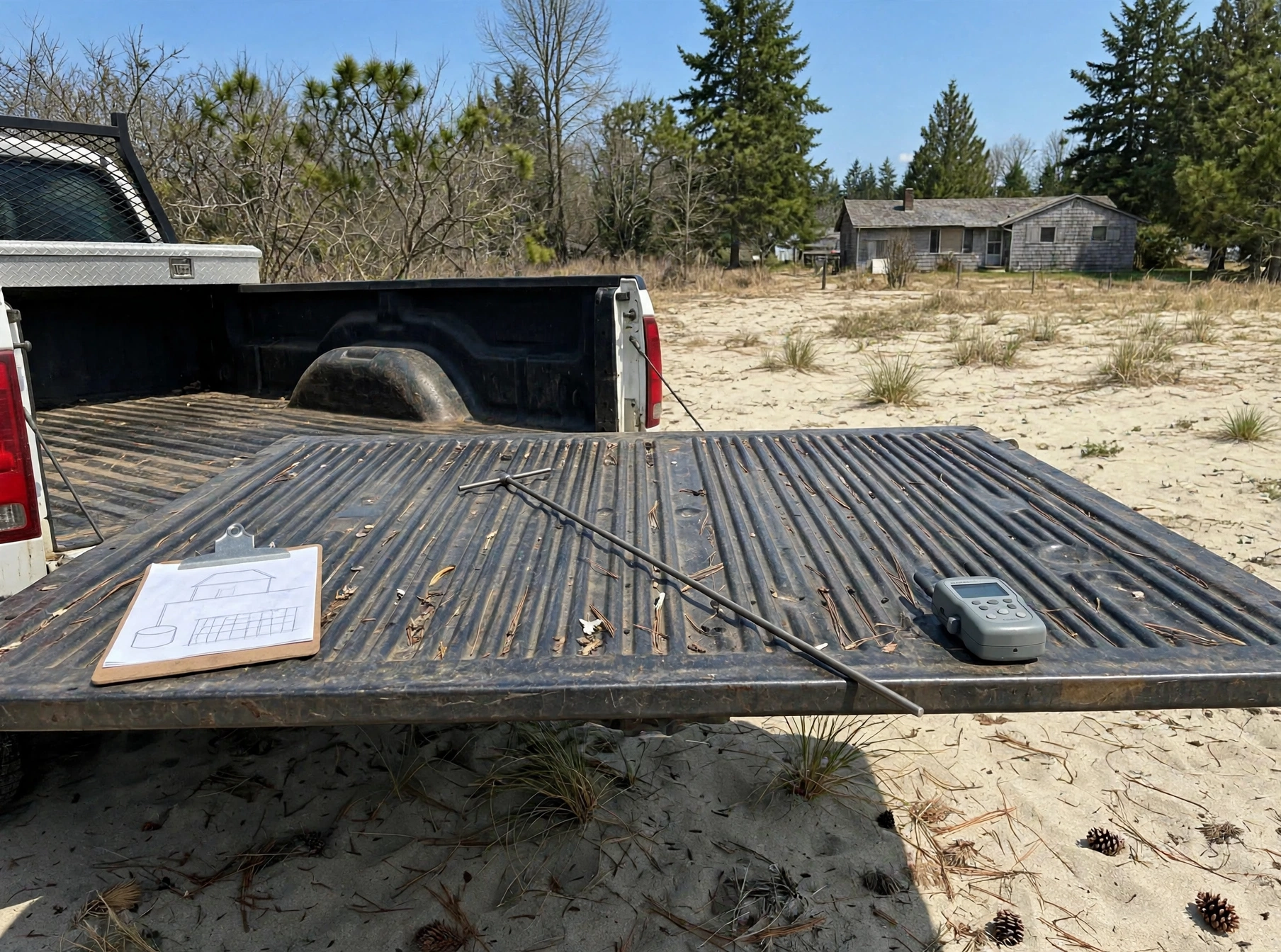
We look for the existing plan, the house bedroom count and any earlier reports. Then we find the tank, the distribution box and the soil absorption area on the ground.
2. Opening the tank and pumping.
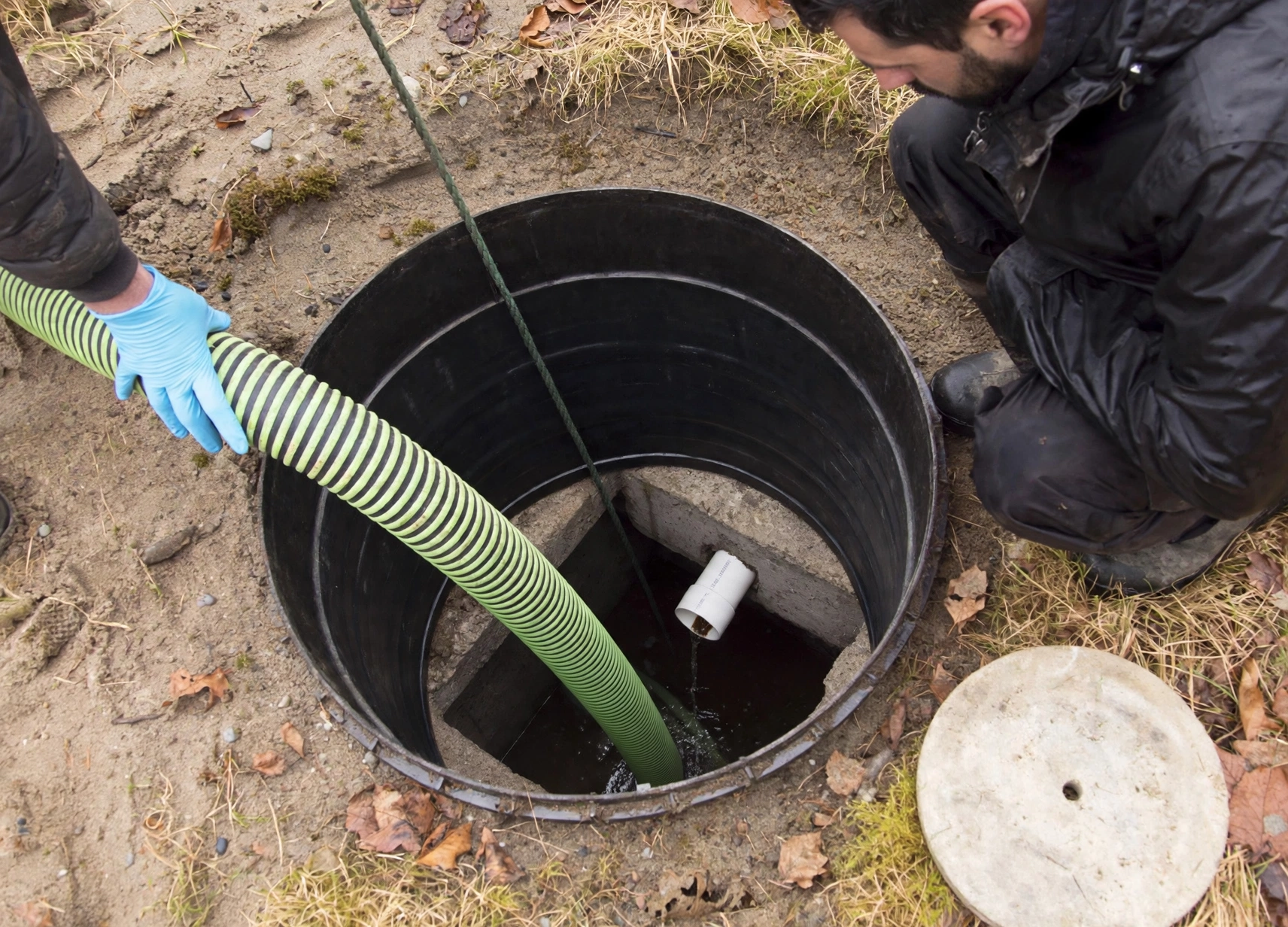
Covers come off. The inspector notes the liquid level and then the tank is pumped so the walls, baffles and floor can be seen.
3. Tank and baffles.
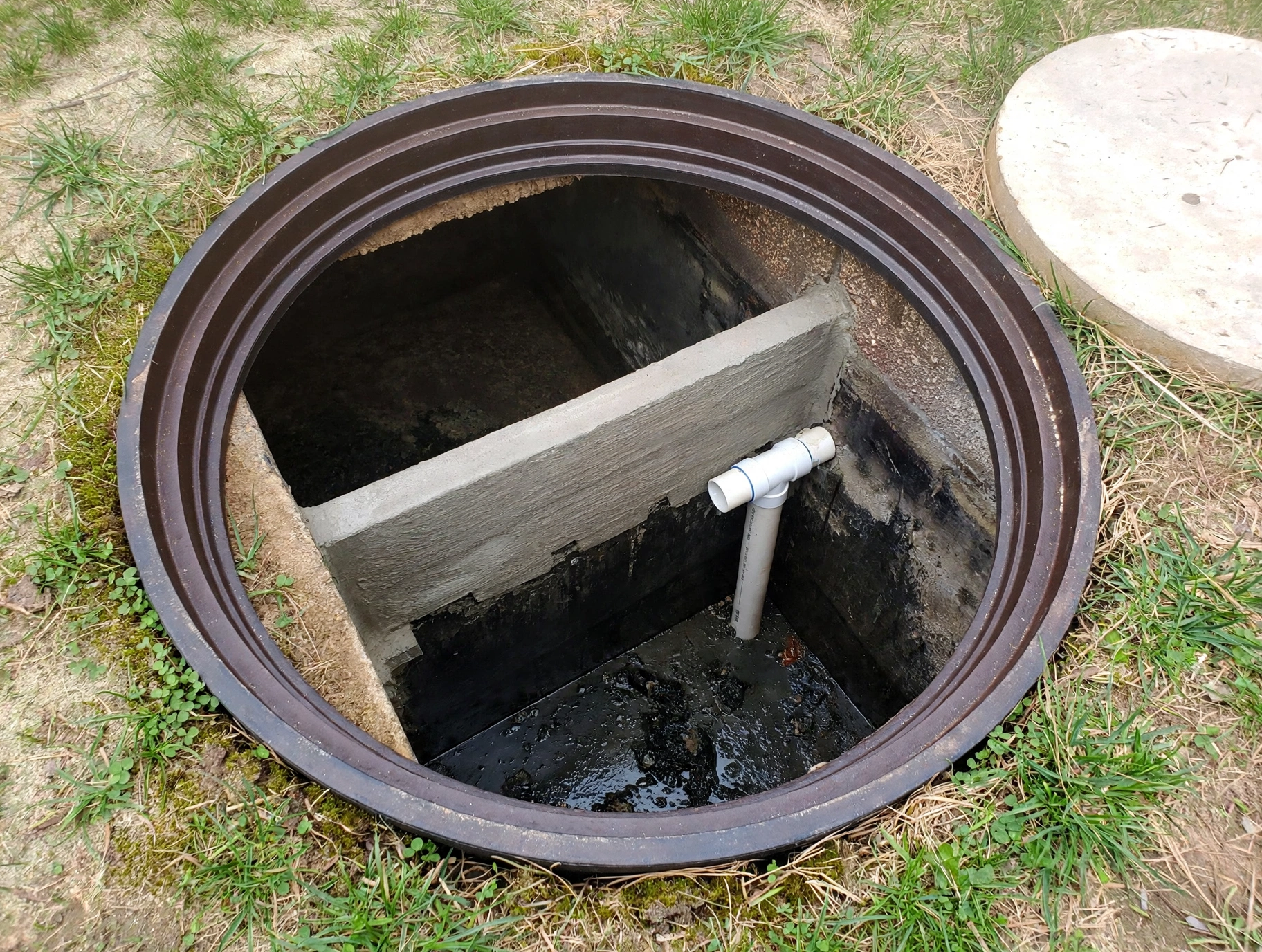
The inspector checks the tank's material and condition, then the inlet and outlet baffles, the tees and the effluent filter if there is one.
4. The distribution box.
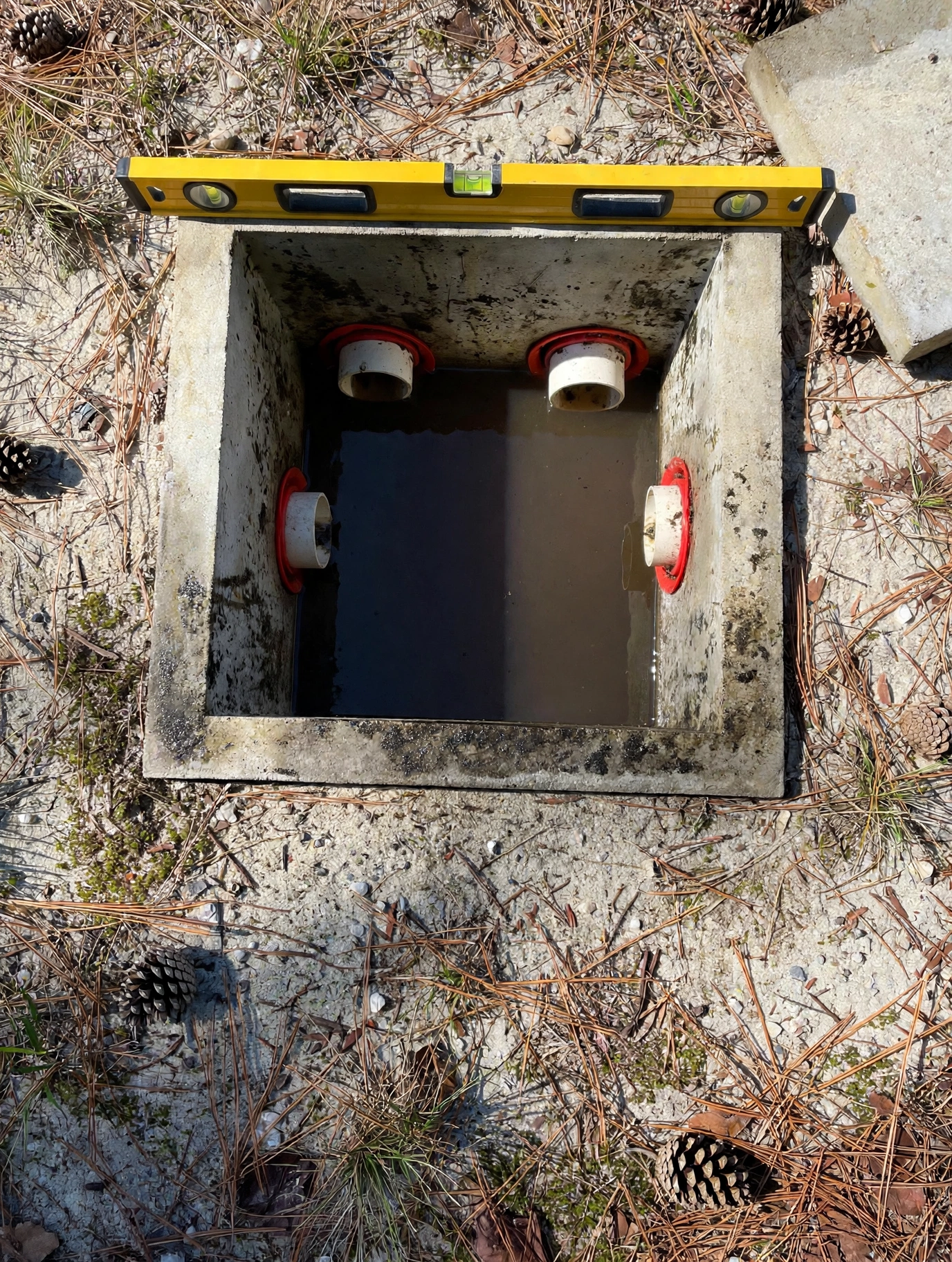
The box is opened and the inspector checks whether liquid stands above the outlets and whether the box has settled so the outlets sit uneven.
5. Pump chamber and soil absorption system.
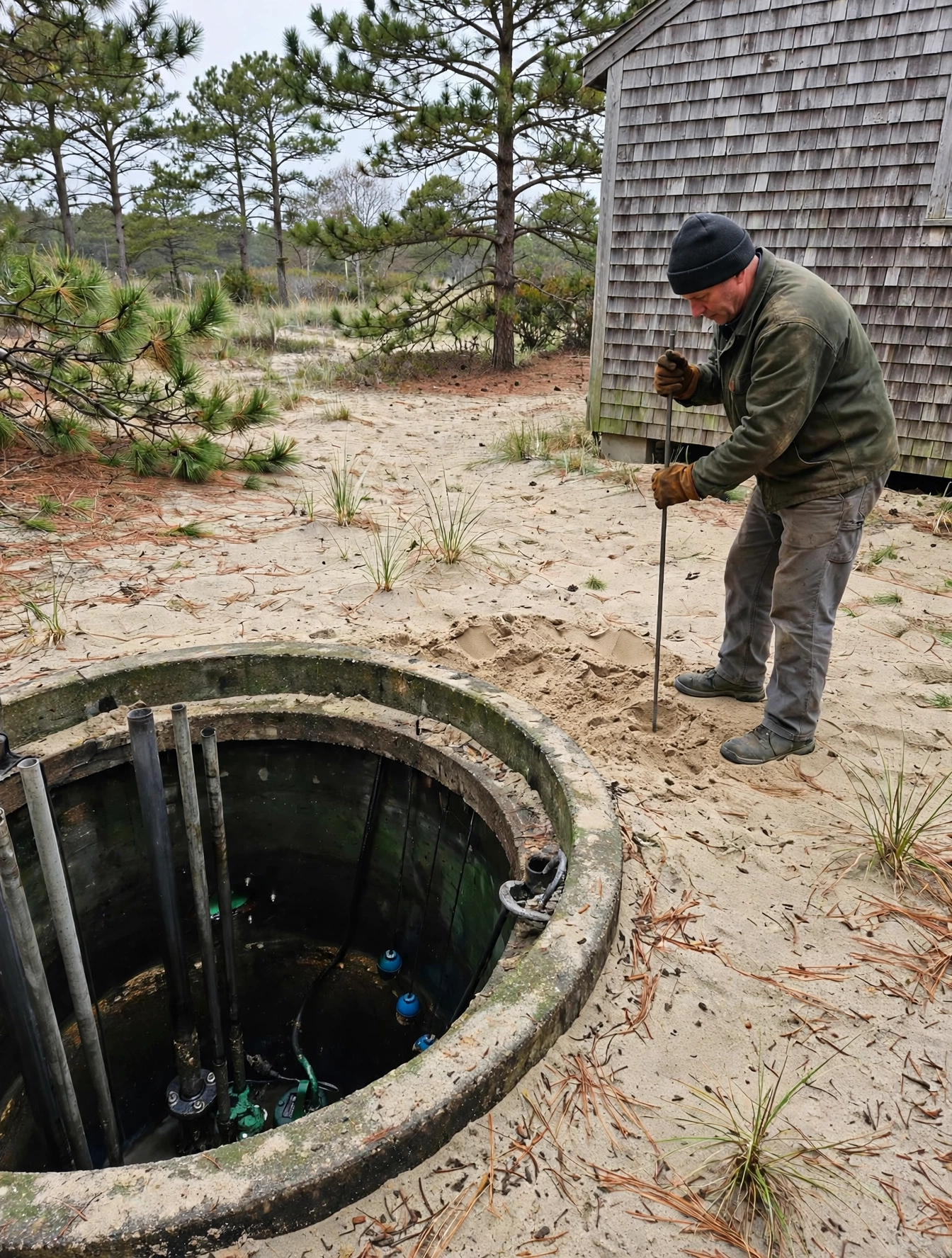
If the house pumps effluent uphill, the pump chamber, floats and alarm are tested. Then the inspector walks the leach field, probing for wet ground, surfacing effluent and signs of breakout.
6. The report.
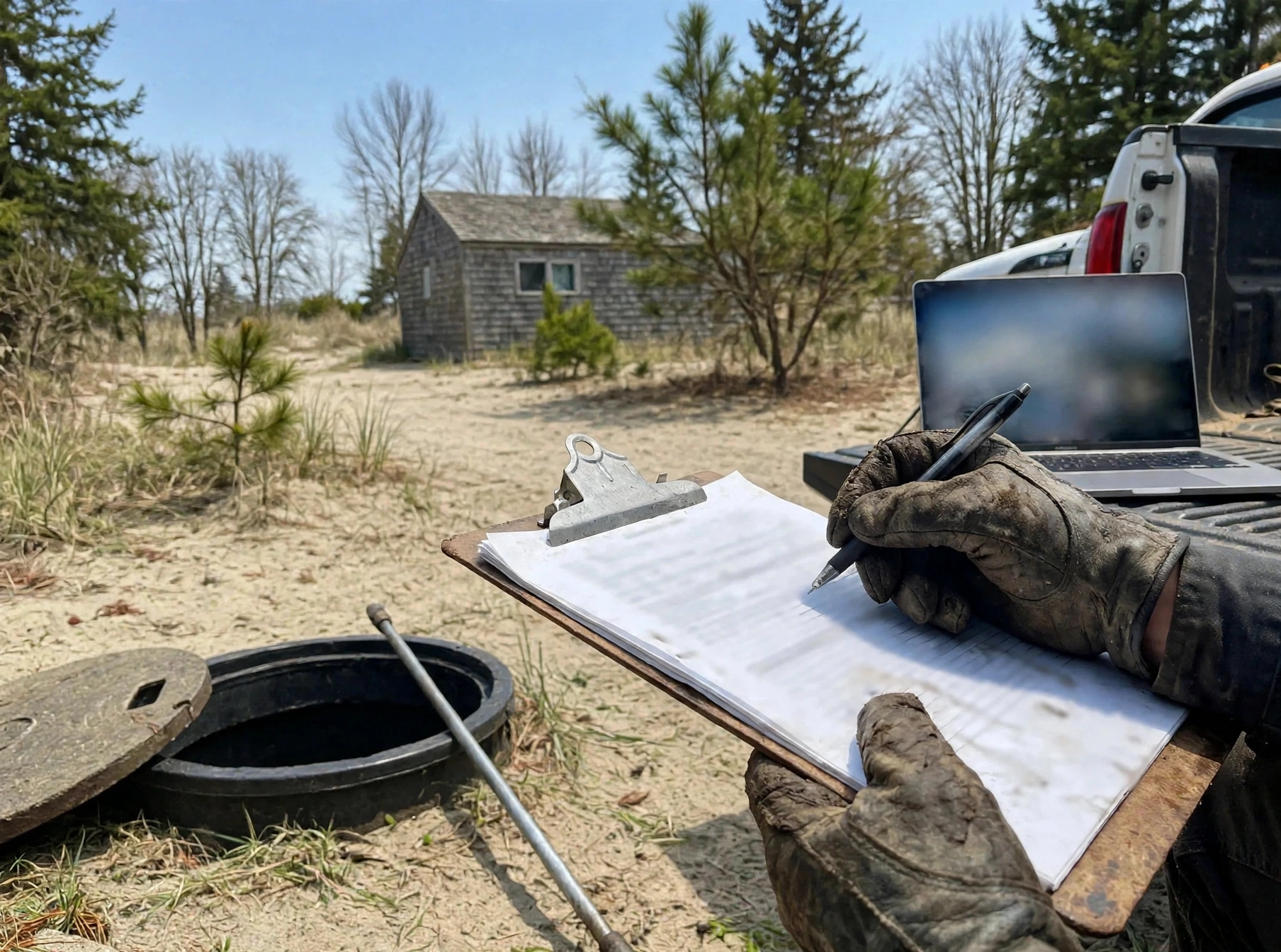
The result goes on the state form. The seller gets a copy and the Board of Health gets the filing within 30 days. We tell you the result by phone before the paper goes out.
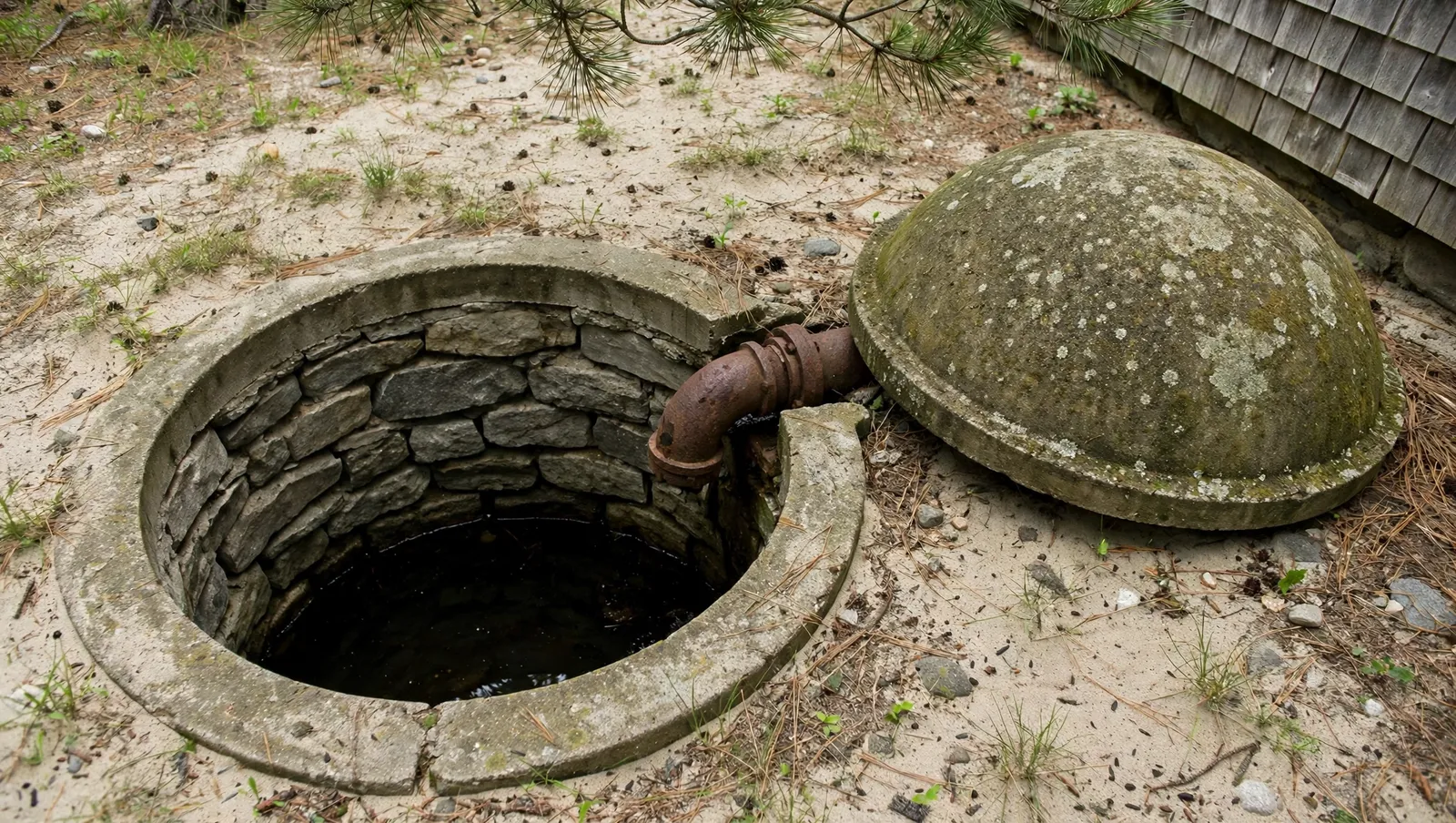
Cesspools found along the way. Some homes turn out to have no leach field. The system is a cesspool, usually a ring or pit that the seller's family never knew about.
Inspection day, booked around your closing
If a closing is on the calendar, call (774) 619-8331 and tell us the date. Or use the form: name and phone are the only required fields, and the optional ones carry this line: The more details you give, the better we are able to help you.
What an inspector would find
Answer as an inspector would find it, group by group. The outcome follows the same definitions the inspection itself uses, and the sections below this checker set the same outcomes, failure criteria and upgrade duty out in full.
Is sewage backing up into the house or a fixture?
Is effluent ponding, breaking out at the surface, or reaching surface water?
How does the inspector find the tank?
Does the system need pumping more than four times a year?
Does liquid in the distribution box stand above the outlet pipes?
Is the distribution box uneven?
Is a pipe broken?
Does the pump chamber need repair?
Does any part of the system sit below high groundwater?
Is there a cesspool on the lot?
Is the cesspool's liquid within 6 inches of its inlet, or does it hold less than half a day's design flow above the liquid?
Does a cesspool or privy sit too close to a water supply?
Fail
The system must be upgraded. A failed system must be upgraded within 2 years, unless the Board of Health or MassDEP sets a different schedule. An imminent hazard means sooner. The duty belongs to the owner, even if the sale falls through. Until the upgrade is done, the flow may not be increased beyond the approved design.
Some lots cannot fit a fully compliant system. Where full compliance is not feasible, the Board of Health may approve a Local Upgrade Approval, which allows the maximum feasible compliance for that site. We prepare the plan the Board reviews.
Found on this system:
Conditional pass
One named component needs repair, the Board of Health approves the repair, and the system then passes.
To be repaired:
A soil absorption system or a cesspool cannot be conditionally passed.
Pass
Every component is sound and the system is working. You keep the report. If you pump at least once a year after the inspection and keep the records, it stays valid for 3 years.
The three outcomes
Pass. Every component is sound and the system is working. You keep the report. If you pump at least once a year after the inspection and keep the records, it stays valid for 3 years.
Conditional pass. One named component needs repair, the Board of Health approves the repair, and the system then passes. The components that qualify are a cracked or metal tank, a broken pipe, an uneven distribution box and a pump chamber. A soil absorption system or a cesspool cannot be conditionally passed.
Fail. The system must be upgraded.
What counts as a failure
In plain terms, the system fails if any of these is true:
sewage backs up into the house or a fixture;
effluent ponds, breaks out at the surface or reaches surface water;
liquid in the distribution box stands above the outlet pipes;
the cesspool's liquid is within 6 inches of its inlet, or it holds less than half a day's design flow above the liquid;
the system needs pumping more than four times a year;
the tank is metal without a recent Certificate of Compliance, or it is cracked and unsound;
any part of the system sits below high groundwater;
a cesspool or privy sits too close to a water supply.
The upgrade duty and Local Upgrade Approval
A failed system must be upgraded within 2 years, unless the Board of Health or MassDEP sets a different schedule. An imminent hazard means sooner. The duty belongs to the owner, even if the sale falls through.
Some lots cannot fit a fully compliant system. Where full compliance is not feasible, the Board of Health may approve a Local Upgrade Approval, which allows the maximum feasible compliance for that site. We prepare the plan the Board reviews.
Until the upgrade is done, the flow may not be increased beyond the approved design. That is the 110 gallons a day per bedroom figure again, so an added bedroom waits on the upgrade.
If your system fails during a sale
The sale does not automatically end. How the failure is handled is a matter between you, your buyer and the agents, and the buyer is entitled to a copy of the report. The upgrade itself stays attached to the property. What helps most is a clear scope and price before negotiations begin, so we give you both quickly.
Our prices for the usual outcomes:
- Conventional septic system replacement: $18,000 to $32,000, and $25,000 to $40,000 on tight lots.
- Nitrogen-reducing I/A system: $32,000 to $55,000, and $45,000 to $75,000 or more on tight lots with a high water table.
- I/A maintenance contract: $400 to $900 a year.
Three programmes help with the cost, and each has its own terms:
- Cape Cod AquiFund. Barnstable County's betterment loans for repair, replacement, I/A installation or sewer connection are repaid on the tax bill over up to 20 years and paid directly to the contractor. Septic work carries the 4% and 5% rates, with 5% applying when the property is or is expected to be listed for sale within 12 months.
- State septic tax credit. For a principal residence, the credit is 60% of the cost of repairing or replacing a failed cesspool or septic system, with costs capped at $30,000. It is limited to $4,000 per year and $18,000 in total, for tax year 2023 onward.
- MassHousing Septic Repair Loan. It lends up to $25,000 to owner-occupants of 1 to 4 family homes, and income limits apply.
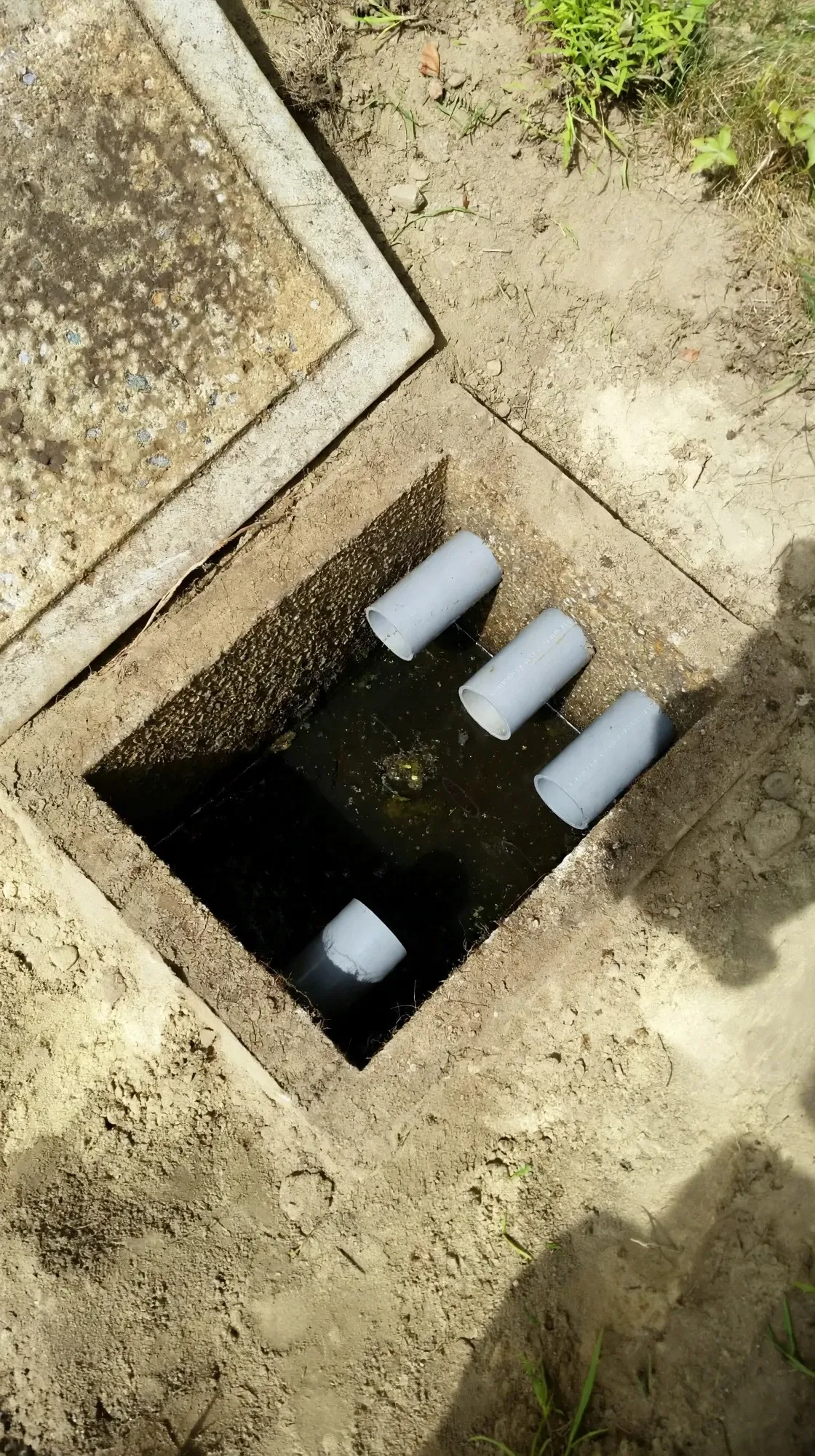
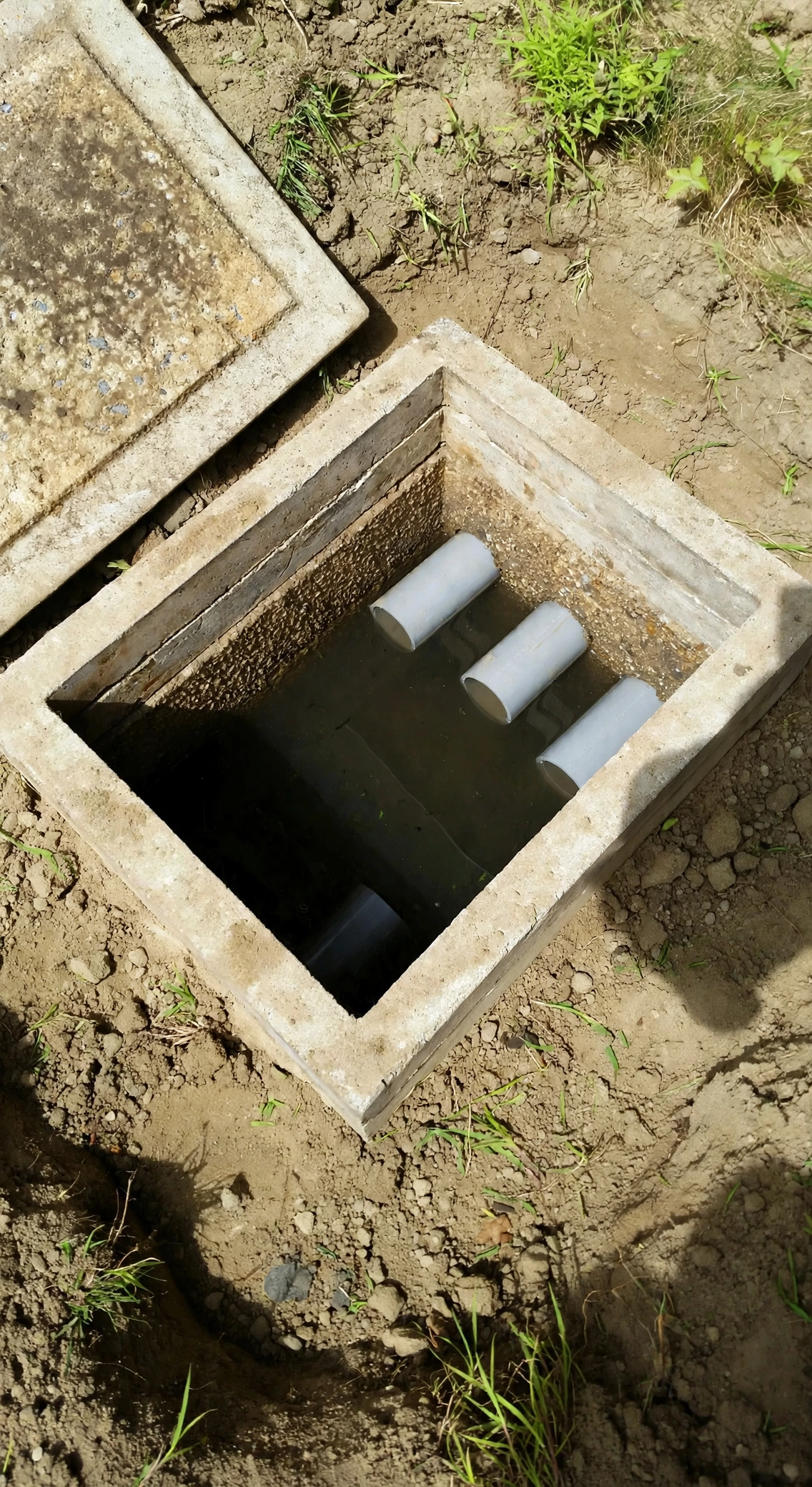
A Barnstable seller and a conditional pass on Phinney's Lane
A seller on Phinney's Lane in Barnstable had a closing date and a buyer waiting. We opened the tank and pumped it. The tank was sound, the baffles were intact and the leach field showed no breakout. The distribution box had settled, and its outlets sat uneven. That put the system at a conditional pass, with the box named as the component to repair.
The seller worried that a conditional pass meant a failed sale. It does not. We explained that the repair needed Board of Health approval, so we sent that through right away rather than waiting on the paperwork. We reset the box level, and the repair fell within the $500 to $1,500 we charge for distribution box repair. The inspection itself was priced at $600 to $1,200 because the tank was pumped the same visit.
The system passed, the report went to the Board of Health on the state form, and the seller handed the buyer a copy. The closing stayed on its original timeline.
Questions
Do I need a Title 5 inspection to sell my house?
Yes, if the system has not been inspected within the 2 years before the transfer. If weather prevents an inspection at sale, it can be done within 6 months after, with written notice to the buyer.
What does a Title 5 inspection cost with you?
$475 to $850. Booked together with pumping, the price is $600 to $1,200.
How much is pumping on its own?
$375 to $575 for a 1,500-gallon tank.
Does the tank have to be pumped for the inspection?
It has to be emptied so the walls, baffles and floor can be seen. That is why most owners book the inspection with pumping.
Who is allowed to inspect?
Only a MassDEP-approved System Inspector. The report goes on the state form to the local Board of Health within 30 days, and the seller gives the buyer a copy.
How long does a passing report last?
Two years before a transfer. It can be held for 3 years if the system is pumped at least once a year after the inspection and the records are kept.
What is a conditional pass?
A named component needs repair, the Board of Health approves the repair, and the system then passes. A cracked or metal tank, a broken pipe, an uneven distribution box and a pump chamber qualify.
Can a cesspool get a conditional pass?
No. Neither a cesspool nor a soil absorption system can be conditionally passed.
Is my cesspool automatically a failure?
No. A cesspool is not condemned by existing. It must be upgraded when it shows hydraulic failure, sits extremely close to a water supply or otherwise fails to protect health and the environment, and always before any increase in design flow.
What makes a system fail?
Sewage backing up, effluent at the surface or in surface water, liquid above the distribution box outlets, a cesspool with liquid within 6 inches of its inlet, pumping needed more than four times a year, a metal or cracked tank, any part below high groundwater, or a cesspool too close to a water supply.
How long do I have to fix a failed system?
Two years, unless the Board of Health or MassDEP sets another schedule. It is sooner for an imminent hazard.
What if my lot cannot fit a fully compliant system?
The Board of Health may approve a Local Upgrade Approval, allowing the maximum feasible compliance.
Do I need an inspection if I am adding a bedroom?
Yes. A change needing a building or occupancy permit triggers one, and flow may not exceed the approved design of 110 gallons a day per bedroom until the system is upgraded.
What does a replacement cost if the system fails?
Conventional septic system replacement is $18,000 to $32,000, or $25,000 to $40,000 on tight lots. A nitrogen-reducing I/A system is $32,000 to $55,000, or $45,000 to $75,000 or more on tight lots with a high water table. An I/A maintenance contract is $400 to $900 a year.
Is there help paying for an upgrade?
Yes. Cape Cod AquiFund loans, the state septic tax credit and the MassHousing Septic Repair Loan each have their own terms, summarised above.
Tell us the closing date and we will take it from there
Call (774) 619-8331, Monday to Friday, 9:00 AM to 5:30 PM, or send the form on this page. It needs only your name and a phone number. The more details you give, the better we are able to help you.