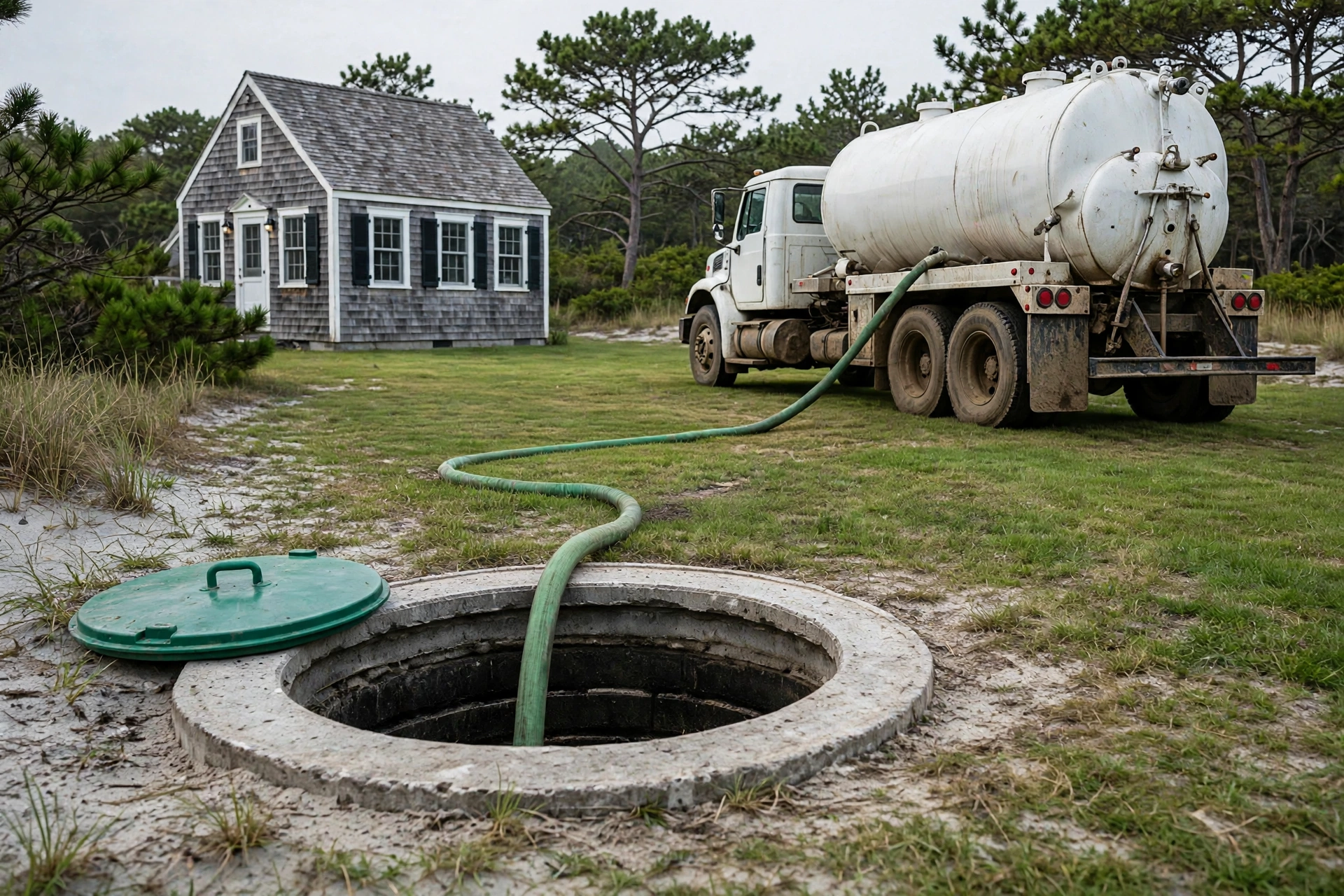
Barnstable Septic is a Hyannis-based company, and the first question we hear from homeowners in Barnstable, Yarmouth and Dennis is usually some version of "is the tank due?" Septic pumping is the most routine job in the trade and the one most often put off, because a tank that is filling up looks exactly like a healthy one until the day it does not. Most septic maintenance comes down to not letting that day arrive.
The timing matters beyond comfort. Title 5 inspections read the condition of the tank and the absorption system, and a tank that has been pumped on schedule, with the receipts to show it, keeps the avoidable problems out of the report. When something does turn up, septic repairs such as a baffle, a distribution box or a cracked lid are small jobs next to septic system replacement. A failed cesspool is a bigger decision, because cesspool replacement is a full project and not a repair.
If your system is a nitrogen-reducing one, the cadence is different. I/A system service runs on a maintenance contract, not on a three-year guess, and a section below sets out what that looks like.
Know the tank is overdue, or not sure when it was last done? Call (774) 619-8331, Monday to Friday, 9:00 AM to 5:30 PM, or send your name and phone number through the form at the bottom of this page and we will call you back.
How often does your tank need pumping?
Set your household's facts and the guide answers with the interval that applies and why. The section below this guide sets the same cadence out in full, with the chart.
Your system
Garbage disposal
Household against the design
Tank size
Use pattern
The interval that applies
Set your household's facts above and the interval that applies appears here.
The regulation itself, 310 CMR 15.351, works from measurement: a tank must be pumped when sludge or scum builds up to the stated distances from the outlet tee, whatever the calendar says. That is why we measure before we pump.
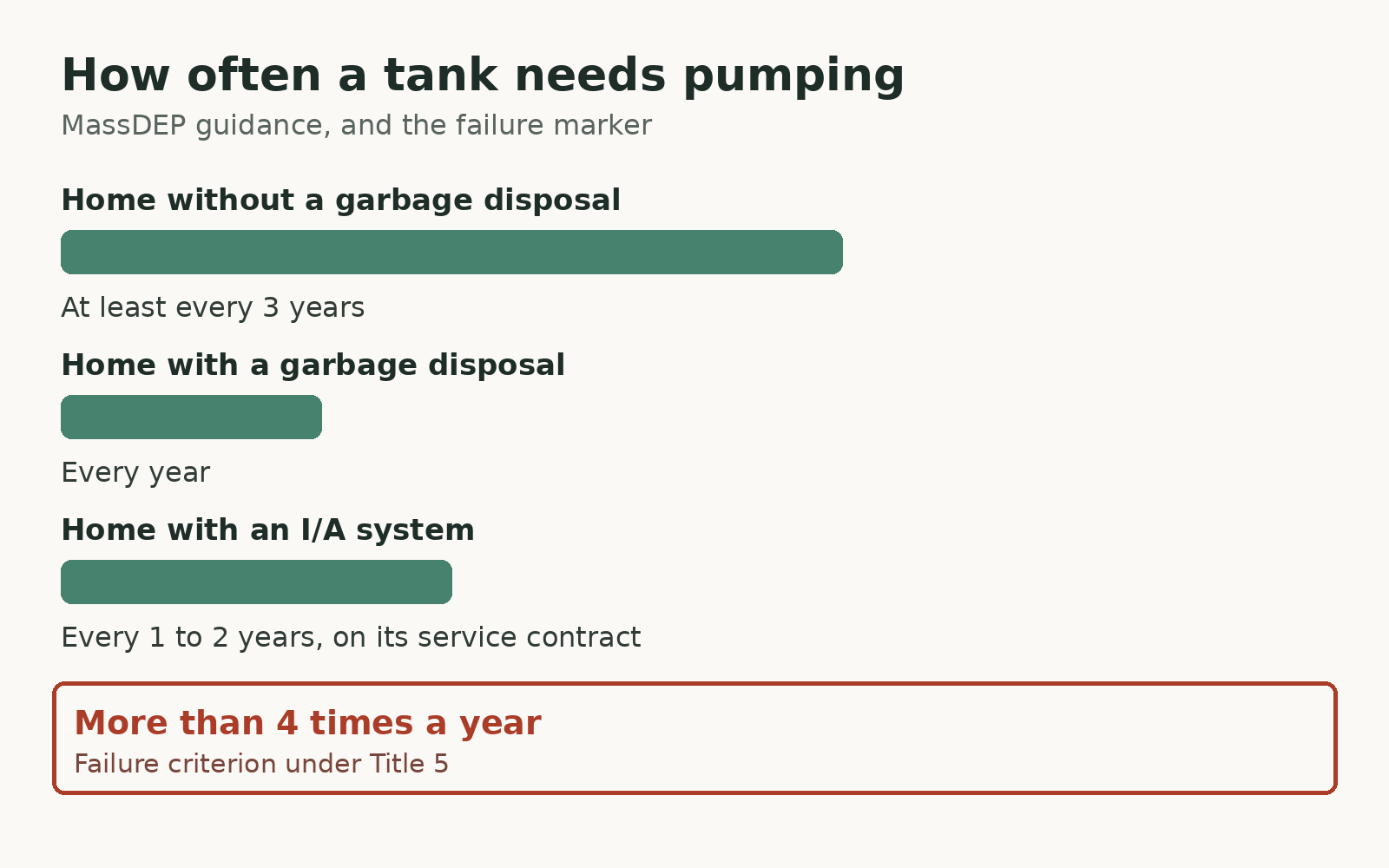
One number belongs on the other side of the ledger. If a system needs pumping more than four times a year, Title 5 treats that as a failure criterion. At that point the tank is not the problem, and a more frequent schedule will not fix it.
How often a tank needs pumping
MassDEP's guidance is plain: pump at least once every 3 years if the house has no garbage disposal, and every year if it has one. A disposal sends a steady load of ground food solids into the tank, and the solids settle where the tank has to hold them.
That guidance is a floor. The regulation itself, 310 CMR 15.351, works from measurement. A tank must be pumped when sludge or scum builds up to the stated distances from the outlet tee, whatever the calendar says. That is why we measure before we pump. Several things push a tank toward the sooner end:
- A household larger than the bedroom count assumes. Title 5 sizes a home at 110 gallons per day per bedroom, with a 330-gallon minimum, so a full house of adults fills a tank faster than the design expected.
- A garbage disposal in regular use.
- A smaller tank. Typical residential tanks run 1,000 to 1,500 gallons, and the smaller ones reach their limits sooner.
- A seasonal pattern of heavy use, covered further down.
One number belongs on the other side of the ledger. If a system needs pumping more than four times a year, Title 5 treats that as a failure criterion. At that point the tank is not the problem, and a more frequent schedule will not fix it.
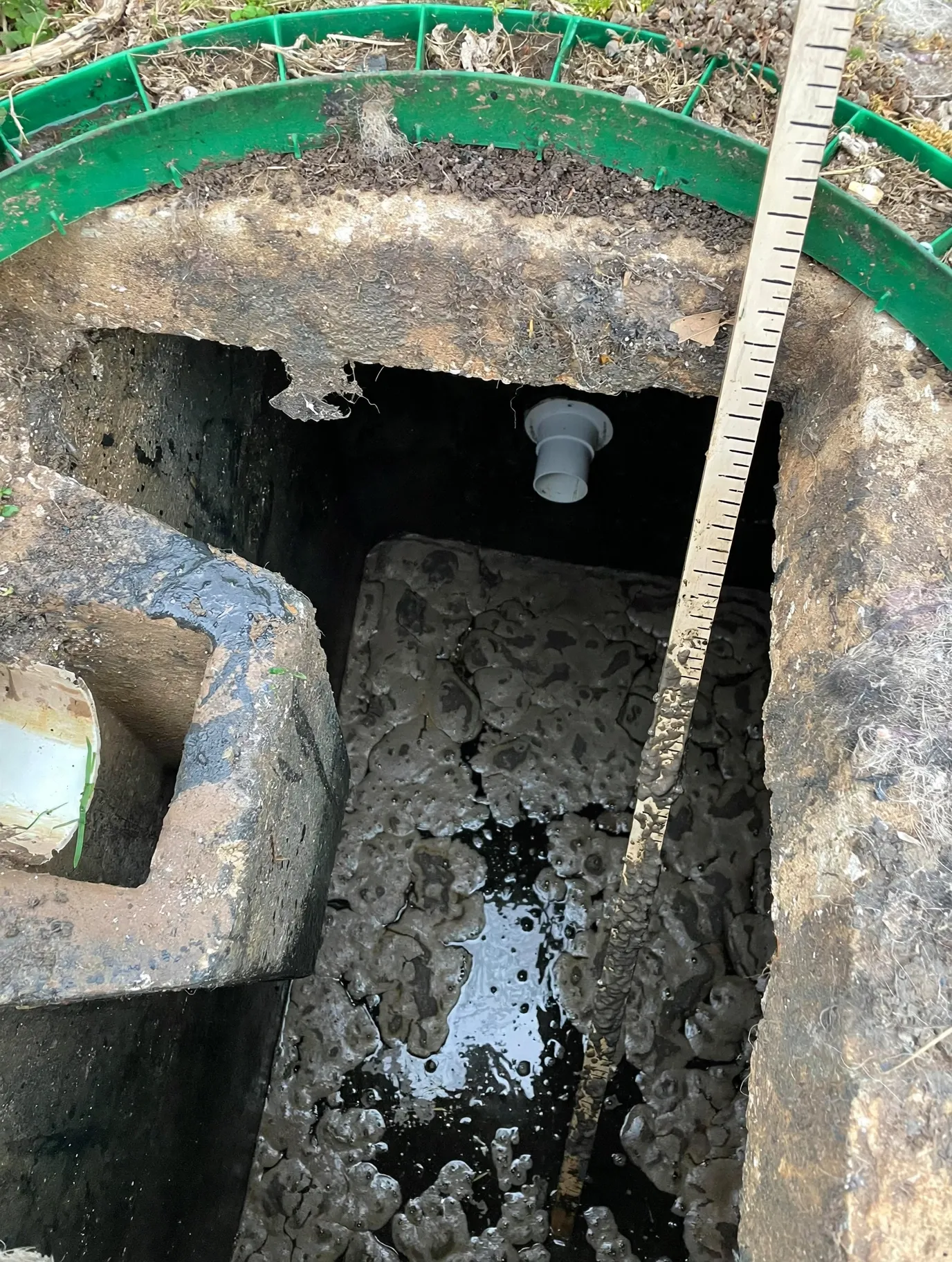
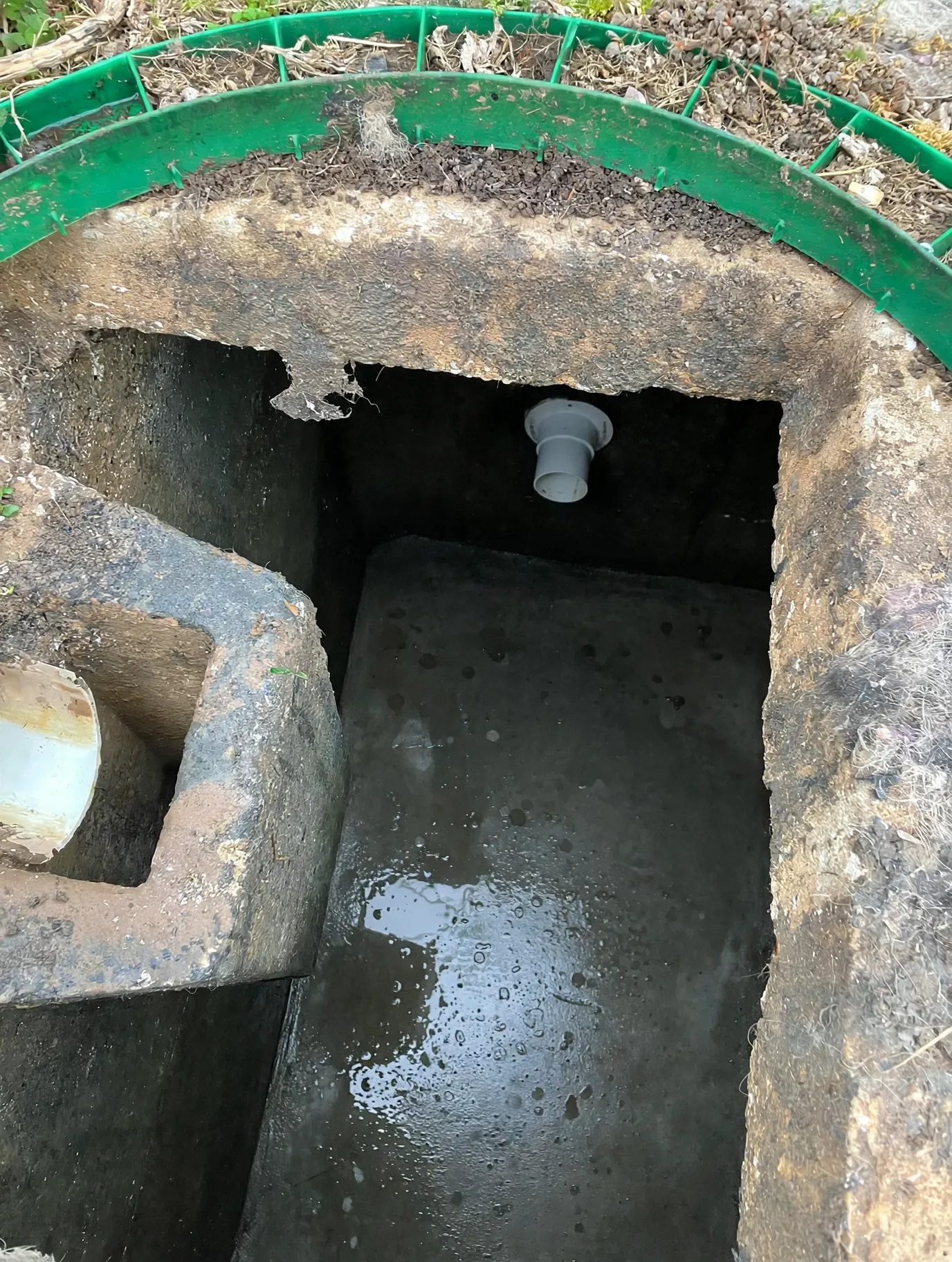
What is inside the tank, and what the before and after show
A septic tank sorts what enters it. Heavy solids settle to the bottom as sludge. Fats and light solids rise and form a scum layer. Between them is a band of relatively clear liquid, and that liquid is what leaves through the outlet to the distribution box and the soil absorption system. The baffles and outlet tee are there to keep the scum and sludge from following it.
As the layers thicken, the clear zone shrinks and the solids start to travel. They reach the distribution box and then the leaching area, which is the part of a system that cannot be conditionally passed and the part that costs the most to replace. Pumping on time protects it.
What pumping costs
These are our prices.
| Service | Price |
|---|---|
| Septic pumping, a 1,500-gallon tank | $375 to $575 |
| Title 5 inspection | $475 to $850 |
| Title 5 inspection booked together with pumping | $600 to $1,200 |
| Distribution box repair | $500 to $1,500 |
| I/A maintenance contract | $400 to $900 a year |
The pumping figure is for a 1,500-gallon tank, the larger end of the typical range. The inspection and pumping are booked together because an inspector has to see inside an emptied tank, so doing both in one visit is the way sellers usually handle it. Distribution box repair is listed here because it is the repair most often found when a tank is opened and the box beyond it is checked.
Want the tank opened and measured before you decide anything? Call (774) 619-8331 and tell us the tank size if you know it and when it was last pumped. If you are working to a closing date, say so and we will schedule around it.
How a pumping visit goes
1. Finding and opening the tank.

We locate the tank lids, probing if the yard has settled over them, and open them. Many Cape homes have risers installed, which bring the lids to the surface. If yours does not, the visit is the time to decide whether to add them. We also note the tank size and how many compartments it has.
2. Measuring sludge and scum.
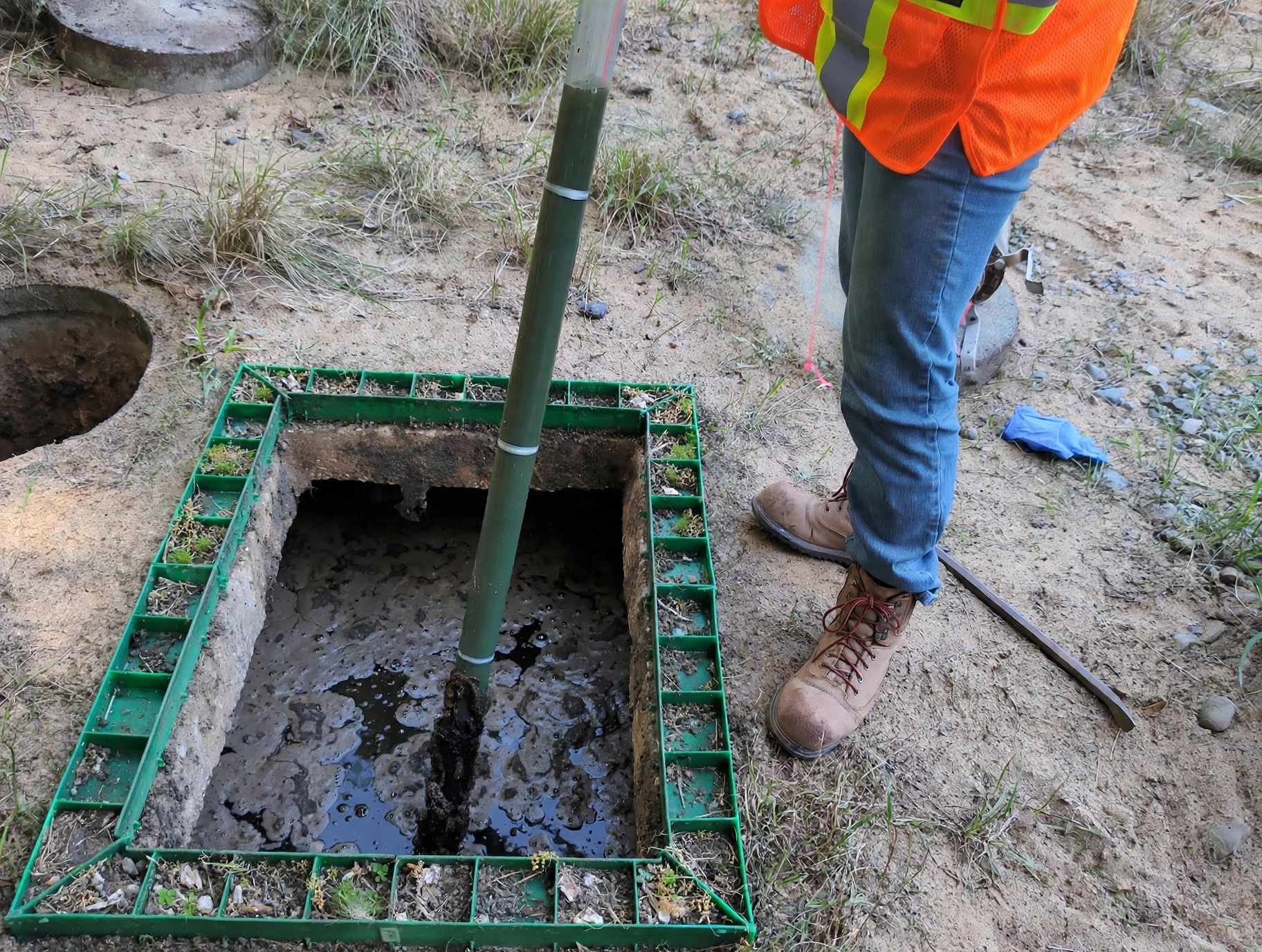
Before pumping, we put the pole in and read the scum and sludge layers against the outlet tee. This is the reading that tells you whether the interval you have been using is right.
3. Pumping every compartment.
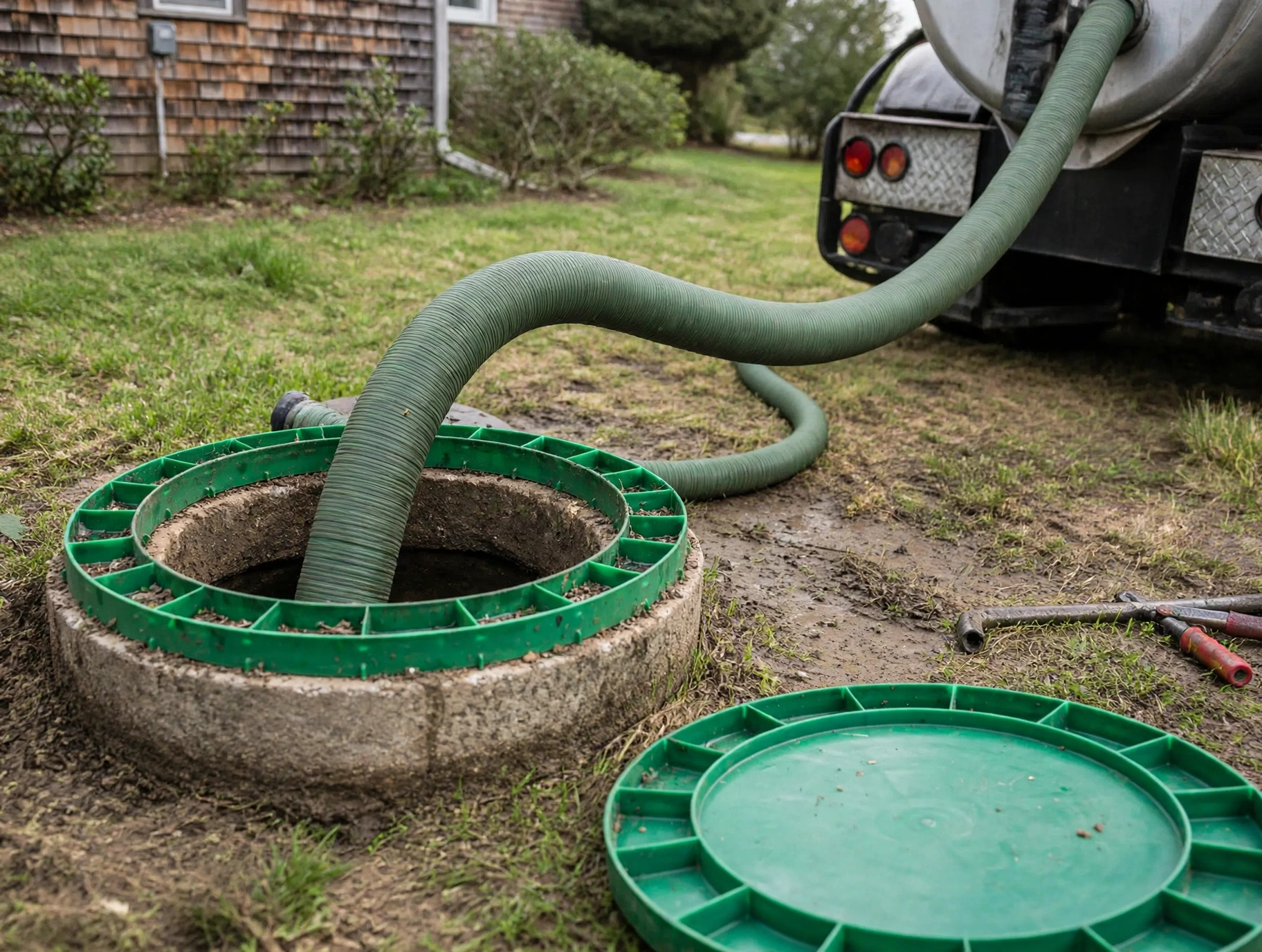
The tank is emptied completely, all compartments, with the walls and the compartment divider washed down enough to see them clearly. A crust left on top and a skim from the middle is not a pumping.
4. Inspecting what the empty tank shows.
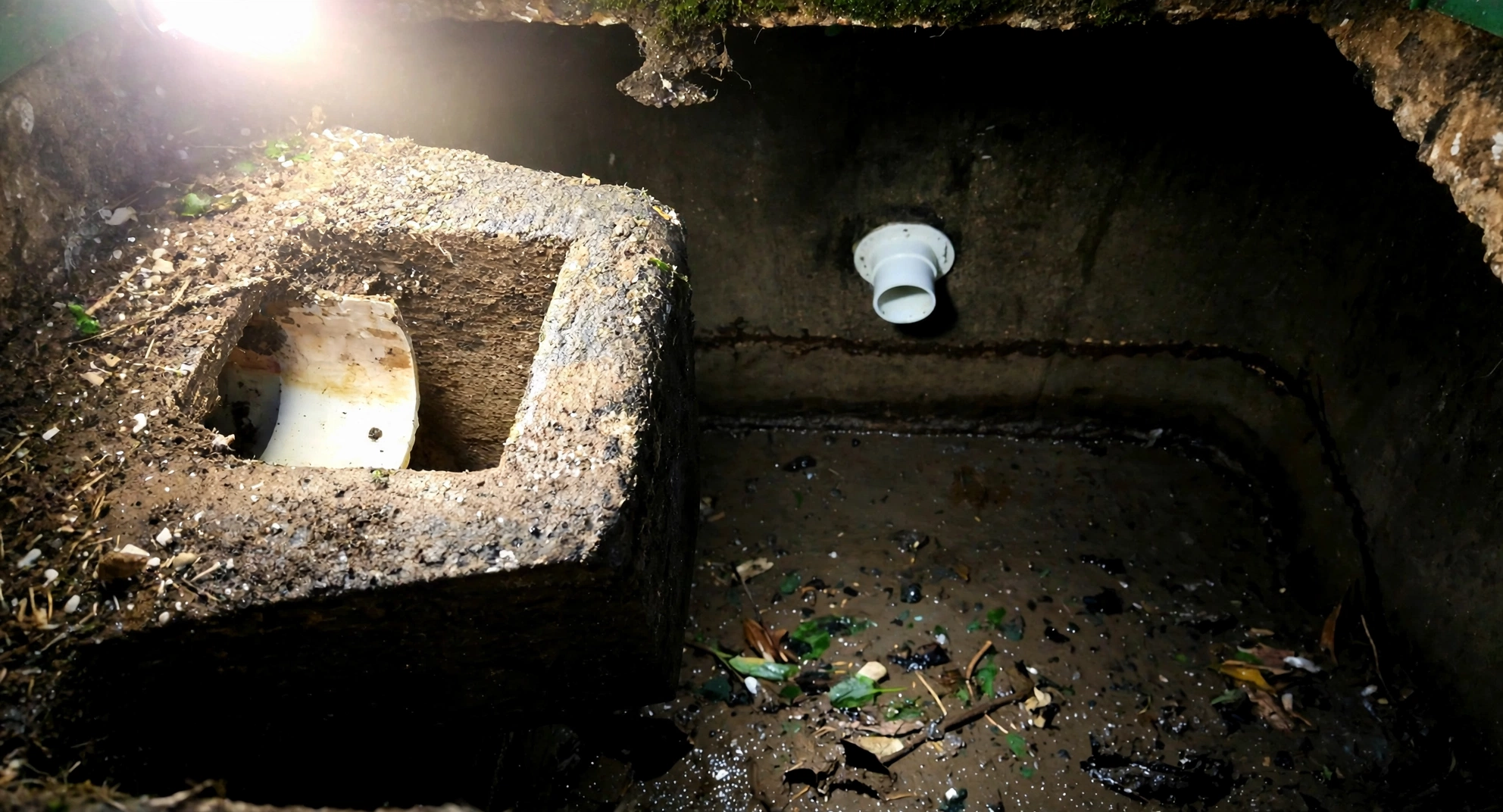
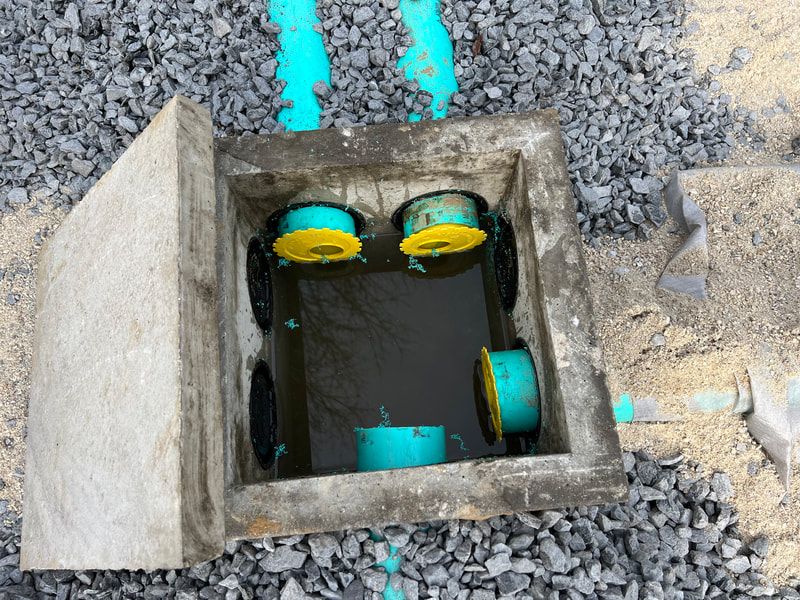
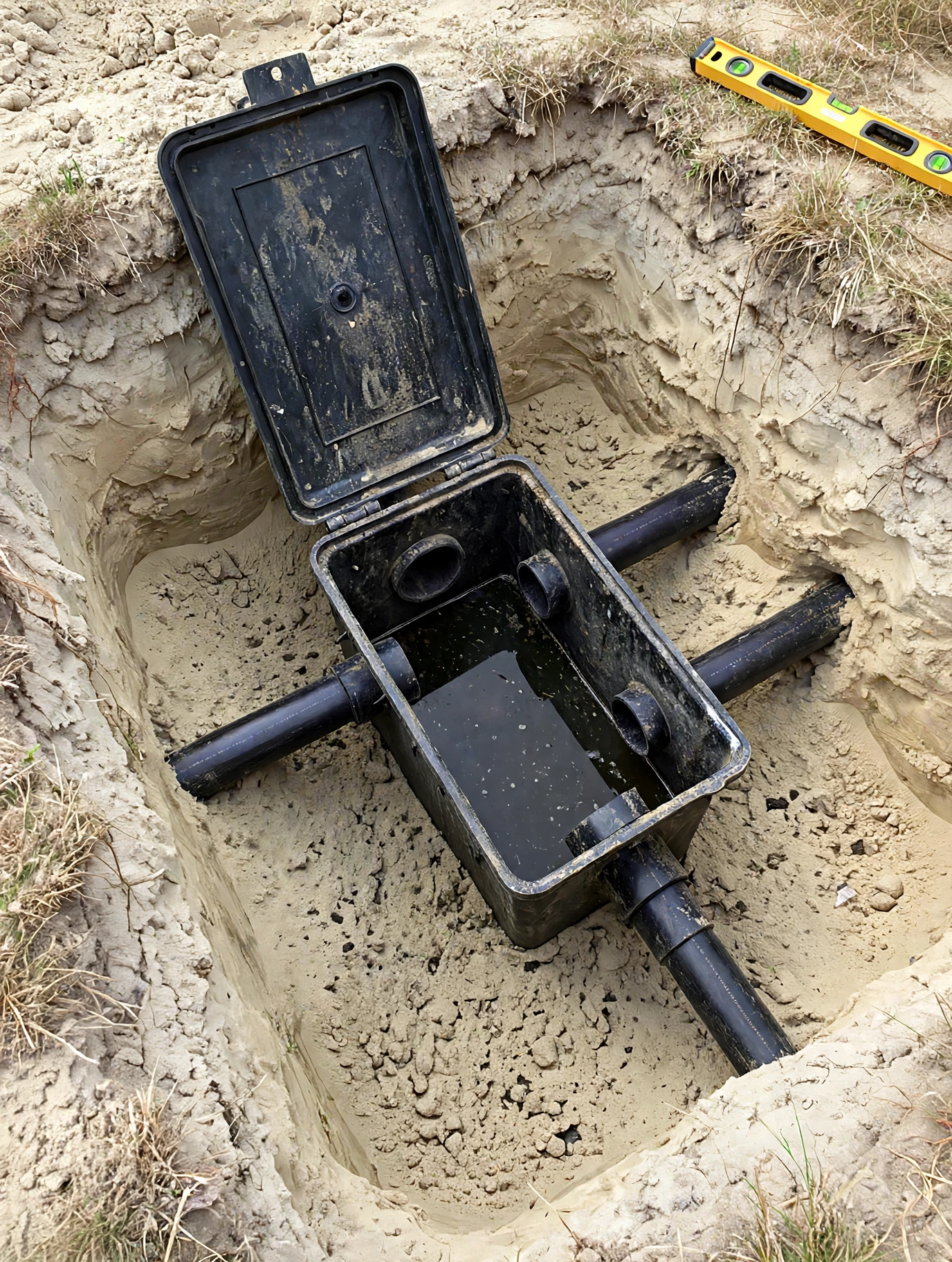
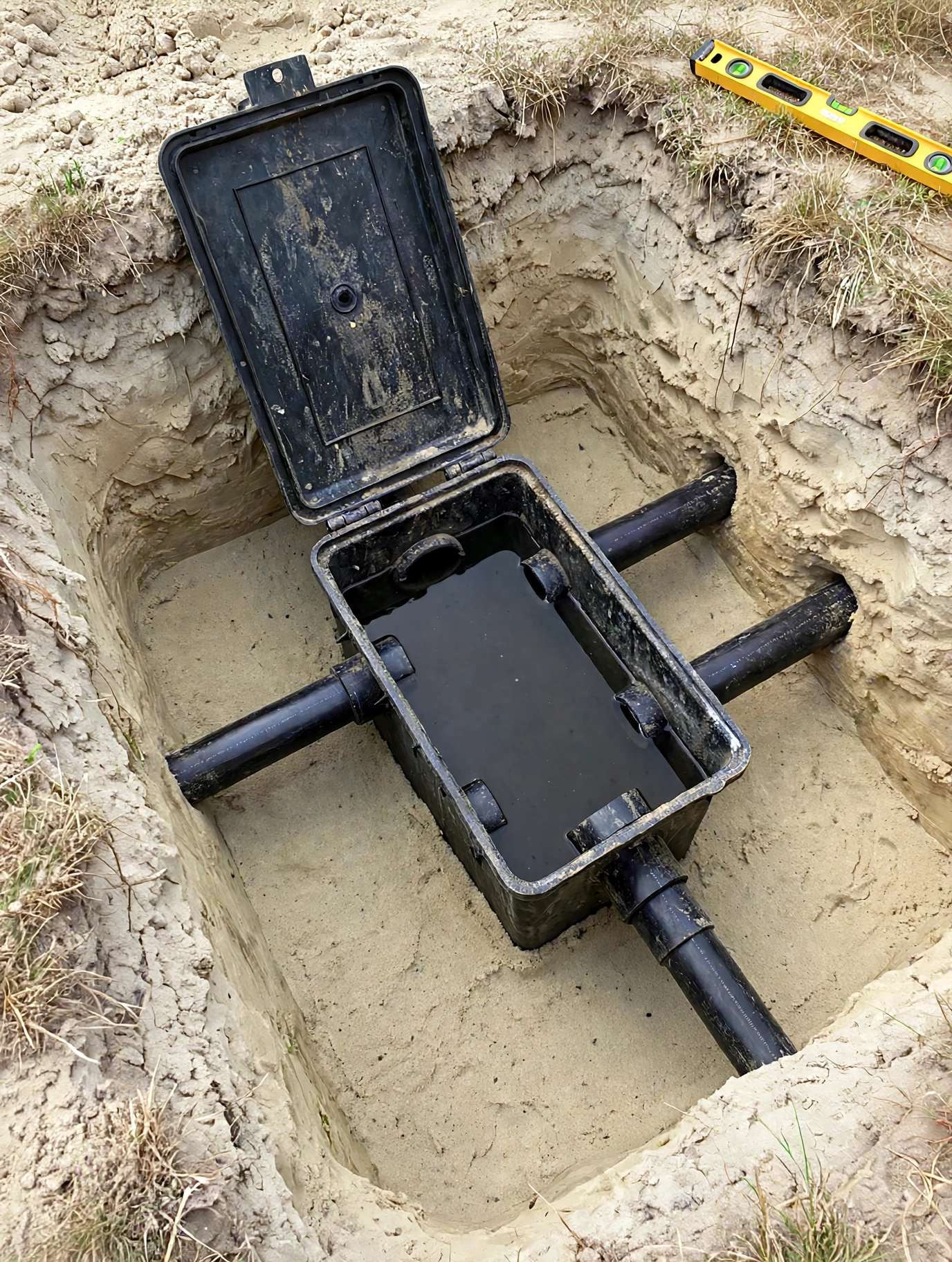
With the tank empty we look at the baffles and outlet tee, the effluent filter if there is one, the tank walls and the lids. A cracked or metal tank is one of the conditions that fails a system under Title 5, and the baffle and tee are the parts that most often need a small repair. Where the distribution box can be reached, we open it and check it too, because liquid standing above the outlet and an uneven box are both things the regulation cares about.
5. Reporting to the Board of Health.
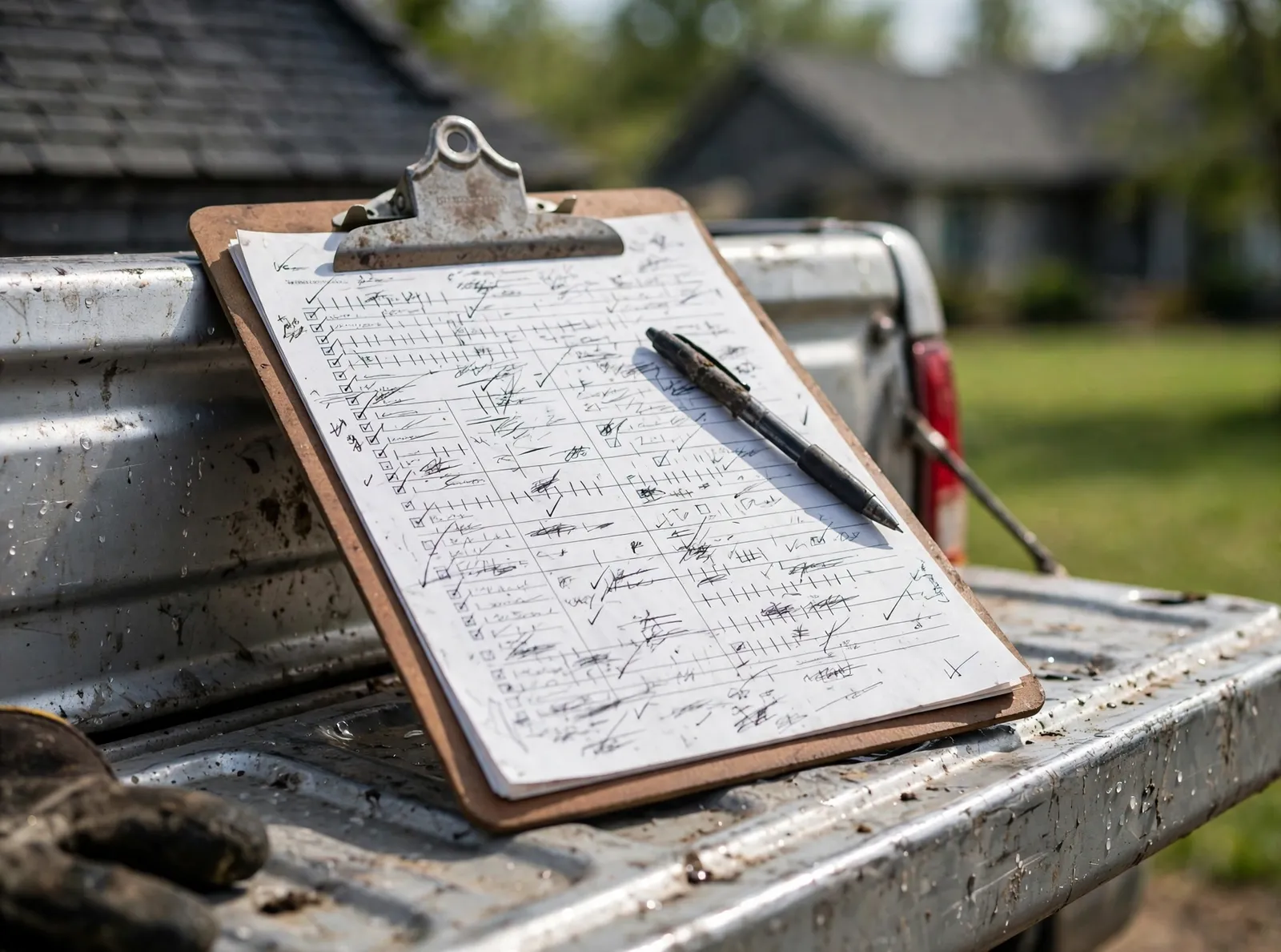
The pumper reports the tank's condition to the local Board of Health within 14 days. That report is a requirement of the regulation, not an extra, and it is why the condition notes taken in step 4 matter.
6. The homeowner's record.

You get a service record with the date, the tank size, what was measured and what was seen. Keep it with the Title 5 report and the closing papers. It is the document that carries weight later, and the next section explains why.
Why the three-year inspection depends on annual pumping records
A Title 5 inspection is required within 2 years before a property transfer, and one inspection can cover more than one transfer inside that window. There is a longer path. An inspection stays valid for 3 years when the system is pumped at least once a year after it, with records.
That condition is all in the paperwork. A seller who has pumped every year but cannot produce the receipts has a harder time than one who kept a folder. If you plan to sell in the next few years, start the folder now.
When pumping turns up a repair
Opening a tank often shows what is wrong before a failure does. The common findings and what each means under Title 5:
- A cracked tank, a broken pipe, an uneven distribution box or a pump chamber problem. These can receive a conditional pass if the repair is made with Board of Health approval. Distribution box repair is $500 to $1,500.
- A failed soil absorption system or cesspool. These cannot be conditionally passed. A failed system must be upgraded within 2 years unless the Board of Health or MassDEP sets another schedule, and sooner for an imminent hazard.
- Signs of outright failure. Sewage backing up, effluent breaking out at the surface, liquid standing above the outlet in the distribution box, or any part sitting below high groundwater.
If the answer is replacement, a conventional septic system replacement is $18,000 to $32,000, or $25,000 to $40,000 on a tight lot. Our Installation and Replacement page covers the work.
Help exists for failed systems. The Cape Cod AquiFund, run by Barnstable County, makes betterment loans for repair, replacement or I/A installation, repaid on the tax bill over up to 20 years and paid directly to the contractor. Septic work carries the 4% and 5% rates, with 5% where the property is or will be listed within 12 months. The state septic tax credit gives owners of a principal residence 60% of the cost of repairing or replacing a failed system, on costs up to $30,000, up to $4,000 a year and $18,000 in total. MassHousing's Septic Repair Loan runs up to $25,000 for owner-occupants of one to four family homes, with income limits.
Seasonal homes
A summer house often does badly in the same way each year. The system sits idle for months, then takes a full house of guests from June to September. A tank that was pumped last fall and used lightly is a different tank than one that was left a full year and then loaded, and a rental with more guests than bedrooms puts the design flow well past what the system was sized for.
For a seasonal home, two habits help. Have the tank measured before the heavy season, not after it, and keep every receipt, since a seasonal home changes hands often and the records carry the inspection. The Yarmouth page follows a job of exactly this kind, where the care schedule has to fit how the property is used.
Nitrogen-reducing systems run on a different schedule
A nitrogen-reducing I/A system has mechanical and electrical parts that a conventional tank does not, and these need regular attention. That is why a maintenance contract is required, at $400 to $900 a year. The field guidance we work from puts pumping for an I/A system at every 1 to 2 years, which is more often than the three-year floor for a conventional home with no disposal. I/A system service therefore covers the unit and the tank together. Our I/A Systems page covers installation and the contract in full.
Questions
How often should I have my septic tank pumped?
At least once every 3 years if you have no garbage disposal, and every year if you do, per MassDEP's guidance. The regulation sets the true trigger: pumping is required when sludge or scum reaches the stated distances from the outlet tee. That is why we measure at each visit.
What does septic pumping cost?
Pumping a 1,500-gallon tank is $375 to $575.
Does a garbage disposal really change the schedule?
Yes. A disposal adds ground food solids that settle as sludge, so MassDEP's guidance moves from every 3 years to every year.
How do I know the tank is full before the schedule says so?
Look for signs that are already failure criteria: sewage backing up into the house, effluent ponding or breaking out at the surface, or liquid standing above the outlet in the distribution box. These are urgent and mean the system needs attention, not just pumping. Measuring the layers at a regular visit is how to catch it earlier.
Do I need to pump before a Title 5 inspection?
The inspector needs to see inside an emptied tank, so the two are commonly done together. A Title 5 inspection is $475 to $850, and booked together with pumping it is $600 to $1,200.
How long does a Title 5 inspection stay valid?
It must be done within 2 years before a transfer. It stays valid for 3 years if the system is pumped at least once a year after the inspection and you have the records to show it.
Who reports to the Board of Health, and when?
The pumper reports the tank's condition to the Board of Health within 14 days. A System Inspector separately files the Title 5 report on the state form within 30 days, and the seller gives the buyer a copy.
Are septic pumpers licensed by the state?
MassDEP does not license pumpers. The local Board of Health is where to find haulers and confirm what a town requires.
What does distribution box repair cost?
$500 to $1,500.
My tank needs pumping more than four times a year. What does that mean?
It is a failure criterion under Title 5. The tank is not the cause, and a failed system must be upgraded within 2 years unless the Board of Health or MassDEP sets another schedule. A conventional replacement is $18,000 to $32,000, or $25,000 to $40,000 on a tight lot.
Can I just keep pumping a cesspool instead of replacing it?
A cesspool is not condemned simply by existing. It must be upgraded when it shows hydraulic failure, sits extremely close to a water supply or otherwise fails to protect health and the environment, and always before any increase in design flow. A cesspool fails when its liquid is within 6 inches of the inlet or holds less than half a day's design flow above the liquid. Cesspools have been banned for new construction since 1995 and are usually found at the transfer inspection.
My street is getting sewer. Should I stop pumping?
Not until you are connected. In Barnstable, a building abutting a way with a public sewer must connect within 6 months of the Board of Health's letter, or 60 days if the system has hydraulically failed. On connection the old system is removed or filled in. Check your parcel against the town's sewer plan, and keep the tank maintained until then.
How is pumping different with an I/A system?
It runs about every 1 to 2 years and sits under a required maintenance contract of $400 to $900 a year, which also covers the mechanical and electrical parts.
Where are my tank lids?
If you do not know, we find them by probing at the first visit and sketch the location for your records. Risers bring lids to grade and spare the next visit the digging.
Tell us about your tank and we will take it from there. Call (774) 619-8331, Monday to Friday, 9:00 AM to 5:30 PM, or use the form below. Only your name and phone number are required. If you add the address, tank size, last pumping date, whether you have a disposal or a closing date, it helps us plan the visit. The more details you give, the better we are able to help you.