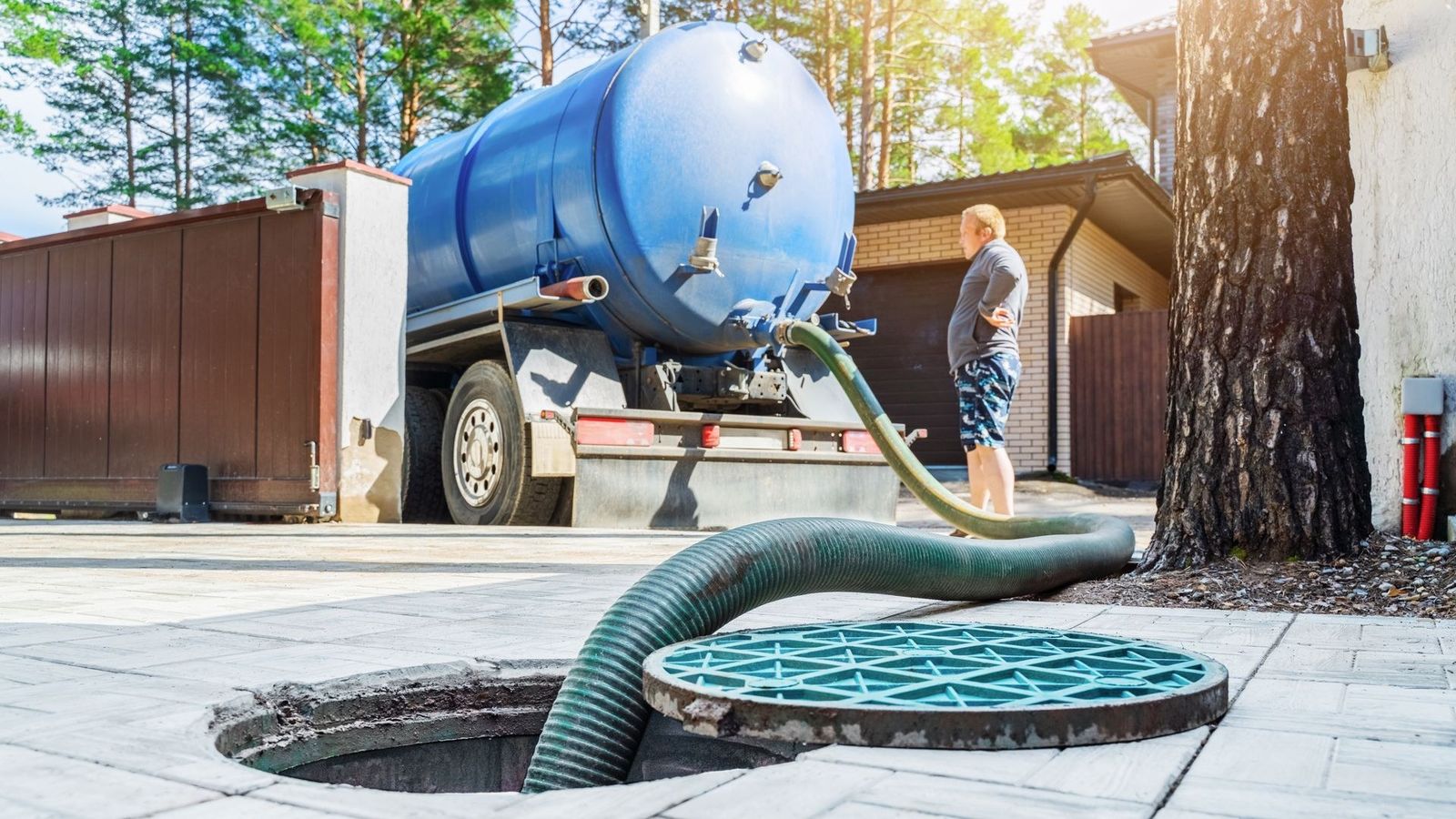
Barnstable Septic is Hyannis-based, and Yarmouth is the town next door where our septic pumping work is most constant. There is no municipal sewer anywhere in Yarmouth. Every house, cottage, motel unit and shop on Route 28 runs on its own on-site system, and the whole town's wastewater is handled in the ground, lot by lot. That makes septic maintenance here a schedule that tracks the calendar: quiet in winter, then heavy use from the first warm weekends through Labor Day.
The rest of the work grows out of that schedule. Title 5 inspections come up whenever a Yarmouth property changes hands, and a pump-out is usually the first visit that shows what the system is really doing. If something is found, septic repairs such as a settled distribution box or a damaged baffle are often modest jobs when caught early. When a tank or leaching area is past saving, septic system replacement follows, including cesspool replacement where an old pit turns up and I/A system service where a nitrogen-reducing system is already in the ground. Call (774) 619-8331, or use the form at the bottom of the page.
Tell us about the property in Yarmouth, whether it is a year-round home, a rental or a place you are buying or selling, and when the tank was last pumped if you know. We need only your name and phone number to call you back. Everything else on the form is optional, and the more details you give, the better we are able to help you.
Living on an on-site system in Yarmouth
The rules are the same for every Massachusetts owner, but Yarmouth's circumstances change how they bite. Because the town has no sewer, a failed system cannot be solved by connecting to a pipe in the street. The fix is always on your own lot. Summer population doubles or triples here, and the Route 28 corridor concentrates rentals and commercial uses whose systems sit idle off-season and take peak load in season.
If you are buying in Yarmouth
A system must be inspected within 2 years before a property transfer. If weather prevents the inspection before the sale, it can be done within 6 months after, with written notice to the buyer. One inspection can cover more than one transfer inside that window. Only a MassDEP-approved System Inspector may do it, the report goes on the state form to the Board of Health within 30 days, and the seller gives the buyer a copy.
The outcome is a pass, a conditional pass or a fail. A conditional pass covers a named component repaired with Board of Health approval, such as a cracked tank, a broken pipe, an uneven distribution box or a pump chamber. A soil absorption system or a cesspool cannot be conditionally passed. A failure means an upgrade within 2 years unless the Board of Health or MassDEP sets another schedule, and the duty stays with the owner even if the sale falls through. Cesspools are usually discovered at exactly this inspection.
A Title 5 inspection from us is $475 to $850. Booked together with pumping, which the inspector will want done to see the tank properly, it is $600 to $1,200. Ask the seller for pumping records. An inspection stays valid 3 years if the system is pumped at least once a year after it, with records, so the paperwork you inherit has real value.
If you rent the property out
A system is designed around bedrooms. Title 5 sizes a home at 110 gallons per day per bedroom, with a 330 gallon minimum, and flow may not be increased beyond the approved design until the system is upgraded. An added bedroom, or a change of use that needs a building or occupancy permit, also triggers an inspection. Sleeping extra guests on pull-out couches in a three-bedroom is where rentals quietly outrun their design.
Idle months matter too. A tank that sits through winter and then takes a full rental summer needs its scum and sludge checked at the opening, not discovered in July. A system that needs pumping more than four times a year is one of the regulation's failure criteria, so the cheap fix of pumping every time a guest complains does not last. A pump-out of a 1,500-gallon tank is $375 to $575. A visit that opens the house in spring and one that closes it in fall give you a condition record each time, and that record matters if you ever sell.
If you live here year-round
MassDEP's guidance is to pump at least once every 3 years for a home without a garbage disposal, and every year with one. The regulation itself requires pumping when sludge or scum reaches the stated distances from the outlet tee, and the pumper reports the tank's condition to the Board of Health within 14 days. MassDEP does not license pumpers, so the Board of Health is where you confirm who is operating in town.
If your system does fail, three programmes help pay. Cape Cod AquiFund betterment loans repay on the tax bill over up to 20 years, are paid directly to the contractor, and carry 4% or 5% for septic work (5% where the property is or is expected to be listed within 12 months). The state tax credit gives a principal residence 60% of the cost of repairing or replacing a failed system, with costs capped at $30,000, up to $4,000 a year and $18,000 in total. The MassHousing Septic Repair Loan runs up to $25,000 for owner-occupants of 1 to 4 family homes, with income limits.
If you are opening a cottage this spring or closing one this fall, tell us the address street, the number of bedrooms and what you know about the tank. A name and a phone number are all we require. The more details you give, the better we are able to help you.
Featured job: the spring opening on Old Main Street
The situation
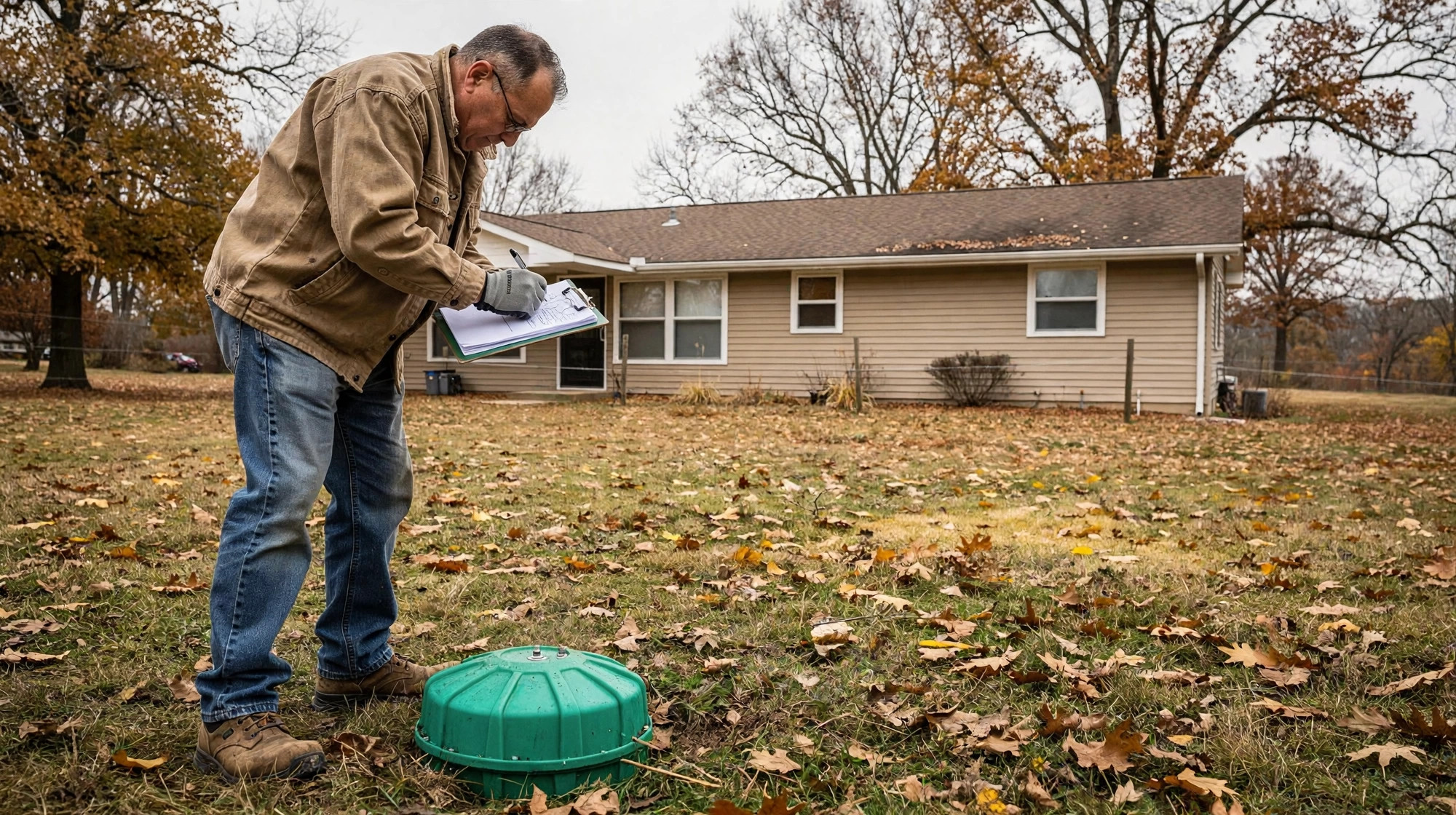
A seasonal rental cottage in South Yarmouth, a short walk from Route 28, sits empty from October to May and then takes a full rental summer. Its owner had skipped the pump-out two seasons running, reasoning that a quiet winter meant a quiet tank. Before the first booking of the year, the owner called Barnstable Septic to open the system the way the house itself gets opened.

What was found
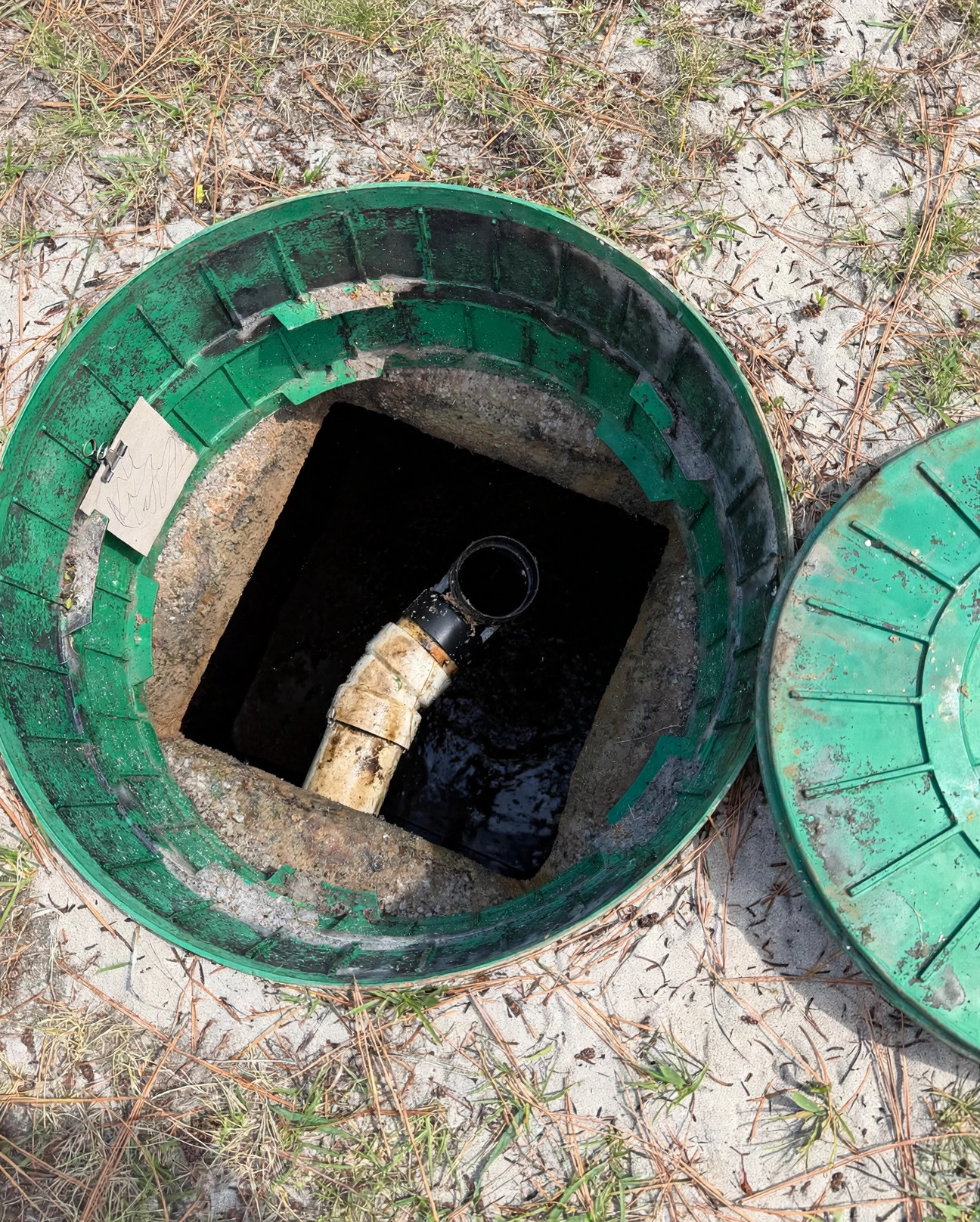
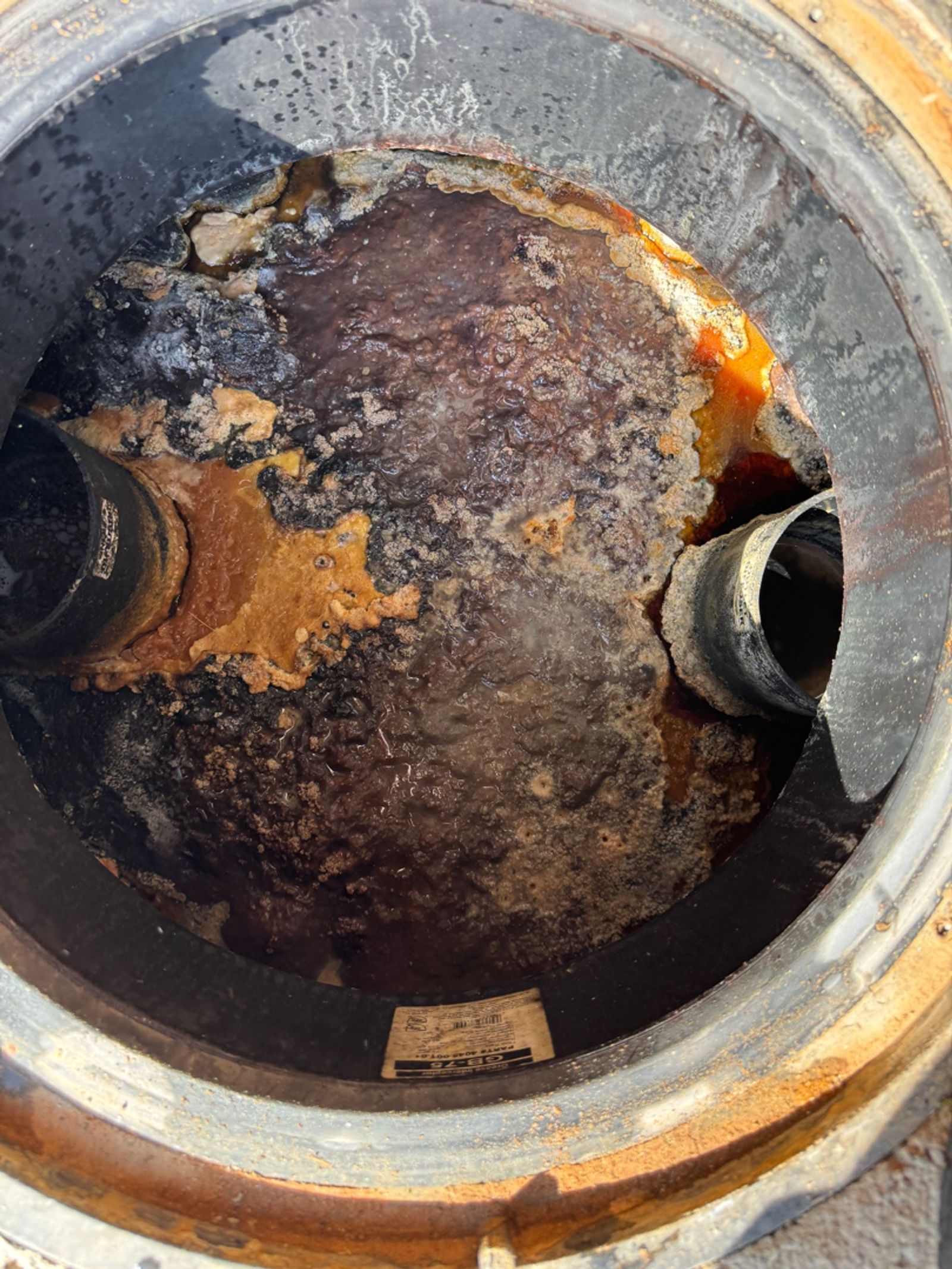
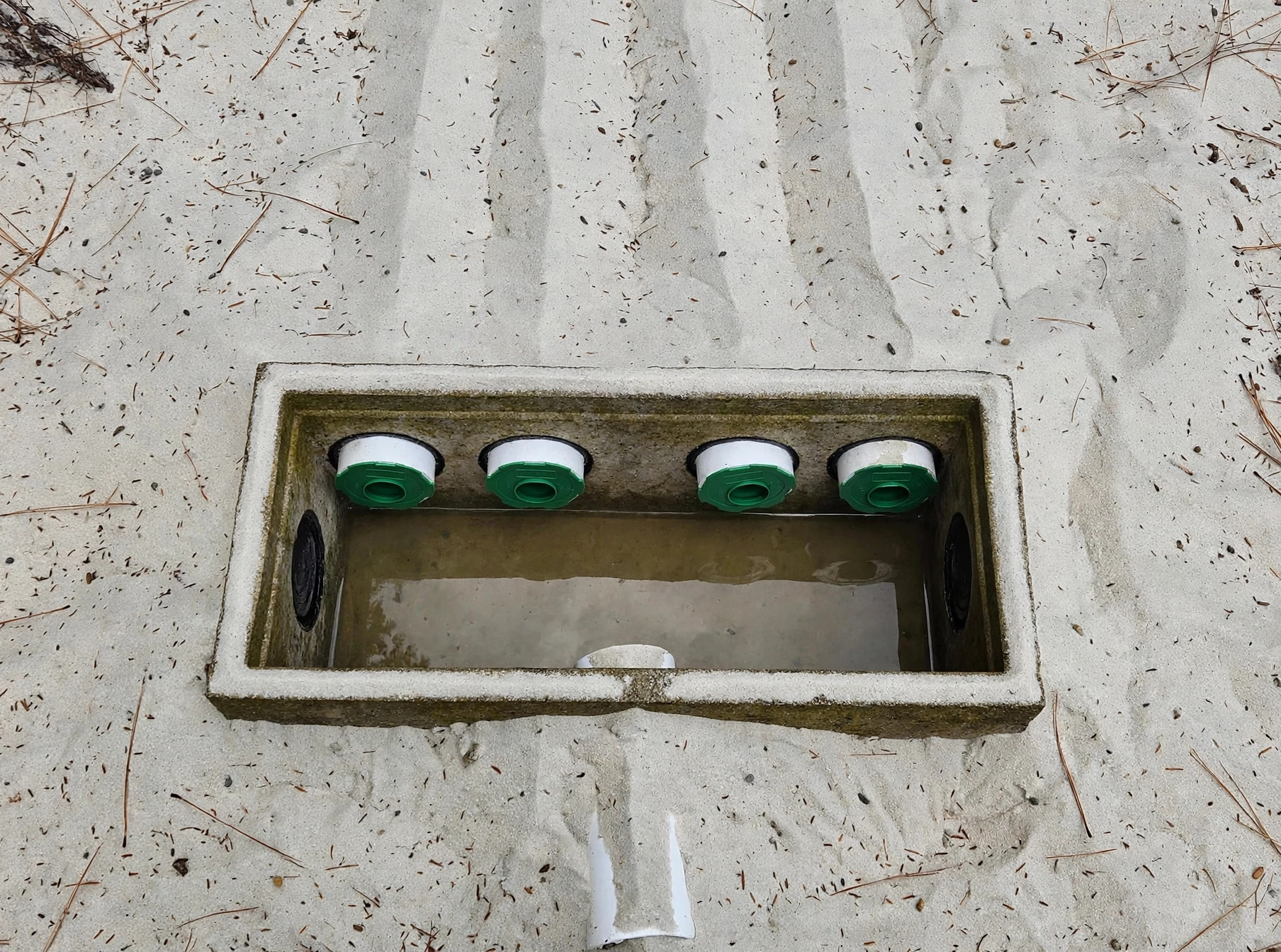
With the lid off, the tank told the story. The sludge layer at the bottom and the scum layer at the top had both climbed far past the distances from the outlet tee at which the regulation requires pumping. Two missed seasons will do that to a 1,500-gallon tank. The distribution box was the second finding: its outlets were running unevenly, so the leaching area was taking more flow on one side than the other.
The decision
Nothing here called for a new system. The tank was sound and the box was repairable, which meant a pump-out and a repair rather than septic system replacement. The owner booked the pump-out with an inspection, priced at the combined $600 to $1,200 for a Title 5 inspection together with pumping, and approved the distribution box repair at $500 to $1,500. Had the box been past repair, or the leaching area failing, the conversation would have been a conventional replacement at $18,000 to $32,000, or $25,000 to $40,000 on a tight lot. That was not this cottage.
The work
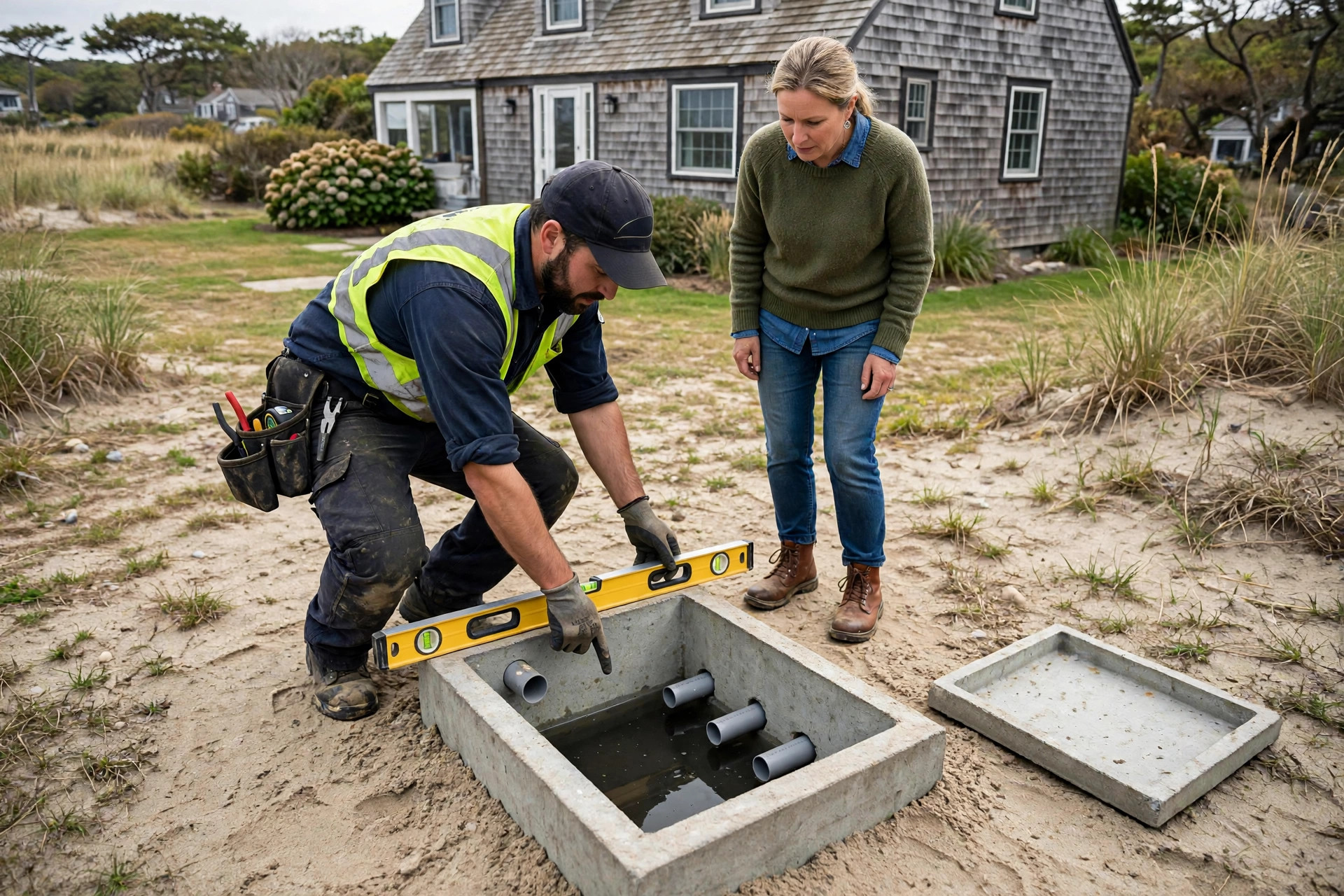
The tank was pumped to the bottom, the walls and baffles were looked over, and the pumper filed the condition report with the Board of Health, which is due within 14 days. The distribution box was reset so the outlets sat level and flow splits evenly across the leaching area. The access lids were checked and the riser was left clear for next time.
The result
The cottage opened on time, and the owner now has a two-visit plan: an opening visit in spring with a pump-out and a look at levels, and a closing visit in fall with a check of the box and tank before the house goes quiet. Each pump-out of the 1,500-gallon tank is $375 to $575. Each visit leaves a dated record, so the cottage always has the paperwork a buyer or an inspector will ask for.
Read the tank
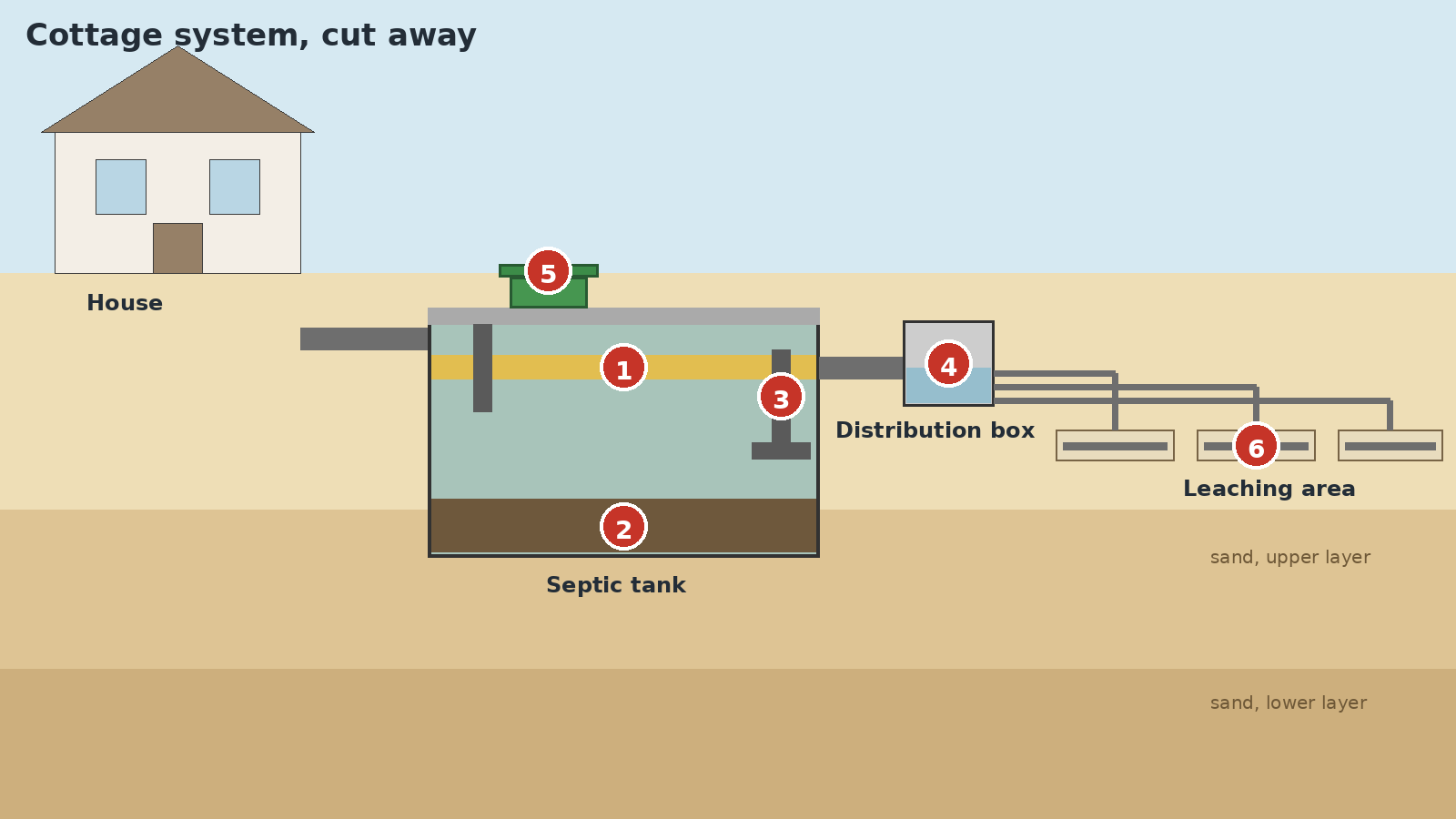
Scum layer. Grease and floating solids collect at the top. A cap close to the outlet tee means the tank is about to pass solids to the field. This is one of the two readings that trigger pumping under the regulation.
Sludge layer. Settled solids build from the bottom, and an idle tank still accumulates them. Measured against the outlet tee, sludge decides when a tank must be pumped, regardless of how long it has been since the last visit.
Outlet tee. This is the datum for both measurements. It holds solids back and lets clarified liquid leave the tank, so everything that crowds it is a warning.
Distribution box. Liquid should divide evenly among the outlets. Liquid standing above the outlet is a failure criterion, while uneven outlets are a conditional pass with Board of Health approval, and a repair of $500 to $1,500.
Riser and lid. Bringing the lid to grade makes pumping and inspection quick, and it is where a dated tag starts the service record.
Soil absorption system. The final treatment step. It cannot be conditionally passed, so everything upstream is cared for to protect it.
Questions
How often should I pump my septic tank in Yarmouth?
MassDEP's guidance is at least once every 3 years for a home without a garbage disposal and every year with one. Seasonal rentals and Route 28 properties usually need more attention than that, because the system takes peak load in a few months. The regulation requires pumping when sludge or scum reaches the stated distances from the outlet tee.
What does septic pumping cost?
Pumping a 1,500-gallon tank is $375 to $575.
Does Yarmouth have a town sewer I can connect to?
No. Yarmouth has no municipal sewer, so every property is on an on-site system. If yours fails, the fix happens on your own lot.
How much is a Title 5 inspection?
A Title 5 inspection is $475 to $850. Booked together with pumping, it is $600 to $1,200.
Do I need the tank pumped before a Title 5 inspection?
The inspector needs to see the tank properly, which is why pumping is usually booked with the inspection. It also helps afterward: an inspection stays valid for 3 years if the system is pumped at least once a year following it, with records kept.
What happens if my system fails the inspection?
A failed system must be upgraded within 2 years unless the Board of Health or MassDEP sets another schedule, and sooner for an imminent hazard. The duty is the owner's even if the sale falls through. Where full compliance is not feasible, the Board of Health may approve a Local Upgrade Approval.
What is a conditional pass?
It means a named component is repaired with Board of Health approval. Examples are a cracked or metal tank, a broken pipe, an uneven distribution box or a pump chamber. A soil absorption system or cesspool cannot be conditionally passed.
What does a distribution box repair cost?
Distribution box repair is $500 to $1,500.
What does a full replacement cost?
A conventional septic system replacement is $18,000 to $32,000, or $25,000 to $40,000 on a tight lot. A nitrogen-reducing I/A system is $32,000 to $55,000, or $45,000 to $75,000 or more on tight lots and high water tables. An I/A maintenance contract is $400 to $900 a year.
I just learned my house has a cesspool. Do I have to replace it right away?
Not by existing alone. A cesspool must be upgraded when it shows hydraulic failure, sits extremely close to a water supply or otherwise fails to protect health and the environment, and always before any increase in design flow. At a sale, it cannot be conditionally passed, so it is usually dealt with then.
Can I add a bedroom to my Yarmouth rental?
Adding a bedroom needs a building or occupancy permit, which triggers an inspection. Flow may not exceed the approved design, 110 gallons per day per bedroom, until the system is upgraded.
Who can do a Title 5 inspection?
Only a MassDEP-approved System Inspector. The report goes on the state form to the Board of Health within 30 days, and the seller gives the buyer a copy.
Does MassDEP license septic pumpers?
No. Haulers are found through the local Board of Health, which also receives the pumper's report on the tank's condition within 14 days.
Is there help paying for a repair or replacement?
Yes. Cape Cod AquiFund loans repay on the tax bill over up to 20 years at 4% or 5% for septic work. The state tax credit covers 60% of the cost of a failed system on a principal residence, with costs capped at $30,000. MassHousing offers up to $25,000 to owner-occupants of 1 to 4 family homes, with income limits.
When can I reach you?
Monday to Friday, 9:00 AM to 5:30 PM, at (774) 619-8331.
Whether it is a spring opening, a pre-sale inspection or a tank you cannot remember pumping, send us your name and phone number and we will call you back. The more details you give, the better we are able to help you. You can also reach Barnstable Septic at (774) 619-8331, Monday to Friday, 9:00 AM to 5:30 PM.